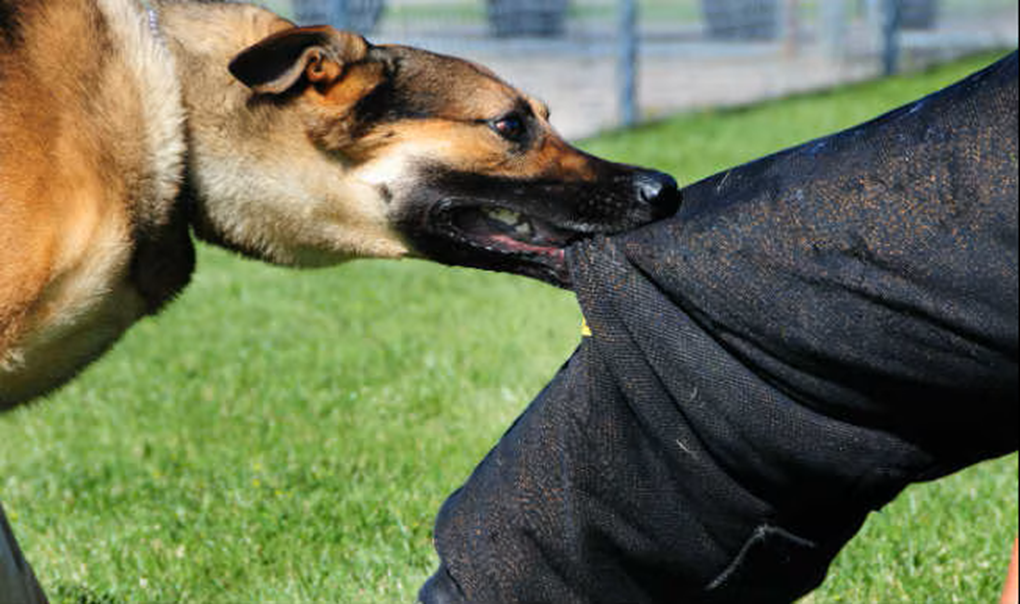
Persistent Pain Point – India has the world’s largest stray dog population and accounts for approximately 36% of global rabies deaths. The country reports over 3.7 million dog bites annually, leading to between 5,000 and 20,000 human rabies deaths per year. Children under 15 are disproportionately affected, representing nearly half of all victims. Sources – multiple news reports
In view of the foregoing, in a landmark judgment addressing India’s escalating public health crisis, a three-judge bench of the Supreme Court of India has refused to dilute its stringent orders on stray dog management. The bench, comprising dismissed a batch of petitions and NGO appeals seeking to modify its previous November 7, 2025, ruling.
In a historic and highly debated shift in Indian animal jurisprudence, the apex court has expressly authorized municipal authorities to euthanize rabid, incurably ill, and “demonstrably dangerous or aggressive” stray dogs.
Furthermore, the court issued a stern warning to civic bodies across major metropolitan hubs like Mumbai and Bangalore, asserting that the right to human life and free movement under Article 21 of Indian Constitution takes absolute precedence over animal welfare.
Ban on Release of Strays in High-Footfall Public Zones
The Supreme Court firmly upheld its directive barring municipal corporations—including the Brihanmumbai Municipal Corporation (BMC) and the Bruhat Bengaluru Mahanagara Palike (BBMP)—from releasing stray dogs back into high-footfall institutional areas after sterilization or vaccination.
The court called out the “staggering dimensions” of the stray dog menace, noting that dog-bite cases nationwide jumped nearly 70% between 2022 and 2024, resulting in millions of bite incidents and dozens of suspected human rabies fatalities annually.
War Footing: Mandatory District ABC & ARV Centers
The apex court directly blamed state governments and municipal authorities for two decades of “discernible absence of sustained, systematic, and incremental efforts” to control the stray population. To bridge this structural vacuum, the Supreme Court issued a mandatory infrastructure roadmap:
-
Mandatory Centers: Every single district across all States and Union Territories must establish at least one fully functional Animal Birth Control (ABC) and Anti-Rabies Vaccination (ARV) Centre
-
Scaling Requirements: In mega-cities like Mumbai and Bangalore, these centers must be scaled up exponentially based on population density and territorial extent
-
Immunity & Vaccine Mandate: Municipalities are ordered to run comprehensive anti-rabies vaccination campaigns on a war footing, ensuring uninterrupted stockpiles of human and veterinary anti-rabies vaccines
-
Strict Accountability: Chief Secretaries of all states must submit comprehensive ground compliance reports to their respective High Courts by August 7, 2026, with High Courts submitting progress reviews to the Supreme Court every four months
Euthanasia Clause: Expanding the Grey Area of Public Safety
Historically, Section 13 of the Prevention of Cruelty to Animals (PCA) Act, 1960 only permitted putting down animals that were mortally injured or incurably diseased, where survival itself amounted to cruelty. The Supreme Court’s ruling explicitly expands this operational context to include public safety hazards.
Enforcement Mechanism & Immunity for Officials
To ensure municipal commissioners and veterinary officers carry out these directives without fear of legal backlash, the Supreme Court has granted blanket judicial protection for acts carried out in “good faith.” The bench explicitly noted that no First Information Report (FIR) or criminal proceedings can be initiated against municipal officials executing these orders. High Courts have been fully empowered to summarily quash any “frivolous, vexatious, or malicious” lawsuits filed by activists against civic workers. Officials who fail to execute these population control mandates will face immediate contempt of court and disciplinary actions.
Local Impact & Ground Realities: Mumbai vs. Bangalore
The verdict has triggered intense operational shakeups and highly polarized reactions across India’s two premier IT and commercial capitals:
Mumbai Dilemma (BMC Jurisdiction)
Brihanmumbai Municipal Corporation (BMC) has been under intense heat following severe dog-bite surges in residential pockets, railway platforms, and coastal promenades. While residents have welcomed the court’s strict stance on clearing hospitals and transport hubs, civic body workers face a massive infrastructure bottleneck.
Mumbai’s existing animal shelters are already severely overcrowded. The mandate to house thousands of rounded-up institutional strays long-term—rather than returning them to the streets post-sterilization—will require immediate land allocation and capital expenditure to build mass canine holding centers.
Bangalore Hub (BBMP Jurisdiction & Activist Backlash)
In Bengaluru, the ruling has drawn sharp rebukes and legal challenges from prominent animal welfare groups. Organizations like the Sahavarthin Animal Welfare Trust and Heritage Beku have pointed out that the court’s order could inadvertently trigger the “vacuum effect”—where removing a sterilized, peaceful pack from a territory simply opens up a resource zone for unsterilized, aggressive wild dogs to move in.
Activists are particularly alarmed by the lack of a strict statutory definition for a “demonstrably dangerous/aggressive” dog. They warn that without airtight community oversight and scientific temperament testing, local municipal teams might use the court’s order as a legal shield to execute mass culls of healthy street dogs simply to quiet public complaints.
SC Judicial Order Summary vs. India’s Legacy ABC Rules
Regulatory Vector
|
Legacy ABC Rules Framework
|
New Supreme Court Mandate (May 2026)
|
Operational Squeeze on BMC & BBMP
|
Post-Surgical Protocol
|
Mandatory release of sterilized/vaccinated dogs back to their exact capture spot.
|
Strict relocation ban for dogs caught in schools, hospitals, airports, and stations.
|
Forces immediate construction of massive, long-term civic dog shelters.
|
Euthanasia Triggers
|
Severely restricted to incurably ill, terminally injured, or clinically proven rabid dogs.
|
Expanded to include “demonstrably dangerous and aggressively hostile” strays.
|
Creates a controversial grey area; requires qualified veterinary panels to prevent misuse.
|
Legal Protection
|
Civic workers and handlers frequently faced police complaints and FIRs from activists.
|
Absolute legal protection for actions in “good faith.” High Courts ordered to crush vexatious suits.
|
Grants municipal teams the authority to clear high-risk zones without fear of litigation.
|
Accountability Gauge
|
Voluntary, decentralized municipal progress with loose timelines.
|
Chief Secretary-level monitoring; formal status updates mandated by August 7, 2026.
|
Failure to expand ABC/ARV capacities will invite direct contempt of court proceedings.
|
AHI Opinion
The Supreme Court’s ruling marks a dramatic pivot toward public safety in managing India’s urban animal conflict. By explicitly tilting the constitutional balance in favor of human life under Article 21, the apex court has dismantled years of administrative inertia.
For cities like Mumbai and Bangalore, the clock is now ticking. Success will depend on whether these municipalities can rapidly scale up advanced, humane veterinary infrastructure to meet the court’s strict mandates, or if a lack of resources will result in aggressive mass culls that further complicate India’s public health crisis.