


NELLORE, ANDHRA PRADESH — In a major move to upgrade rural livelihoods and enhance livestock productivity, the Andhra Pradesh State Government has launched its targeted “Animal-Centric Breeding Approach.” The initiative introduces precise, scientific breeding methods designed to improve dairy cattle reproduction and boost milk yields across regional farming hubs.
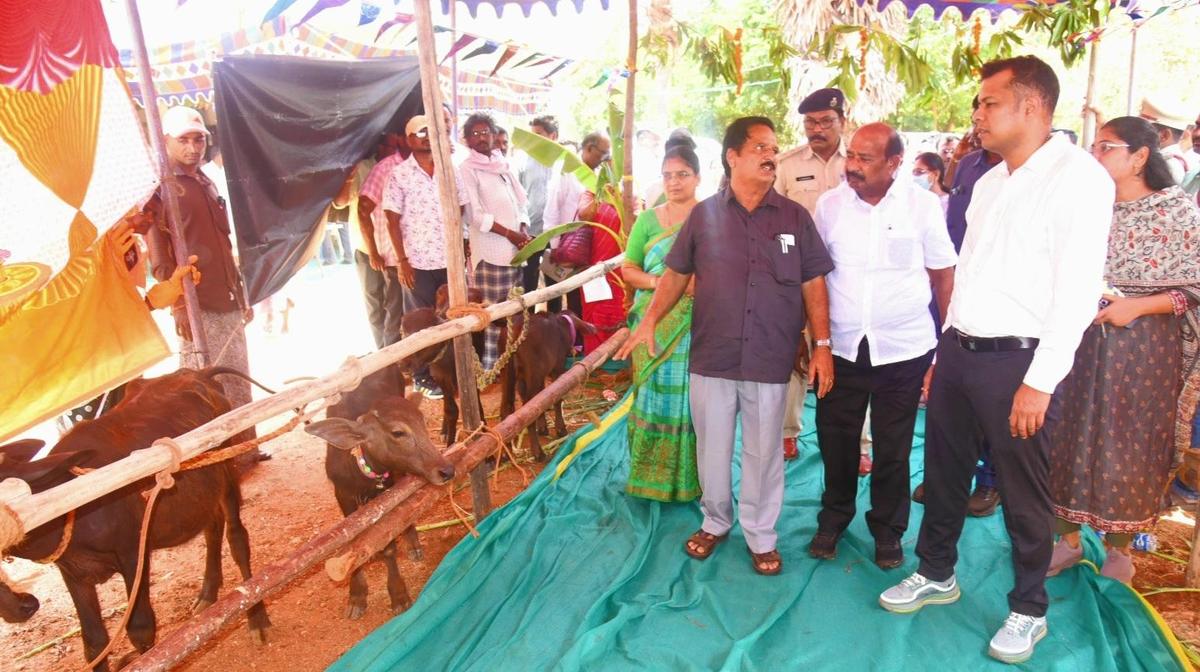
Speaking at a livestock farmers’ awareness campaign held in Kulluru village, Kaluvoya mandal, SPSR Nellore District Collector Himanshu Shukla urged the farming community to actively embrace the program to advance the state’s animal husbandry sector.
Shifting to a Precision Scientific Approach
Traditional veterinary breeding frameworks often rely on generalized herd targets. By contrast, the newly introduced Animal-Centric Breeding Approach focuses on tailored, animal-specific veterinary interventions.
According to District Collector Shukla, the framework applies structured scientific methods to manage individual cattle profiles, lowering calving intervals and enhancing overall reproductive efficiency. By stabilizing these physiological cycles, local dairy cooperatives expect a direct, reliable increase in daily milk production volumes.
Field Implementation & Ground Support
The public launch of the framework was integrated into the district’s “Palle Veekshana” grassroots governance initiative. Joined by Venkatagiri MLA Kurugondla Ramakrishna, state officials immediately transitioned the policy from theory to practical farm-gate support:
-
Nutritional Subsidies: To ensure local herds have the high nutritional baseline required for scientific breeding, officials distributed specialized, fortified animal feed directly to participating dairy farmers.
-
Community Engagement: To promote the adoption of high-yield traits, the event hosted a calf beauty contest, presenting prizes to local breeders maintaining exceptional young stock.
-
Veterinary Oversight: The field deployment is backed by senior technical leads, including Animal Husbandry Department Joint Director Ramesh Nayak, alongside dedicated veterinary doctors and field staff tasked with managing local reproductive logs.
Economic Impact Potential for Dairy Farmers
The state-wide push comes at a critical time for India’s broader agricultural sector, where dairy cooperatives are working to optimize input costs and increase thin operating margins.
By shifting from broad herd management to an individual, animal-centric approach, the government aims to increase the dollar-for-dollar output of smallholder livestock portfolios. Local administrators emphasize that utilizing these genetic and reproductive services will help insulate smallholder farmers against seasonal pasture deficits, turning rural animal husbandry into a more resilient source of primary household income.

