



India’s Milk Adulteration Crisis: How Food Fraud is Becoming an Organised Crime—and What It Means for the World’s Largest Dairy Industry and its consumers.
India’s dairy industry, valued at more than ₹18 lakh crore (US$210+ billion) and producing nearly 250 million tonnes of milk annually, has long been celebrated as one of the country’s greatest agricultural success stories. Yet beneath this achievement lies a growing food safety challenge that is becoming increasingly sophisticated: milk adulteration.
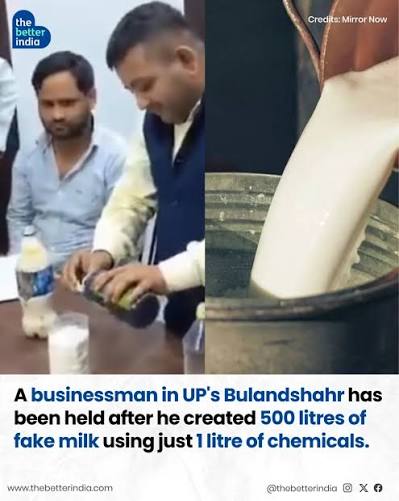
India’s milk adulteration problem has evolved beyond small-scale dilution into an organised food-fraud ecosystem, with criminal networks allegedly manufacturing and distributing “synthetic milk” capable of closely resembling genuine milk in appearance, taste and composition.
The findings reinforce growing concerns among regulators, dairy companies and food safety experts that adulteration is no longer confined to isolated rural practices but is increasingly becoming an organised commercial enterprise.
From Water Dilution to Synthetic Milk – yes you read it right, Synthetic Milk
Historically, milk adulteration in India primarily involved dilution with water to increase volume. However, investigators now report far more sophisticated formulations designed to mimic the physical and chemical properties of genuine milk.
As per media reports, authorities recently dismantled a synthetic milk manufacturing unit in Gujarat’s Sabarkantha district. Investigators allege that the operation used a mixture of detergent, urea, caustic soda, skimmed milk powder, whey, refined palm oil and soybean oil to manufacture imitation milk. Officials estimated that approximately 300 litres of genuine milk was converted into 1,700–1,800 litres of counterfeit product daily before being distributed as milk and buttermilk across parts of Gujarat. That this adulteration was running for over 5 years before being busted.
The investigation further notes that enforcement actions during 2025–26 across Gujarat, Uttar Pradesh, Haryana, Punjab and the Delhi-NCR region uncovered networks allegedly involved not only in fake milk but also adulterated paneer / cottage cheese, butter fat / ghee and other dairy products.
Massive Industry Creates Massive Vulnerability
India accounts for approximately 24% of global milk production, making it the world’s largest milk producer. The dairy sector contributes roughly 5–6% of India’s Gross Value Added (GVA) and supports the livelihoods of more than 80 million rural households.
However, the structure of the industry also creates vulnerabilities. More than 60–70% of India’s milk continues to move through informal or unorganised channels before reaching consumers. Long procurement chains, multiple intermediaries, limited cold-chain infrastructure, gullible consumers and uneven food safety enforcement create multiple opportunities for adulteration and counterfeiting – resulting in a thriving enterprise.
Unlike organised dairy cooperatives that operate integrated procurement and quality testing systems, milk handled by fragmented supply chains often pass through several collection points before reaching processing facilities or end-consumers.
Counterfeiting on the Rise
Milk is no longer the only target. According to the Authentication Solution Providers’ Association (ASPA)-CRISIL State of Counterfeiting in India Report, dairy products—including milk, ghee, paneer, cheese and khoya—have become among the most counterfeited food categories in India. The report documented a 2.5-fold increase in reported counterfeiting incidents between 2018 and 2025, with dairy products among the most affected FMCG categories. Counterfeit products are typically sold at discounts of around 19% compared with genuine products.
Copy of Report – ASPA CRISIL Report State of Counterfeiting in India
What Are Adulterators Adding?
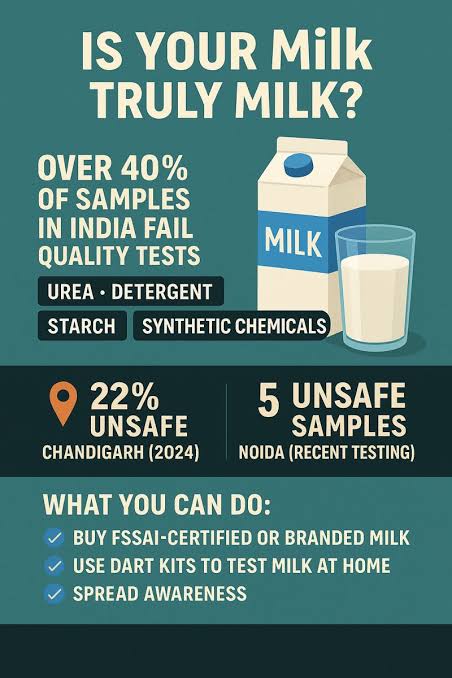
Food safety investigations over the past several years have identified a range of substances used to manipulate milk quality or increase apparent volume, including:
-
Water
-
Starch
-
Urea
-
Detergents
-
Caustic soda
-
Glucose
-
Synthetic fats
-
Vegetable oils
-
Skimmed milk powder
-
Whey solids
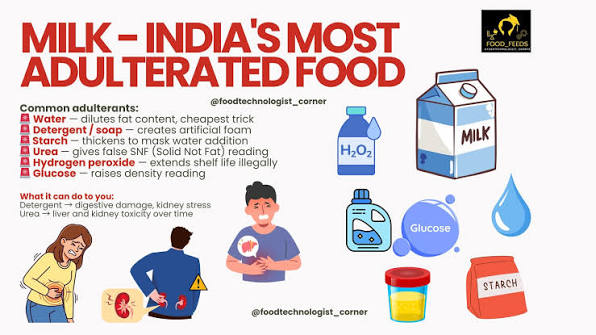
These additives may be intended to increase protein readings, restore fat content after dilution or improve the appearance and texture of adulterated milk. Some substances can pose significant health risks if consumed.
Two MAJOR Additional Challenges with India’s Milk
Aflatoxin M1 Contamination
The national survey highlighted the significant threat of Aflatoxin M1, which was detected beyond permissible limits in 5.7% of all samples (368 out of 6,432).
-
Source: Aflatoxin M1 is a potent, heat-stable carcinogen. It enters the animal’s system when cows and buffaloes consume feed and fodder contaminated with fungal species, Aspergillus molds due to poor storage in hot and humid conditions
-
Operational Bottleneck: Because India’s agricultural feed sector remains largely unregulated, this contaminant bypasses the farm gate and survives standard industrial pasteurisation, making it more prominent in processed, packaged milk than raw milk raising significant health concerns for babies and adolescents where milk consumption is relatively higher
Antibiotic Residues and the Anti-Microbial Resistance Issue
Unregulated and indiscriminate use of antibiotics in veterinary treatments has created an unprecedented publich health concern in form of wide-spread AMRs in India. Roughly 1.2% of milk samples contained antibiotic residues exceeding maximum residue limits (MRLs).
-
Culprit: The presence of tetracyclines and beta-lactam antibiotic residues, is heavily tied to the management of bovine mastitis – a very common infectious, inflammatory disease of udders of milch animals
-
Failure: Regulatory requirements mandate ‘withdrawal periods” after usage of antibiotics in dairy, milch animals but are rarely followed, especially at smallholders levels and unorganized milk collection centres, allowing active antibiotic fractions to slip directly into milk marketed for public consumption
Public Health Concerns
The primary concern extends beyond economic fraud. Adulterated milk may expose consumers to chemical contaminants, harmful microorganisms or residues that can affect vulnerable groups, including children, older adults and immunocompromised individuals.
The Food Safety and Standards Authority of India (FSSAI) distinguishes between deliberate adulteration and contamination arising from poor hygiene or handling. Its nationwide surveillance has indicated that while most milk samples are considered safe for consumption, a substantial proportion fail one or more quality or compositional parameters, with contamination often representing a greater concern than deliberate adulteration.
Regulatory Crackdown Intensifies
Indian regulators have significantly increased enforcement activities. Government data cited in industry reports indicate that more than 12,000 cases related to milk adulteration were initiated during the 2024–25 fiscal year as part of an intensified nationwide enforcement campaign. Authorities have expanded inspections, increased sampling, strengthened licensing requirements and taken legal action against offenders.
Recent regulatory measures include:
-
Mandatory licensing for independent milk vendors.
-
Increased inspections by state food safety authorities.
-
Expanded laboratory testing.
-
Stronger supply-chain monitoring.
-
Greater emphasis on traceability and enforcement.
Organised Dairy Remains Better Protected
Industry experts consistently note that large organised dairy companies generally maintain far more robust quality assurance systems than informal supply chains. Leading cooperatives and private processors routinely employ:
-
Rapid milk analysers.
-
Antibiotic residue screening.
-
Adulteration detection tests.
-
Microbiological monitoring.
-
Cold-chain controls.
-
Supplier audits.
-
Digital procurement systems.
Companies operating direct procurement models with limited intermediaries are generally considered less vulnerable to adulteration during collection and transportation.
Technology May Become the Turning Point
The fight against milk adulteration is increasingly shifting toward technology. Several solutions are being adopted or evaluated across the dairy sector, including:
-
Blockchain-enabled supply-chain traceability.
-
QR-code product authentication.
-
AI-based anomaly detection.
-
Portable milk testing devices.
-
Spectroscopy-based screening.
-
Internet of Things (IoT) monitoring of milk collection.
-
Digital procurement platforms.

