



After becoming the world’s first approved veterinary Janus kinase (JAK) inhibitor in January 2014, Apoquel® (oclacitinib maleate) has fundamentally transformed the management of canine allergic dermatitis and atopic dermatitis, and creating a first block-buster outside of parasiticides.
Over the past decade, Zoetis has invested heavily in clinical education, post-marketing evidence generation and veterinarian engagement, establishing Apoquel as the global standard of care for canine pruritus. The product today enjoys near-universal adoption across companion-animal veterinary practices in North America, Europe and many international markets.
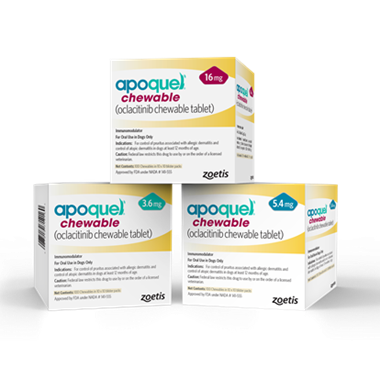
That commercial strategy has translated into exceptional financial performance.
From annual revenues of roughly US$400 million in 2018, Apoquel continued to record double-digit growth, surpassing US$650 million during the COVID-era pet care boom before crossing the US$1 billion annual revenue milestone. Industry estimates now place Apoquel’s worldwide annual sales at approximately US$1.1–1.2 billion, making it one of the largest-selling companion animal pharmaceuticals globally and among Zoetis’ flagship brands. The product continues to benefit from expanding diagnosis of canine atopic dermatitis, increasing pet healthcare expenditure and strong veterinarian confidence.
Competition Finally Arrives After a Decade of Market Exclusivity
For more than ten years, Apoquel effectively enjoyed a monopoly within the veterinary JAK inhibitor segment. That changed with the approval of Zenrelia® (ilunocitinib) from Elanco Animal Health, which received U.S. FDA approval in September 2024 followed by European approval in July 2025.
Zenrelia initially faced commercial headwinds because the FDA required a boxed warning related to concurrent vaccine administration following observations from vaccine response studies. Early veterinarian adoption was therefore more cautious than expected.
However, subsequent regulatory changes removing the boxed warning have substantially improved market acceptance. Elanco has identified Zenrelia as one of its key innovation products, with management reporting that the product contributed meaningfully to 2025 innovation growth alongside Credelio Quattro. While Elanco has not disclosed standalone sales, industry analysts estimate Zenrelia generated well above US$100 million in global revenue during its first full commercial year, making it one of the fastest-growing launches in veterinary dermatology.

Numelvi Raises the Bar with Second-Generation JAK1 Selectivity
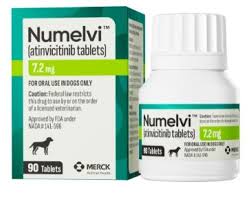
Before Zenrelia could fully establish itself, MSD Animal Health (Merck Animal Health) entered the market with Numelvi® (atinvicitinib) following European approval in mid-2025.
Unlike Apoquel and Zenrelia, Numelvi represents a second-generation JAK inhibitor with approximately 10-fold greater selectivity for JAK1 compared with JAK2, JAK3 and TYK2. This enhanced specificity is designed to preserve beneficial immune signalling while maintaining potent anti-pruritic and anti-inflammatory activity, potentially offering an improved safety profile.
Numelvi also enjoys another important competitive advantage: it is currently the only JAK inhibitor approved for dogs from six months of age, compared with the one-year minimum age restriction applicable to Apoquel and Zenrelia. This expands the addressable treatment population and positions MSD to compete aggressively in younger canine patients diagnosed with allergic dermatitis.
Although commercial rollout remains in its early stages and sales have not yet been separately disclosed, industry observers expect Numelvi to become an increasingly important competitor as approvals expand beyond Europe into additional global markets.
Commercial Comparison
| Product | Company | Generation | Estimated 2025/26 Brand Revenue* | Key Differentiator |
|---|---|---|---|---|
| Apoquel (oclacitinib) | Zoetis | First-generation | US$1.1–1.2 billion | Established global market leader |
| Zenrelia (ilunocitinib) | Elanco | First-generation | >US$100 million (estimated) | Once-daily dosing; rapidly expanding adoption |
| Numelvi (atinvicitinib) | MSD Animal Health | Second-generation | Early commercial launch | Highly JAK1-selective; approved from six months of age |

