

HomeCorporateWorld Unites Around One Health as Countries Mark World Zoonoses Day with...

World Unites Around One Health as Countries Mark World Zoonoses Day with Rabies Preparedness Campaigns

Governments, veterinary authorities, public health agencies, universities and animal welfare organisations across the world observed World Zoonoses Day on Sunday with coordinated campaigns highlighting the critical importance of preventing diseases transmitted between animals and humans.

Commemorated annually on 6 July, the day marks the anniversary of Louis Pasteur’s successful administration of the first rabies vaccine in 1885 and has evolved into one of the veterinary profession’s most significant global awareness events. International organisations estimate that around 60% of known infectious diseases and nearly 75% of emerging human diseases originate from animals, underscoring the growing importance of the One Health approach.

International Agencies Reinforce One Health

The World Organisation for Animal Health (WOAH), together with its Quadripartite partners—the World Health Organization (WHO), the Food and Agriculture Organization (FAO) and the United Nations Environment Programme (UNEP)—used the occasion to reiterate the need for integrated surveillance and coordinated action at the human-animal-environment interface.

Global messaging focused on strengthening disease surveillance, improving veterinary services, combating antimicrobial resistance, enhancing food safety and preparing countries for future zoonotic disease threats through the internationally recognised One Health framework.
India Launches Rabies Awareness and Vaccination Drives

Across India, veterinary departments, municipal corporations, veterinary colleges and animal welfare organisations organised extensive anti-rabies vaccination campaigns, public education programmes and awareness drives.

One of the largest initiatives was led by the Greater Hyderabad Municipal Corporation (GHMC), which launched a multi-zone anti-rabies vaccination campaign targeting stray dogs while veterinary professionals highlighted the importance of booster vaccinations and improved urban waste management to reduce stray dog populations.

Several veterinary universities and research institutes also conducted seminars promoting responsible pet ownership, bite prevention and integrated zoonotic disease surveillance.

Africa Focuses on Rabies Elimination

Several African countries organised community vaccination campaigns and educational programmes aimed at accelerating progress toward the global objective of eliminating dog-mediated human rabies.

Veterinary authorities worked alongside local governments to provide free dog vaccinations, educate schoolchildren about bite prevention and encourage communities to report suspected rabies cases promptly.

Europe Highlights Pandemic Preparedness

Across Europe, veterinary institutions and public health organisations concentrated on the broader implications of zoonotic diseases for global health security.

Educational campaigns addressed avian influenza, antimicrobial resistance, food safety and wildlife surveillance while emphasising that veterinary services represent a critical component of national pandemic preparedness.

Universities organised scientific lectures discussing emerging pathogens, climate-related disease expansion and wildlife health monitoring.

North America Promotes Responsible Pet Ownership

Veterinary associations throughout the United States and Canada used World Zoonoses Day to encourage routine vaccination of companion animals, parasite control, annual health examinations and safe interactions between people and animals.

Public campaigns also highlighted diseases including rabies, Lyme disease, leptospirosis and salmonellosis, while reinforcing the role of veterinarians in protecting both animal and human health.

Latin America Expands One Health Outreach

Several countries across Latin America organised educational workshops linking veterinary medicine, environmental conservation and public health.

Authorities promoted improved surveillance of wildlife diseases, responsible livestock production and greater collaboration between medical and veterinary professionals to strengthen regional preparedness against zoonotic threats.

Asia Strengthens Disease Surveillance

Across Asia, veterinary agencies highlighted the importance of surveillance programmes targeting avian influenza, African swine fever and other transboundary animal diseases.

Educational campaigns encouraged livestock producers to maintain strong biosecurity measures while companion animal organisations promoted routine vaccination and preventive healthcare.

Universities Lead Scientific Engagement

Veterinary schools and research institutions worldwide marked the day through scientific seminars, student workshops and community outreach programmes examining emerging zoonotic pathogens, diagnostic technologies and disease prevention strategies.

Researchers emphasised the growing importance of multidisciplinary collaboration between veterinarians, physicians, epidemiologists, wildlife specialists and environmental scientists.

Rabies Remains Central Theme

Although discussions covered numerous zoonotic diseases—including avian influenza, Ebola, anthrax, leptospirosis, brucellosis and antimicrobial resistance—rabies remained the principal focus of many campaigns.

Despite being almost entirely preventable through vaccination, rabies continues to cause tens of thousands of human deaths annually, primarily in Asia and Africa. International agencies continue advocating mass canine vaccination as the most effective strategy for eliminating dog-mediated human rabies.

Growing Recognition of Veterinary Medicine

This year’s observance also highlighted the expanding role of veterinary professionals in addressing challenges extending far beyond animal healthcare.

Increasingly, veterinarians are contributing to pandemic preparedness, antimicrobial resistance management, food security, biodiversity conservation, wildlife health and climate resilience through integrated One Health programmes.

Industry Perspective

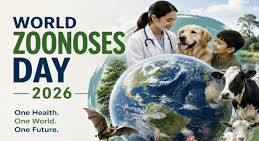
World Zoonoses Day 2026 demonstrated how animal health has become an essential pillar of global public health. From municipal rabies vaccination campaigns in developing countries to international discussions on pandemic preparedness and emerging pathogens, the day’s activities reflected growing recognition that preventing future health crises requires coordinated investment in veterinary services, disease surveillance and collaboration across human, animal and environmental health sectors.

Animal Health India Editorial Team
Animal Health India Editorial Teamhttps://animalhealthindia.com
Animal Health India (AHI) is an independent news and intelligence platform covering the global animal health, veterinary, livestock, poultry, companion animal and pet food sectors. Our editorial team comprises veterinary journalists, animal health professionals, regulatory affairs specialists and industry analysts with over 30 years of combined experience covering India, Asia, Europe and North America. AHI publishes news, regulatory updates, market intelligence and company news drawn from primary sources including DAHD, EMA, USDA, AVMA and leading veterinary publications worldwide.
RELATED ARTICLES