


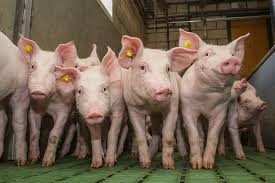
Looks like, similar to increasing numbers of humans, even animals, specially food producing animals kept indoors, under intensive farming techniques too have high levels of Vit D3 deficiency.
Newly aggregated field data from swine health analytics platform SciTell™ DBS Analytics reveals that over 60% of commercial pigs raised in indoor housing systems are tracking significantly below optimal levels for circulating Vitamin D3.
The findings, which coincide with regional animal health field rollouts across Asia and Europe, highlight a critical metabolic disconnect between modern genetic potential and traditional herd nutrition. As swine integrators push for higher sow productivity and rapid piglet growth, standard dietary formulations are failing to prevent subclinical vitamin deficiencies.
Root Cause: Genetic Pressure and Liver Bottleneck
The widespread deficiency stems from a combination of modern multi-suckling housing designs and intense biological pressures. Today’s hyper-producing sows produce much larger litters, while piglets are engineered for rapid muscle growth and higher daily weight gain. This high-velocity growth places immense demand on a pig’s skeletal structure and immune system—both of which rely heavily on consistent Vitamin D3 availability.
In sunlight-deprived indoor facilities, swine depend entirely on dietary supplementation via traditional Vitamin D3 (cholecalciferol). However, conventional D3 requires a complex, multi-stage metabolic conversion process.
When young piglets face standard production stressors—such as weaning, diet transitions, or subclinical gut inflammation—their liver function is frequently compromised. This creates a critical metabolic bottleneck, preventing the liver from efficiently converting conventional Vitamin D3 into its active, circulating form precisely when the animal needs it most.
Solution: Bypassing the Bottleneck with Calcifediol (25-OH-D3)
To resolve this issue, nutritionists and veterinary formulation teams across major Asian agrifood integrators are shifting their feed strategies. Instead of increasing standard D3 inclusion rates, they are transitioning toward 25-OH-D3 (calcifediol) as a direct, highly bioavailable replacement.
Calcifediol offers distinct biochemical advantages that address the limitations of indoor swine production:
-
Direct Absorption: Because calcifediol is highly hydrophilic (water-soluble), it is absorbed more efficiently across the intestinal wall compared to standard fat-soluble D3.
-
Bypassing the Liver: This specific molecular form entirely bypasses the initial, bottlenecked liver hydroxylation step, entering the bloodstream directly to restore circulating vitamin levels.
-
Enhanced Skeletal Integrity: Stabilizing circulating 25-OH-D3 levels optimizes calcium and phosphorus absorption, reducing the incidence of structural soundness issues, splay legs, and metabolic bone disease in fast-growing finishing pigs.
-
Sow Longevity and Reproductive Support: In breeding herds, consistent calcifediol assimilation improves total born-alive metrics, enhances piglet birth weights, and reduces premature sow culling due to structural structural issues or lameness.

