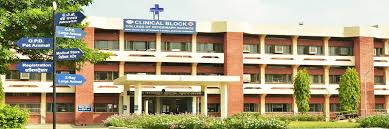
LUDHIANA, INDIA — In a major breakthrough for veterinary nephrology and critical care across South Asia, the Dialysis Unit at the Multi-Specialty Veterinary Hospital of Guru Angad Dev Veterinary and Animal Sciences University (GADVASU) has successfully performed the country’s first-ever Online Hemodiafiltration (OL-HDF) on a dog suffering from end-stage renal failure.
The pioneering procedure was executed on a 9-year-old Labrador Retriever by a specialized clinical team led by Dr. Randhir Singh (In-charge, Dialysis Unit), alongside Dr. Gurpreet Singh and Dr. Raj Sukhbir Singh. This milestone was achieved under the auspices of the Indian Council of Agricultural Research (ICAR) Experiential Learning Project, which aims to position the university at the global forefront of advanced extracorporeal therapies.
Traditional Dialysis vs. Online Hemodiafiltration
While standard veterinary intermittent hemodialysis (IHD) has been used to manage acute uremia, it faces a major hurdle in chronic, end-stage canine cases: solute size limitation.
Standard dialysis relies almost entirely on diffusive transport (solutes moving across a concentration gradient), which efficiently clears small water-soluble molecules like blood urea nitrogen (BUN) and creatinine. However, it fails to clear larger “middle molecules” and protein-bound uremic toxins, which continue to accumulate and cause systemic cardiovascular and neurological decline in the patient.
OL-HDF Advantage
GADVASU’s newly operationalized Online Hemodiafiltration platform overcomes these limitations by combining standard diffusion with high-volume convective transport.
During the procedure, a significant volume of fluid is forcefully driven across a high-flux membrane via ultrafiltration, dragging both small and large uremic toxins along with it through a process known as “solvent drag.”
The system earns its “Online” designation by utilizing a state-of-the-art, fully automatic reverse osmosis (RO) purification plant integrated into the dialysis unit. This allows the machine to continuously manufacture ultra-pure substitution fluid in real time, injecting it directly into the blood line to safely balance fluid loss without the need for commercial fluid bags.
Clinical Execution and Patient Stabilization
The successful implementation of this hybrid modality required complex mathematical dosing models, real-time blood gas monitoring, and precise ultrafiltration rate calibrations to prevent hemodynamic instability—a common risk in critical canine patients.
The Outcome: The patient, a geriatric Labrador Retriever with advanced uremic complications, demonstrated exceptional clinical stability throughout the therapy sessions.
The Diagnostics: Post-procedural biochemistry panels revealed highly efficient clearance of both small uremic compounds and heavy molecular weight toxins, restoring the dog’s acid-base and electrolyte homeostasis without inducing dialysis disequilibrium syndrome.
Redefining Critical Care Across South Asia
Expressing immense pride in the clinical breakthrough, Dr. J.P.S. Gill, Vice-Chancellor of GADVASU, congratulated the medical team, noting that the achievement elevates the university’s stature as a premier hub for renal replacement therapies.
Dr. Swaran Singh Randhawa, Dean of the College of Veterinary Science, and Dr. J. Mohindroo, Director of Clinics, emphasized that introducing OL-HDF represents a major technological leap forward. By providing a reliable tool to manage advanced kidney disease when conventional medicine fails, this clinical milestone establishes a new gold standard for veterinary intensive care throughout the region.