


Veterinary hospitals and private clinics across India’s major metropolitan hubs are reporting an unprecedented, near-simultaneous spike in canine vector-borne diseases.
Deep within the grip of an intense, prolonged summer heatwave—with daytime temperatures in the Delhi-NCR belt consistently hitting 43°C to 46°C and urban microclimates in Mumbai and Bengaluru creating persistent night-time heat retention—veterinary parasitologists and clinicians are sounding alarms over a massive, early-season epidemic of Canine Tick-Fever.
Veterinary clinical networks indicate that caseloads for Ehrlichiosis and Babesiosis have surged by nearly 40% to 50% compared to traditional pre-monsoon baselines. Clinicians collaborating on professional portals are directly tying this shift to the sustained extreme heat across North, Central, and Peninsular India, which has radically accelerated the reproductive cycle of the primary vector: the Brown Dog Tick (Rhipicephalus sanguineus).
The Climate Connection: Vector Acceleration Under Heat Stress
Traditionally, tick infestations and subsequent tick-fever cases in India peak during the high-humidity monsoon and post-monsoon months (July to October). However, the climate realities of May 2026 have rewritten the vector map.
According to entomological data circulated among veterinary public health modules, ambient temperatures hovering between 38°C and 44°C dramatically compress the molting and incubation periods of Rhipicephalus sanguineus.
Eggs hatch faster, larvae transition to nymphs rapidly, and adult ticks display aggressive questing behavior. Furthermore, as urban temperatures fail to drop significantly at night, ticks remain highly active 24/7, turning residential parks, society green belts, and even concrete basements into hyper-infectious zones.
Dual Pathogen Profiling: Ehrlichiosis vs. Babesiosis
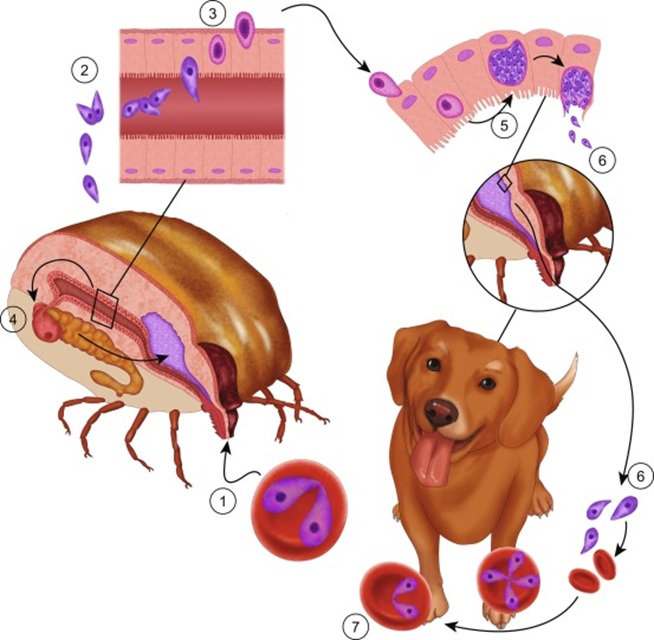
The current clinical surge is dominated by two distinct, highly destructive intracellular pathogens transmitted during a tick’s blood meal.
1. Canine Monocytic Ehrlichiosis (CME)
-
The Pathogen: Ehrlichia canis (an intracellular rickettsial bacterium)
-
Clinical Target: It selectively invades circulating monocytes (white blood cells), replicating within vacuoles to form clusters called morulae
-
The Threat: CME progresses through acute, subclinical, and chronic phases. The ongoing wave is presenting primarily in the acute-to-chronic transition, marked by severe vasculitis, profound immune-mediated thrombocytopenia (platelet destruction), petechiae (pinpoint hemorrhages on gums), and epistaxis (nosebleeds)
2. Canine Babesiosis
-
The Pathogen: Intraerythrocytic protozoa, primarily Babesia canis (small piroplasm) and Babesia gibsoni (large piroplasm)
-
Clinical Target: The parasites directly invade and rupture the dog’s Erythrocytes (red blood cells)
-
The Threat: This triggers massive intravascular and extravascular hemolysis. Dogs present in emergency triage with profound hemolytic anemia, pale-to-icteric (jaundiced) mucous membranes, dark coffee-colored urine (hemoglobinuria), and splenomegaly
Metric Breakdown: Meta-Hub Caseload Analysis (May 15–16, 2026)
| Metropolitan Hub | Avg. Daytime Temp | Primary Clinical Presentation | Diagnostic Testing Uptick |
| Delhi-NCR | 43°C – 45°C (Severe Heat) | Severe Ehrlichiosis with secondary epistaxis and heat exhaustion. | 65% increase in 4Dx Snap Tests and full CBC panels. |
| Mumbai | 31°C – 33°C (90%+ Humidity) | Aggressive Babesia canis / gibsoni clusters; rapid-onset hemolytic anemia. | High demand for PCR testing due to low microscopic visibility in chronic cases. |
| Bengaluru | 33°C – 35°C (Above Norm) | Mixed co-infections (E. canis + Anaplasma platys). | 40% surge in emergency blood transfusions for anemic pets. |
The Co-Infection Moat and High-Risk Breeds
A major complicating factor noted in professional veterinary forums this week is the high rate of concurrent infections. Comprehensive molecular screening (PCR) reveals that nearly 35% of positive cases are harboring more than one vector-borne pathogen simultaneously. When Ehrlichia and Babesia attack a canine host together, the bone marrow suppression from the bacterium compounds the red blood cell destruction from the protozoan, leading to rapid, potential fatal pancytopenia.
High-Susceptibility Trends:
-
Brachycephalic and Long-Coat Breeds: Pugs, French Bulldogs, German Shepherds, and Golden Retrievers are presenting with compounded distress. The metabolic strain of trying to cool down via panting in 44°C heat leaves these animals immunologically compromised, lowering their natural defenses against tick-borne pathogens.
Emergency Clinical Management & Prevention Shift
In response to the early epidemic, corporate hospital chains (such as MaxVets and DCC Animal Hospital networks) have updated their emergency triage protocols:
-
Mandatory Platelet Triage: Every canine patient presenting with a fever above 103.5°F (39.7°C), lethargy, or anorexia must immediately undergo a complete blood count (CBC) with manual platelet verification to check for thrombocytopenia.
-
Aggressive Preventive Protocols: Clinicians are urging pet owners to abandon natural or home remedies and move exclusively to advanced oral ectoparasiticides. Systemic isoxazoline-class drugs (Fluralaner / Bravecto, Afoxolaner / NexGard, and Sarolaner / Simparica) are being prescribed as mandatory baselines to disrupt the tick lifecycle before transmission can occur.
-
Environmental Treatment: Because brown dog ticks can live in wall crevices and flooring cracks for months without a host, veterinary clinics are advising professional chemical pest control for clients’ homes using amitraz or fipronil-based solutions alongside treating the pet.
AHI Editorial Summary

