


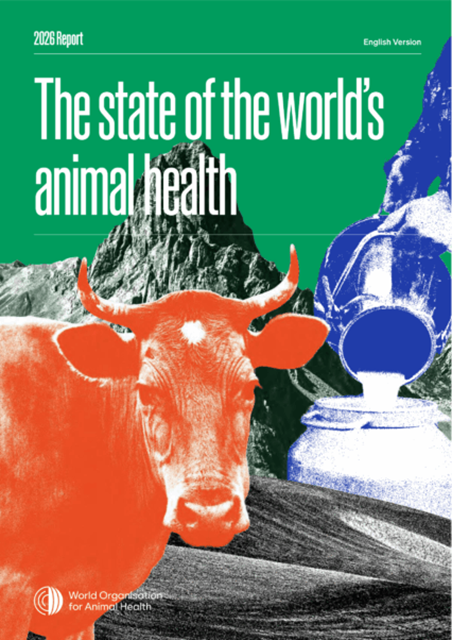
As most countries in the world increase their national defense spendings – a recent report by WOAH has highlighted the stark contrast in spending on animal health which is increasing risks from pandemics, food insecurity and transboundary animal diseases.
The world is dangerously underinvesting in animal health systems despite escalating biological threats, rising food-security pressures and mounting risks from transboundary diseases, according to the latest annual report released by the World Organisation for Animal Health (WOAH).
Published ahead of the organization’s 93rd General Session in Paris, the State of the World’s Animal Health report warns that cuts in international development assistance are weakening global preparedness at a time when outbreaks of avian influenza, African swine fever and foot-and-mouth disease are intensifying across multiple continents.
The report highlights a stark imbalance in global priorities: while worldwide defence spending surged to a record US$2.9 trillion, funding allocated to animal health systems remains critically inadequate despite their central role in protecting food systems, economies and public health.
Animal Diseases Continue Inflicting Massive Economic Losses
According to WOAH, animal diseases destroy more than 20% of global animal production every year, with the heaviest burden falling on low- and middle-income countries where livestock remains essential for:
- rural livelihoods
- food security
- trade
- income generation
- nutritional security.
The organization warned that weak veterinary infrastructure is undermining the ability of countries to:
- detect outbreaks early
- contain disease spread
- maintain animal welfare standards
- respond rapidly to emerging zoonotic threats.
Global Spending Imbalance Raises Concern
One of the report’s strongest messages concerns the widening disparity between military expenditure and global disease-prevention investment.
Global Spending Comparison
| Category | Estimated Spending |
|---|---|
| Global defence spending (2025) | US$2.9 trillion |
| Development assistance for health | US$39.1 billion |
| Share allocated to animal health | <2.5% |
| Estimated annual cost to upgrade global Veterinary Services | US$2.3 billion |
WOAH noted that the estimated US$2.3 billion required annually to bring Veterinary Services globally up to international standards represents:
- less than 0.05% of the estimated US$3.6 trillion in global economic losses caused by COVID-19 in 2020.
“Animal Health Systems Are Chronically Underfunded”
Dr Emmanuelle Soubeyran, Director General of WOAH, said the report demonstrates that animal health remains critically neglected within global preparedness planning.
“Animal health systems sit at the very centre of food security, economic stability, welfare and human health, and yet are chronically underfunded,” Soubeyran said.
She added that the COVID-19 pandemic exposed the urgent need for stronger preventive investment and more effective integration of the “One Health” framework linking human, animal and environmental health systems. “One Health will remain an aspiration until animal health is genuinely built into how we plan and invest — long before the next crisis arrives,” she said.
Major Disease Outbreaks Intensify Global Risks
The report documents significant escalation in transboundary animal disease activity between 2025 and 2026.
Major Global Animal Disease Events
| Disease | Key Developments |
|---|---|
| Highly Pathogenic Avian Influenza (HPAI) | >2,000 outbreaks across 64 countries |
| Poultry losses from HPAI | >140 million birds culled or lost |
| Foot-and-Mouth Disease (FMD) | Severe outbreaks in Southern Africa; re-emergence in Europe |
| African Swine Fever (ASF) | Continued international spread |
| New World Screwworm | Tens of thousands of cases in Central America |
WOAH warned that:
- avian influenza outbreaks continue disrupting global poultry production and trade
- African swine fever remains difficult to contain due to long-distance transmission events
- the New World screwworm’s northward spread poses a growing regional biosecurity concern.
Human Health Risks Increasing
The report reiterates that approximately:
- 75% of emerging infectious diseases affecting humans originate in animals.
This places Veterinary Services at the center of global pandemic preparedness.
However, WOAH data shows increasing pressure on veterinary infrastructure worldwide.
Veterinary Capacity Findings
| Indicator | Share of Countries Showing Decline |
|---|---|
| Veterinary capacity decline | 18% |
| Veterinary paraprofessional decline | 22% |
The findings were based on assessments conducted across 54 countries and territories through WOAH’s Performance of Veterinary Services (PVS) pathway.
Veterinary Workforce and Surveillance Systems Under Pressure
Dr Paolo Tizzani said weakening surveillance and emergency response systems are becoming increasingly visible, particularly in regions facing the highest disease burdens.
“When Veterinary Services are under-resourced, diseases are detected late, spread more widely, and cost more to contain,” Tizzani said.
He emphasized that strengthening Veterinary Services represents one of the most cost-effective mechanisms available for:
- outbreak prevention
- preparedness improvement
- cross-border disease management.
Countries Require Major Budget Increases
WOAH estimates that countries assessed under its PVS framework would require an average:
- 52% increase in annual budgets
to achieve effective Veterinary Services capacity.
The organization stated that recent PVS assessments have nevertheless produced some positive outcomes:
- more than half of participating countries reported increased financial resources following review exercises.
Animal Health Framed as National Security Issue
The report increasingly positions animal health systems not merely as agricultural infrastructure, but as a critical component of:
- national security
- economic resilience
- global biosecurity
- food-system stability.
Dr Susana Pombo said disease threats ignore national borders and therefore require collective global investment.
“Animal health systems are a global public good, and the world is not funding them like one,” Pombo said.
“A gap in animal health surveillance in one country is a vulnerability for every country.”
Key Economic and Disease Figures From WOAH Report
Global Animal Health Snapshot
| Indicator | Figure |
|---|---|
| Global defence spending | US$2.9 trillion |
| Development assistance for health | US$39.1 billion |
| Share for animal health | <2.5% |
| Annual global animal production losses from disease | >20% |
| Estimated annual Veterinary Services investment needed | US$2.3 billion |
| COVID-19 global economic losses (2020) | US$3.6 trillion |
| HPAI outbreaks reported | >2,000 |
| Countries affected by HPAI | 64 |
| Poultry lost from HPAI | >140 million birds |
| Emerging human diseases originating from animals | 75% |

