


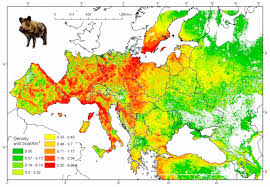
African swine fever (ASF) continued its advance in Europe in 2026. According to the latest figures from the Friedrich Loeffler Institute (FLI), a total of 4,698 outbreaks were registered this year. Eastern Europe remains a particular focus.
PARMA, ITALY & RIEMS, GERMANY — In a newly consolidated multi-national epidemiological briefing, the European Food Safety Authority (EFSA) and the Friedrich Loeffler Institute (FLI) have confirmed that the biological containment landscape across Europe remains incredibly tense.
The joint analysis outlines a sharp escalation in African Swine Fever (ASF) vectors, showing that outbreaks jumped by 76% in domestic swine and 44% in wild boar populations over the latest annual tracking cycle.
The data reveals that the disease has officially broken through long-standing geographic containment perimeters, notably re-emerging in Spain after more than three decades of disease-free status. With 14 European Union Member States actively managing active contagion zones, the continent’s multi-billion-euro pork export engine faces unprecedented biosecurity pressure.
Epidemiology: The Double-Vector Surge
The joint scientific report details an aggressive expansion across both industrial farm holdings and wildlife corridors, erasing previous multi-year drops in overall case numbers.
Commercial Farm Grid
EU Member States recorded 585 distinct ASF outbreaks in domestic herds. According to EFSA scientists, this inflation was heavily driven by Romania, which accounted for a staggering 81% of all farm-level incursions. Additional volume accelerations were logged across Croatia, Estonia, and Latvia.
Critically, 91% of these domestic cases occurred in smallholder facilities or commercial units housing fewer than 100 pigs. The data maps a clear, extended summer peak, forcing agricultural ministries to reassess local biosecurity compliance among non-integrated farmers.
Sylvatic Wildlife Vector
Outbreaks among wild boars reached 11,036 cases—the highest level recorded in the European Union since 2021. Poland serves as the primary regional hotspot, capturing 31% of all wild boar detections. Unlike domestic farms, wild boar populations displayed a severe, prolonged winter peak across Hungary, Italy, Slovakia, Poland, and Romania, showcasing the virus’s long-term environmental stability in cold woodland corridors.
High-Distance Translocation & The Spanish Breach
The most alarming finding published by the FLI and EFSA centers on the breakdown of regional tracking models. Instead of the virus spreading gradually through neighboring regions, Europe is experiencing sudden, erratic long-distance translocation events driven by human activity, transport networks, or illegal feed contamination.
Iberian Peninsula Shock
In late 2025, Spanish authorities confirmed the first ASF outbreak in wild boars in Catalonia since 1995. Spain is the European Union’s leading pork producer and exporter, making this an immediate threat to the country’s agricultural sector.
Advanced genomic sequencing conducted by the FLI failed to find a close match with any known, actively circulating European strains, and no clear source of introduction has been identified. The nearest known outbreak was located in northern Italy, approximately 700 kilometers away.
German Western Migration
A parallel long-distance translocation event was detected in western Germany. Wild boar carcasses tested positive in North Rhine-Westphalia (NRW), a major hub for German pig farming, positioned nearly 200 kilometers away from the country’s established eastern containment lines.
Surveillance Shift: Transitioning to Passive Testing
To manage this complex epidemiological profile, the EU carried out record levels of testing, analyzing 518,000 domestic pig samples and 618,000 wild boar samples.
EFSA – European Union
Based on this dataset, EFSA and FLI scientists are directing member states to shift away from broad, active screening and focus their resources heavily on enhanced passive surveillance.
Scientific Recommendation: Systematic sampling of found carcasses and animals showing unexplained mortality remains the single most effective tool for early intervention. This approach allows veterinary authorities to establish containment rings before the virus can spread to large-scale commercial operations.

