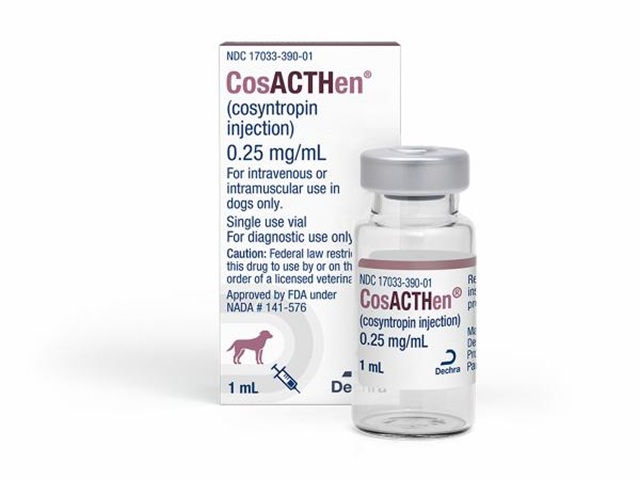
Dechra is proud to announce the U.S. Food and Drug Administration’s (FDA) approval of CosACTHen® (cosyntropin injection), the first and only cosyntropin specifically indicated for use in canine patients. This milestone reinforces Dechra’s ongoing commitment to advancing veterinary endocrinology and providing veterinarians with innovative, high-quality solutions for endocrine health.
CosACTHen® is indicated for the evaluation of adrenal function in dogs and represents a significant advancement in the diagnosis, confirmation, and monitoring of Cushing’s Disease and Addison’s Disease. As an integral tool in ACTH stimulation testing, CosACTHen® provides veterinarians with confidence in assessing adrenocortical function and monitoring patients undergoing treatment with Vetoryl® Capsules (trilostane).
“We know how challenging endocrine diagnoses can be. With CosACTHen®, veterinarians can now have the confidence of performing ACTH stimulation tests with the first and only FDA-approved cosyntropin designed specifically for canine patients,” said Dr. Jill Stohs, Sr. Director Veterinary Professional Services and Medical Affairs, Dechra. “That confidence doesn’t stop at the clinic, it carries through to pet parents, who can feel reassured knowing their dog’s diagnosis and monitoring are supported by the latest advancement in endocrine care.”
Key Highlights of CosACTHen®:
-
Indication & Use: Indicated for the evaluation of adrenal function in dogs. Available as a 0.25 mg/ml solution in 1 ml single-use vials
-
ACTH Stimulation Testing: CosACTHen® is integral to ACTH stimulation tests, the primary method for confirming Addison’s Disease and a valuable tool for diagnosing and monitoring Cushing’s Disease
-
Dosing & Administration: Administered via intravenous or intramuscular injection, with baseline and post-stimulation cortisol levels measured to assess adrenal function
-
Storage: Ready when needed for your urgent cases—CosACTHen® should be stored in the refrigerator
Reinforcing Dechra’s Commitment to Veterinary Specialty Care
With over 1,200 case consults specific to Cushing’s during the last full twelve months of available data, CosACTHen® underscores Dechra’s ongoing commitment and expertise in endocrinology.
Supported by Dechra’s Veterinary Technical Services team, veterinarians can rely on guidance, consultation and other resources to ensure best practices in endocrine diagnostics and patient care.
“The commitment veterinary healthcare teams make to their patients drives Dechra’s commitment to serving veterinarians. With CosACTHen®, clinics now have the ability to utilize the latest advancement in diagnostic and monitoring protocols for Cushing’s and Addison’s cases,” added Dr. Stohs.
CosACTHen® Important Safety Information
As with all drugs, side effects may occur. For intravenous or intramuscular use in dogs only. Do not use Cosacthen in dogs that have previously had a hypersensitivity reaction to cosyntropin. The following adverse events were reported voluntarily during postapproval use of Cosacthen in dogs in foreign markets: lethargy, anxiety, muscle tremor/weakness, abdominal pain, anorexia, diarrhea, injection site pain/bruising, lameness, and hypersensitivity reactions. The safe use of Cosacthen has not been evaluated in breeding, pregnant, or lactating dogs. Not for use in humans. People with known hypersensitivity to cosyntropin or ACTH should avoid contact with the product. Pregnant and breastfeeding women should take care to avoid accidental self-injection. In case of accidental self-injection, seek medical advice immediately. If skin contact occurs, wash affected area with soap and water. Refer to the prescribing information for complete details or visit www.dechra‐us.com.
Vetoryl® Important Safety Information
As with all drugs, side effects may occur. In field studies and post‐approval experience, the most common side effects reported were: anorexia, lethargy/depression, vomiting, diarrhea, elevated liver enzymes, elevated potassium with or without decreased sodium, elevated BUN, decreased Na/K ratio, hypoadrenocorticism, weakness, elevated creatinine, shaking, and renal insufficiency. In some cases, death has been reported as an outcome of these adverse events. VETORYL Capsules are not for use in dogs with primary hepatic or renal disease, or in pregnant dogs. Refer to the prescribing information for complete details or visit www.dechra‐us.com.
About Dechra
Dechra is a global specialist in veterinary pharmaceuticals and related products, dedicated to supporting veterinarians, pet owners, and the animals they care for. For more information, visit www.dechra-us.com