


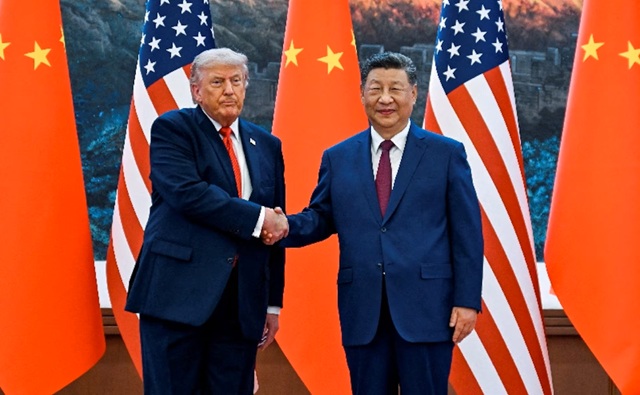
WASHINGTON, D.C. / BEIJING — Following a high-stakes, two-day bilateral summit in Beijing between U.S. President Donald Trump and Chinese President Xi Jinping, the White House has released the official administrative fact sheet detailing a major economic reset in agricultural trade.
Under the newly forged consensus, Beijing has pledged to purchase at least $17 billion worth of U.S. agricultural products annually through 2028. Crucially for the livestock sector, the agreement includes the immediate, sweeping restoration of market access for American beef and the lifting of highly restrictive bans on U.S. poultry imports.
The multi-year demand floor will be prorated for the remainder of 2026 and run at full value through 2027 and 2028. Federal trade officials emphasize that this $17 billion allocation is completely independent of and in addition to China’s October 2025 structural commitment to buy 25 million metric tons of U.S. soybeans annually.
Beef Market Breakthrough: CIFER Re-Registrations
The announcement brings immediate structural relief to U.S. meat packers, effectively reversing a severe market contraction. After Chinese authorities allowed critical plant licenses to expire, U.S. beef exports to China plummeted from a peak of $1.95 billion in 2022 to less than $500 million, slowing to a near-total halt of just $11 million in the first quarter.
-
Mass Re-Listings: The U.S. Meat Export Federation (USMEF) confirmed that China’s General Administration of Customs (GACC) has granted a five-year registration extension to 425 overdue U.S. beef establishments within China’s Food Import Food Establishment (CIFER) system.
-
New Market Entrants: Additionally, 77 brand-new U.S. beef facilities—including processing hubs operated by industry giants Cargill and Tyson Foods—were officially integrated into the CIFER system with an effective validation date of May 15, 2026.
-
Regulatory Outlook: Chinese commerce officials have committed to actively partnering with the USDA to methodically resolve and lift the remaining 38 facility suspensions currently outstanding due to historical administrative friction.
Poultry Logistics: Transition to Regionalized HPAI Bans
The summit successfully altered China’s historical approach to Highly Pathogenic Avian Influenza (HPAI) restrictions, which previously enforced blanket bans on entire trading countries during localized poultry disease events.
-
State-Level Regionalization: Moving forward, China will officially recognize USDA-certified, HPAI-free zones. Imports of American poultry products will immediately resume from U.S. states that are actively cleared of avian influenza restrictions by federal veterinarians
-
Reciprocal Concessions: In exchange for the poultry reopening, Washington has pledged to speed up the regulatory evaluation and recognition of China’s Shandong Province as an official avian-influenza-free zone. The U.S. will also review long-standing automatic detention measures currently levied against Chinese aquatic and dairy exports
CBOT Market Reaction & Macroeconomic Indicators
The sudden injection of multi-billion-dollar Chinese demand triggered aggressive short-covering and bullish momentum across Chicago Board of Trade (CBOT) agricultural futures during the post-summit trading windows:
Commodity Contract |
Session Gains |
Settlement Price Baseline |
CBOT Wheat |
⬆️ 3.2% |
$6.56-1/4 per bushel |
CBOT Corn |
⬆️ 3.1% |
$4.70 per bushel |
CBOT Soybeans |
⬆️ 2.0% |
$12.01 per bushel |
Despite the aggressive market rally, commodity analysts and global logistics providers urge calculated optimism. U.S. agricultural exports to China had dropped to $8.4 billion—a steep 66% decline from their 2022 peak—as Chinese buyers actively diversified their supply lines toward South American producers like Brazil and Argentina.
Institutionalizing the Reset: The New Boards of Trade
To prevent the agreement from collapsing under future geopolitical strain, President Trump and President Xi chartered two new government-to-government regulatory bodies characterized as the “cornerstone” of the framework:
The U.S.-China Board of Trade
A dedicated administrative body tasked with managing the day-to-day bilateral movement of “non-sensitive goods.” This board will serve as the primary negotiating table for executing reciprocal tariff reductions on equivalent scales and dismantling persistent non-tariff technical barriers affecting agricultural shipments.
The U.S.-China Board of Investment
A formal inter-governmental forum established to oversee broader corporate investment issues, supply chain vulnerabilities, and secondary trade friction points. As part of this broader economic package, China agreed to address U.S. supply chain shortages by loosening restrictions on rare earth elements (neodymium, yttrium, scandium, and indium) and approved an immediate commercial order for 200 American-made Boeing commercial aircraft.
AHI Opinion: While the re-listing of meat facilities provides an immediate commercial runway for cold-chain logistics providers, market analysts note that a full return to pre-trade-war export levels (exceeding $30 billion annually) hinges on whether private Chinese agribusinesses and crushers receive formal relief from the remaining 10% retaliatory levies still active from previous trade disputes.