


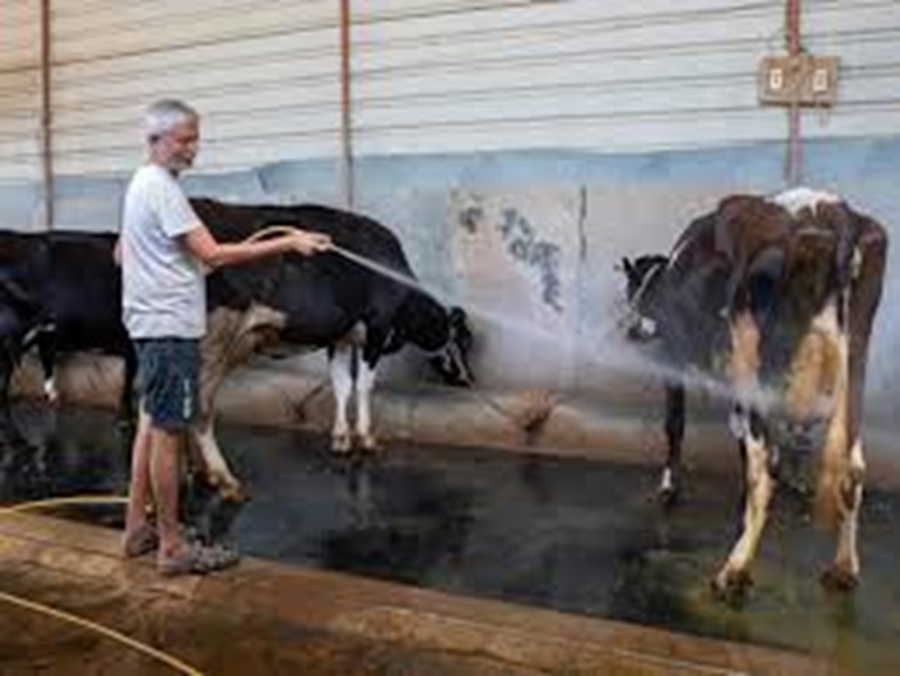
An intense, widespread heatwave across India in May 2026 is taking itts toll on dairy cows and buffaloes and is placing severe operational and physiological stress on the country’s dairy sector. With temperatures soaring up to 45°C in several regions, both milk procurement and milk production have registered sharp drops, forcing major dairy cooperatives to restructure their supply chains and hike farmer procurement prices to stabilize the market.
If the forecasts of a strong El-nino effect this year on India’s so very import monsoon play out, the strain on India’s Dairy sector may well stretch into flush season.
Ground-Level Impact on Milk Production
Extreme summer heat has triggered a sharp decline in animal yields across India’s primary milk-producing belts, including Uttar Pradesh, Maharashtra, Punjab, and Gujarat.
-
25% Production Drop: Industry reports and agricultural experts note that the intensity of the May heat has caused cow and buffalo milk yields to plummet by up to 25% in severely hit areas.
-
Physiological Heat Stress: Extreme temperatures drastically reduce the feed intake of dairy cattle, leading to metabolic exhaustion. Farmers report that even high-yielding crossbred cows (like Holstein Friesians) are dropping at least 4 to 5 liters of milk per animal per day.
-
Fodder Shortages: The prolonged dry spell has decimated green fodder availability, driving up the costs of animal feed and forcing farmers to rely on expensive, low-quality dry fodder alternatives, which further degrades milk yields.
-
Reproductive & Quality Disruptions: The heat wave has quieted the reproductive cycles of bovines, leading to higher insemination failure rates and long-term lactation losses. Additionally, while total volume is down, the fat-to-solid-not-fat (SNF) ratios are fluctuating wildly due to animal dehydration.
Bottlenecks in Dairy Procurement & Logistics
The crisis extends from individual farm gates directly into the industrial cold chain, where cooperatives are fighting a race against time to prevent massive spoilage.
-
Massive Collection Dips: In regional collection hubs, procurement officers are reporting catastrophic drop-offs. For example, route collectors for major regional cooperatives (such as Banas Dairy in northern India and Gokul Dairy in Maharashtra) have noted that daily route collections have plummeted—in some cases dropping from standard peaks of 35,000 liters down to 20,000 liters.
-
The 45°C Cold Chain Battle: Maintaining milk safety at 45°C is straining rural cooling infrastructure. To protect the dwindling volume collected, procurement teams are actively covering milk cans with wet jute bags, redesigning transport routes to cut transit time, and accelerating plant unloading protocols to under seven minutes to minimize ambient heat exposure and bacterial growth.
Corporate Reactions & Price Hikes
To counter the dip in procurement volume and compensate farmers for skyrocketing input and cattle-feed costs, prominent dairy giants have announced sudden financial interventions:
-
Amul Dairy (May 20, 2026): Amul officially announced an aggressive hike of ₹10 per kg of fat in milk procurement prices for its cooperative members, effective June 1, 2026. This raises the rate for buffalo milk with 6% fat content to ₹54.05 per liter, directly aiming to incentivize farmers to keep pouring milk into the cooperative network.
-
Gokul Dairy (Mid-May 2026): Confronted with a daily collection deficit of 50,000 to 60,000 liters attributed strictly to the heatwave and fodder scarcity, Gokul Dairy implemented a ₹2 per liter increase in the selling price of cow milk across Maharashtra (Mumbai, Pune, Kolhapur) to offset operational and transportation losses.