


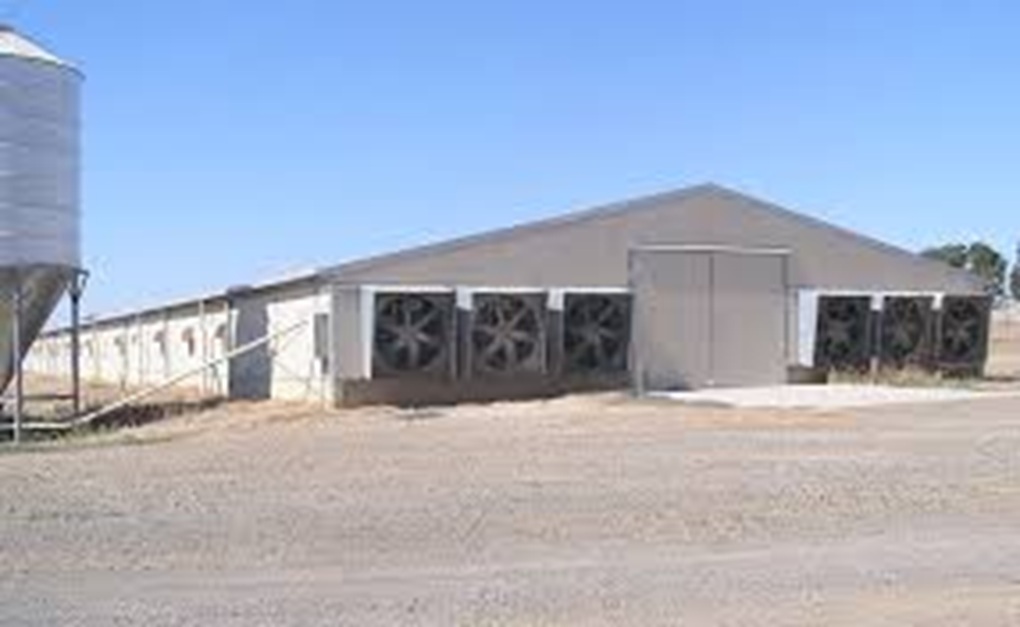
Environmental control (EC) farms for broilers use automated systems and insulated housing to strictly regulate temperature, humidity, ventilation, and lighting. This optimized, biosecure environment maximizes bird comfort and growth rates, resulting in healthier flocks, reduced mortality, and significantly higher year-round profitability. However, in absence of power and back-up power, the same EC farm may end up suffocating broiler birds and precisely this happned at an EC Farm in Orissa, India this week.
MALKANGIRI, ODISHA — A catastrophic infrastructure failure mixed with a critical fuel shortage has devastated an Environment-Controlled (EC) poultry operation in Mundaguda, on the outskirts of Malkangiri town in Orissa, INDIA.
Over 5,300 broiler chickens perished within a tight three-hour window after a localized electrical transformer failure completely cut power supply to the farm’s automated climate systems. The state-of-the-art facility, constructed by local entrepreneur Manoj Padhi and his daughter (a B.Tech engineering graduate) under a state employment scheme, was transformed into an airtight “heat chamber” during an intense pre-monsoon heatwave. Broilers suffocating to death resulted in an immediate 12.5-tonne loss of commercial broiler meat, wiping out an estimated ₹15 Lakhs (USD 17,000) from 1 shed.
Infrastructure Failure
Environment-Controlled (EC) poultry housing is designed to shield fast-growing broiler breeds from India’s harsh summer climates. These closed sheds rely entirely on continuous electricity to drive tunnel ventilation fans, evaporative cooling pads, and automated misting systems.
When the dedicated electrical transformer sustained a technical failure, the facility’s baseline ventilation lines stopped instantly. While the farm integrated a Diesel Generator (DG) set capable of backing up the facility’s heavy cooling loads—which burn roughly 7 liters of diesel per hour—the backup line was rendered completely useless by a severe, district-wide fuel crisis.
Fuel Deadlock: Regulatory Restrictions Block Emergency Sourcing
The tragedy highlights a critical flaw in emergency agribusiness operations. Padhi had spent three days attempting to secure emergency fuel reserves amid acute, long-running shortages of petrol and diesel across Malkangiri district.
Local filling stations flatly refused to dispense diesel into external barrels, drums, or portable containers, citing strict regional rationing directives. Even as a visible, high-value agricultural emergency unfolded, the farm operators were legally blocked from purchasing the mere 30 liters of diesel required to run the ventilation grid through the heatwave’s peak.
Without mechanical airflow, the metabolism of thousands of tightly packed birds caused internal shed temperatures to surge well past the outdoor ambient reading of 41°C.
Why Broilers Experience Rapid Biological Collapse Under Heat Stress
Poultry physiology leaves modern commercial broilers uniquely vulnerable to sudden drops in ventilation:
-
The Inability to Sweat: Chickens lack sweat glands. Their sole method of heat dissipation is evaporative cooling via panting—rapidly breathing to force warm moisture out of their respiratory tracts
-
The High-Mass Trap: Modern broilers are bred to maximize muscle mass rapidly. This accelerated growth rate generates immense internal metabolic heat
-
The Humidity Ceiling: When a closed shed loses its exhaust fans, the humidity from the birds’ breath traps heat inside. Once the air saturation peaks, panting loses its cooling efficiency. The birds’ internal core temperatures quickly shoot past the lethal threshold of 42.5°C, triggering rapid hyperthermia, acute circulatory collapse, and mass suffocation
Malkangiri Poultry Disaster
Parameter Vector |
Real-World Operational Metric |
Systemic Root Cause |
Financial & Economic Impact |
Total Mortality |
5,300 Broiler Chickens lost in a single afternoon |
Catastrophic structural transformer breakdown paired with a total grid blackout. |
₹15 Lakhs ($17,000 USD) in direct equity wiped out. |
Broiler Meat Loss Volume |
12.5 Tonnes of high-value broiler meat protein |
Total failure of tunnel ventilation systems during a 41°C heatwave. |
Massive waste management overheads; dead stock buried immediately to prevent disease. |
Survival Window |
Less than 3 hours from initial power disruption |
Closed EC shed architecture acted as an airtight heat trap without exhaust lines. |
Total destruction of an entire batch just days away from market slaughter readiness. |
Emergency Blockage |
0 Liters of diesel cleared for container transit |
Filling stations enforced strict rationing laws barring fuel sales in barrels/barrels. |
Highlights a critical regulatory gap in agricultural safety nets during fuel crises. |

