


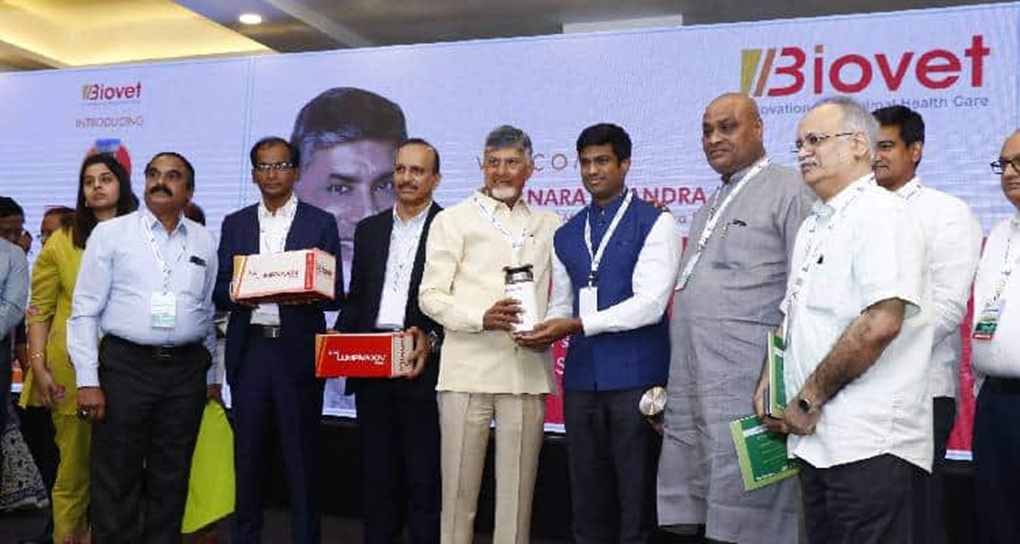
NEW DELHI, INDIA — The Central Drugs Standard Control Organisation (CDSCO) has implemented an intensive pharmacovigilance and structural distribution monitoring framework for the commercial deployment of Biolumpivaxin.
Developed by Biovet Pvt Ltd (the dedicated animal health arm of Bharat Biotech) in close collaboration with the Indian Council of Agricultural Research (ICAR), Biolumpivaxin stands as the world’s first-ever Differentiating Infected from Vaccinated Animals (DIVA) marker vaccine authorized for Lumpy Skin Disease (LSD) in bovines.
Following its commercial introduction at the Livestock Prosperity Conclave, the vaccine is being scaled across major dairy states to build a secure barrier against a disease that has historically cost the rural economy over ₹18,337 Crores and claimed roughly 200,000 cattle.
Technological Frontier: DIVA Marker Immunology
Traditional LSD vaccines—primarily heterologous goatpox strains or global Neethling strains—suffer from a major clinical limitation: they lack biological markers. When a cow tests positive for LSD antibodies, epidemiologists cannot determine whether the animal was successfully vaccinated or is actively carrying the wild-type virus. This diagnostic blind spot halts international dairy trade and complicates disease eradication campaigns.
Biolumpivaxin solves this bottleneck through DIVA (Differentiating Infected from Vaccinated Animals) Technology.
The Molecular Mechanism
Using the specialized indigenous LSD virus/Ranchi/2019 strain isolated by the ICAR-National Research Centre on Equines (ICAR-NRCE) in Hisar, scientists engineered a live-attenuated marker vaccine.
The vaccine stimulates a robust immune response while lacking specific non-essential wild-type antigenic markers. During post-vaccination seromonitoring, standard diagnostic kits read this difference instantly, allowing veterinary authorities to clear healthy, vaccinated livestock for inter-state transit while isolating naturally infected animals.
Clinical Profile & Manufacturing Scales
CDSCO’s monitoring parameters are tracking the vaccine’s real-world safety metrics across high-density milking operations. Pre-clinical and field trials conducted at the Indian Veterinary Research Institute (IVRI) confirmed excellent safety performance:
-
Zero Reversion to Virulence: Unlike the Neethling strain—which can trigger temporary milk drops, local site inflammation, and fever in up to 15% of herds—Biolumpivaxin exhibits no localized side effects. The vaccine virus does not shed into milk, semen, or bodily excretions
-
Broad-Group Safety: Testing across thousands of animals has proven the vaccine is completely safe for pregnant heifers, lactating dairy cows, breeding bulls, and calves over 3 months old
-
Single-Dose Annual Regimen: A single subcutaneous dose develops full protective immunity within 3 to 4 weeks, maintaining high antibody titers for a full calendar year
-
Massive Industrial Supply: Biovet’s primary automated production plant in Mallur, Karnataka, commands a manufacturing capacity of 500 million doses annually, ensuring a highly stable supply chain for state-sponsored vaccination programs
CDSCO Surveillance Directives
To ensure the rollout matches strict quality standards, the CDSCO’s veterinary biologicals division has instituted three core field directives:
-
Cold Chain Integrity Auditing (2°C to 8°C): Because Biolumpivaxin is distributed as a freeze-dried pellet requiring specialized stabilizing fluid, field inspectors are actively auditing rural distribution networks to prevent thermal degradation during peak summer conditions
-
Post-Marketing Seromonitoring Support: The CDSCO is collaborating with state animal husbandry departments to deploy specific companion diagnostic test kits. This infrastructure verifies that field teams can fully utilize the vaccine’s DIVA capabilities for regional disease mapping
-
Adverse Event Logging: Utilizing newly upgraded digital reporting channels, veterinarians are required to log any instances of Lack of Expected Efficacy (LOEE) or unexpected hypersensitivity reactions directly to the central registry
Biolumpivaxin vs. Legacy LSD Protocols
Parameter Vector |
Legacy Heterologous Vaccinations |
Biovet Biolumpivaxin Profile |
Strain Base |
Heterologous Goatpox (Uttarkashi Strain) / Imported Neethling Strains. |
Indigenous Live-Attenuated LSDV/Ranchi/2019 Strain (ICAR-NRCE). |
DIVA Capability |
None. Vaccinated and infected animals look identical on standard antibody assays. |
Full DIVA Marker Integration. Enables precise epidemiological surveillance and trade clearances. |
Yield Impact |
Up to 15% of animals show temporary milk drops, localized swelling, and low-grade fever. |
Zero localized side effects. Safe for pregnant, lactating, and breeding cattle with no yield loss. |
National Capacity |
Dependent on fractured, multi-manufacturer supply lines or imports. |
500 Million Doses/Year centralized out of Biovet’s Mallur facility. |
Immunity Window |
Variable protection windows requiring frequent booster evaluations. |
Single annual dose establishing a high safety buffer within 21–28 days. |

