


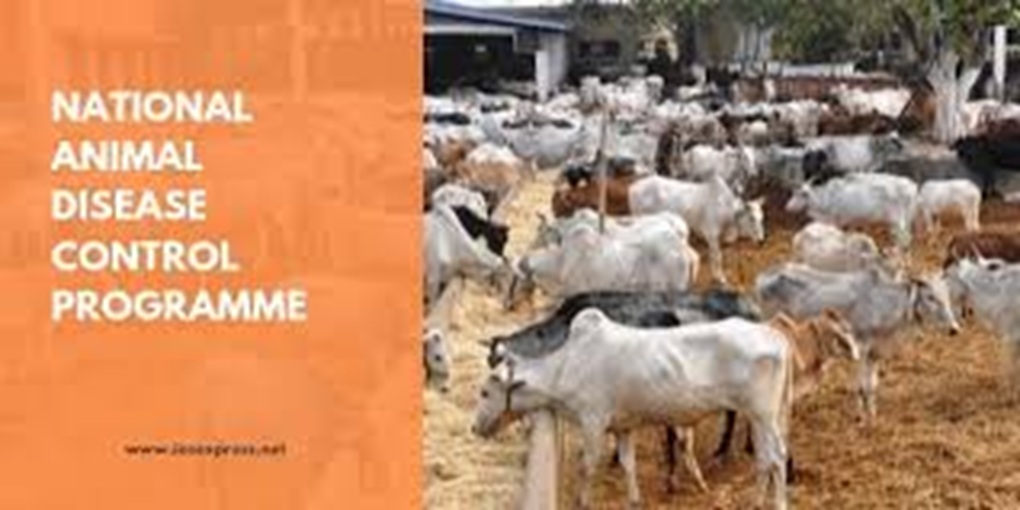
Operating under the structural framework of the Livestock Health and Disease Control Programme (LHDCP), state veterinary departments have deployed thousands of field teams to execute mass prophylactic vaccination operations.
This intense field activity follows the Union Cabinet’s strategic revision of the scheme, which locked in a budgetary outlay of ₹3,880 crore (USD 430 Mill.) to run through the 2024–25 and 2025–26 fiscal cycles. Managed by the Department of Animal Husbandry & Dairying (DAHD), the program operates as a critical macroeconomic shield designed to systematically eradicate high-consequence production diseases, reduce multi-crore agrarian losses, and insulate rural livelihoods from biosecurity shocks.
Three Core Pillars
The revised LHDCP consolidates India’s fragmented veterinary defense lines into a streamlined, three-pronged institutional blueprint:
-
The National Animal Disease Control Programme (NADCP): Focusing entirely on achieving a 100% vaccination threshold to control and subsequently eradicate Foot and Mouth Disease (FMD) by 2030, alongside strict heifer immunizations for Bovine Brucellosis
-
Livestock Health & Disease Control (LH&DC): Managing sub-components like the Critical Animal Disease Control Programme (CADCP) for small ruminant health, and funding the ground operations of Mobile Veterinary Units (MVUs) via a 60:40 center-state cost-sharing basis
-
The Pashu Aushadhi Initiative (New Component): Supported by a dedicated ₹75 crore sub-allocation, this new initiative introduces low-cost, high-quality generic and ethno-veterinary medicines into rural distribution loops via PM-Kisan Samriddhi Kendras and local cooperative networks
Breaking the Transmission Chain
In cattle-dense states including Uttar Pradesh, Madhya Pradesh, Rajasthan, and Gujarat, veterinary teams are executing synchronized containment measures.
The FMD Counter-Offensive – Field operations are enforcing strict biannual injections for all susceptible cattle, buffaloes, sheep, and goats. According to internal DAHD progress trackers, India’s mass vaccination push has successfully administered over 132.49 crore cumulative FMD vaccine doses.
This sustained herd immunity wall has caused a dramatic epidemiological crash: nationwide FMD outbreaks have plumetted from 132 recorded incidents in 2019 down to just 32 in recent cycles, with data confirming that the dangerous Asia 1 viral strain has seen zero active outbreaks across the subcontinent
The Brucellosis Calf-Window Strategy:
To halt the spread of Brucellosis—a highly contagious zoonotic disease that causes widespread infectious abortions in cattle and severe, chronic undulant fever in human handlers—teams are enforcing a strict “once-in-a-lifetime” target window. Field veterinarians are exclusively isolating and vaccinating 4-to-8-month-old female bovine calves. Over 3.17 crore dairy calves have cleared this critical window, dropping active national Brucellosis clusters down to single digits.
To ensure total traceability, every single vaccinated animal is instantly ear-tagged with a unique 12-digit identification chip, uploading real-time health data directly into the Bharat Pashudhan/National Digital Livestock Mission (NDLM) portal.
Mobile Veterinary Units (MVUs) on the Move
To solve the historical challenge of rural access, the program has scaled up its Establishment and Strengthening of Veterinary Hospitals and Dispensaries (ESVHD-MVU) network.
A fleet of 4,019 customized Mobile Veterinary Units is currently operational across 29 states and Union Territories. Accessible via a unified 1962 emergency toll-free helpline, each mobile unit operates with a clinical crew comprising one licensed veterinary doctor, one para-veterinary technician, and an assistant. This doorstep model allows rapid field diagnostic testing, immediate localized ring-vaccination during suspected outbreaks, and fast deployment of the new Pashu Aushadhi generic pharmaceutical kits directly to smallholder farm gates.
Veterinary Vaccines
Because the LHDCP relies exclusively on centralized, highly regulated procurement tenders to supply its nationwide mass immunization drives, the program has cemented its status as the absolute primary demand driver for India’s animal vaccine manufacturing sector.
The strict multi-million-dose supply contracts have generated massive, predictable revenue pipelines for India’s top biological laboratories:
-
Indian Immunologicals Limited (IIL): Utilizing its massive mega-facilities in Hyderabad and Ooty to churn out high-potency quadrivalent and strain-specific FMD formulations
-
Brilliant Bio Pharma: Actively scaling up production lines to fulfill state-level tenders for highly stable Brucella abortus (S19 strain) vaccines
-
Biovet Private Limited: Maintaining peak capacity utilization to supply validated biological packages that meet the rigid purity, safety, and non-structural protein (NSP) DIVA assay criteria mandated by ICAR-NIFMD monitoring labs
LHDCP Field Performance
Operational Vector |
Technical Parameter |
Current Field Milestone |
Macro-Economic Objective |
FMD Eradication |
Biannual Mass Vaccination |
132.49 Crore Doses administered |
Complete eradication by 2030; opening premium global beef/dairy export markets. |
Brucellosis Control |
4–8 Month Female Calf Window |
3.17 Crore (31.7 Mill.) Calves immunized |
Eliminating zoonotic spillover to milk handlers; cutting reproductive losses. |
Healthcare Access |
1962 Toll-Free MVU Deployment |
4,019 MVUs fully active |
Eliminating transit stress for sick animals; leveling the rural care gap. |
Manufacturing |
Centralized Mega-Tenders |
Prime driver for IIL, Brilliant, and Biovet |
Insulation of domestic biotech sector via stable, long-term state purchasing. |

