



World’s largest milk producer by volume, India’s dairy industry is confronting one of its most challenging periods in recent years as rising milk prices, climate disruptions, fodder shortages, and weakening farm economics expose deeper structural weaknesses within the world’s largest milk-producing nation.
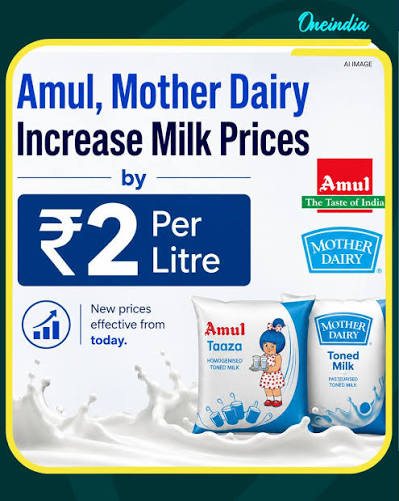
Over the past several months, retail milk prices across India have increased by approximately ₹2–₹5 per litre, reflecting mounting pressure throughout the dairy value chain. Industry leaders attribute the sharp increase primarily to:
- severe fodder shortages,
- escalating cattle feed prices,
- declining milk procurement,
- climate-related disruptions,
- and rising packaging costs linked to global geopolitical tensions.
The situation has intensified since late last year, with dairy companies increasingly warning of an acute supply-demand imbalance across the sector.
Milk Supply Crunch Intensifies Across India
India’s dairy industry has been experiencing sustained supply pressures since November last year, according to senior industry executives. Srideep Kesavan, CEO of Heritage Foods, recently stated that the sector is witnessing one of the tightest milk supply environments seen in the past five years. Farm-level raw milk prices have surged sharply amid falling procurement volumes and rising operational costs.
The crisis is being compounded by multiple interconnected factors:
- shrinking availability of green fodder,
- heat stress affecting cattle productivity,
- elevated cattle feed costs,
- and disruptions in packaging supply chains.
The ongoing conflict in West Asia has further impacted the industry through rising polymer shortages, significantly increasing packaging material costs for dairy processors and FMCG companies. As a result, dairy companies across India are facing simultaneous inflationary pressure on:
- raw milk procurement,
- cattle nutrition,
- transportation,
- energy,
- and packaging inputs.
Climate Change Emerging as Major Dairy Risk
Industry leaders increasingly believe climate change is no longer a temporary challenge but a long-term structural risk for India’s dairy economy. Historically, India benefited from a prolonged “flush season”—the period of higher milk production during cooler months. However, extended summers and recurring heatwaves have shortened this cycle considerably.
Extreme temperatures are now affecting:
- milk yield,
- cattle fertility,
- feed availability,
- and animal health.
The impact on milk procurement has become increasingly visible across major dairy-producing regions. More concerning for the industry is the sustained slowdown in India’s milk production growth rate.
Until 2022, India’s milk production was expanding at approximately 6%–7% annually. Over the last few years, however, growth has steadily declined to nearly 3.5%–3.8% year-on-year. Industry executives warn that while production growth is slowing materially, consumption demand remains robust at nearly 6% annually, creating a widening structural gap between supply and demand.
Rahul Kumar, COO of Parag Milk Foods, described the situation as a “systemic problem,” highlighting the growing mismatch between production capacity and rising consumer demand.
Nutritional Deficiencies and Poor Feed Quality Continue to Hurt Productivity
Despite being the world’s largest milk producer, India continues to struggle with issues related to milk quality, productivity, and nutritional efficiency. A major challenge lies in the fragmented and largely unorganized nature of the industry:
- only around 30%–35% of India’s milk production flows through the organized sector,
- while the majority remains within informal supply chains.
As a result, feed quality, cattle nutrition, and herd management standards remain inconsistent across large parts of the country. Most small-scale dairy farmers continue relying on traditional raw feed materials such as:
- mustard cake,
- groundnut cake,
- cottonseed,
- and locally sourced fodder.
However, scientifically formulated compound cattle feed—which provides balanced nutrition—is still used only on a limited scale due to higher costs. According to A.Y. Rajendra, CEO of the animal feed and aqua feed business at Godrej Agrovet, India’s compound cattle feed market remains significantly underdeveloped relative to national requirements.
Out of nearly 100 million tonnes of cattle feed and feed ingredients consumed annually, compound feed accounts for only around 15%. Industry experts argue that poor-quality feed creates multiple downstream problems:
- lower milk productivity,
- poor reproductive performance,
- higher toxin exposure,
- increased antibiotic contamination risks,
- and declining cattle fertility.
Unlike standardized compound feed, raw feed materials are often vulnerable to:
- adulteration,
- fungal infestation,
- inconsistent nutrient quality,
- and contamination.
These issues directly affect both milk quality and long-term livestock productivity.
India Faces Massive Feed Supply Gap
The dairy industry is also struggling with a severe structural shortage in cattle feed manufacturing capacity. According to industry estimates:
- India currently produces approximately 240 million metric tonnes of milk annually,
- which would require nearly 120 million metric tonnes of cattle feed every year.
However, organized cattle feed manufacturing capacity is estimated at only around 10 million metric tonnes annually. Even though major cooperatives and private dairy companies—including:
- Amul,
- Nandini,
- Heritage Foods,
- Hatsun,
- and Parag Milk Foods
have established their own cattle feed operations, overall national capacity remains far below demand requirements. The shortage has intensified further due to:
- rising raw material costs,
- climate-related fodder disruptions,
- and land availability constraints.
Green Fodder Crisis Adds Further Pressure
Green fodder shortages are becoming another major bottleneck for India’s dairy sector. Industry leaders point out that:
- land availability for fodder cultivation remains limited,
- agricultural land is increasingly prioritized for food crops,
- and fodder cultivation remains heavily dependent on monsoon conditions.
As fodder production is largely rain-fed, climate variability is directly affecting availability and pricing. In many regions, green fodder remains available for only six months annually, creating sustained pressure on dairy farmers during lean periods.
This has significantly increased dependence on purchased feed and nutritional supplements, thereby raising milk production costs further.
Disease Burden Weakening Livestock Economics
Livestock diseases continue to remain a major challenge for dairy farmers. Among the most significant concerns is:Lumpy Skin Disease (LSD), which has caused substantial cattle morbidity and mortality across multiple states over recent years.
The disease, spread primarily through mosquitoes and biting insects, tends to re-emerge cyclically and has severely impacted:
- milk productivity,
- cattle health,
- reproductive performance,
- and farmer confidence.
One of the biggest concerns is the limited penetration of livestock insurance among Indian dairy farmers. As cattle deaths increase, many farmers are experiencing severe financial losses with little protection against herd destruction.
Industry stakeholders warn that repeated disease outbreaks are contributing to growing farmer fatigue and declining interest in dairy farming as a sustainable livelihood.
Younger Farmers Losing Interest in Dairy Farming
Rising production costs and weakening profitability are increasingly discouraging younger generations from entering the dairy sector. Industry executives note that dairy farming today has become significantly more expensive due to:
- higher feed prices,
- labor shortages,
- climate disruptions,
- veterinary costs,
- and lower productivity growth.
As a result, many younger rural entrepreneurs are shifting toward alternative agricultural sectors such as:
- horticulture,
- floriculture,
- high-value crops,
- and other less labor-intensive businesses.
Even in traditionally strong dairy states such as Gujarat, industry observers are beginning to see signs of generational disengagement from conventional dairy farming. At the same time, however, some experts believe the industry is witnessing the early stages of dairy corporatization. Larger, professionally managed farms with:
- 50+ cattle,
- improved genetics,
- mechanized systems,
- and scientific herd management
are gradually emerging across parts of India.
This suggests that while smallholder dairy farming may face increasing pressure, organized commercial dairy operations could continue expanding.
Industry Calls for Long-Term Structural Reforms
Industry leaders increasingly agree that solving India’s dairy supply crisis will require long-term structural interventions rather than short-term price corrections. Key priorities identified by industry stakeholders include:
- improving cattle nutrition,
- expanding compound feed production,
- strengthening animal genetics,
- improving disease prevention,
- enhancing veterinary infrastructure,
- and building climate-resilient dairy systems.
Experts also emphasize the need for:
- productivity-driven dairy farming,
- scientific breeding programs,
- fodder innovation,
- and stronger livestock insurance coverage.
Outlook
India’s dairy industry remains one of the most strategically important components of the country’s rural economy and food security system.
However, the sector is now entering a more complex phase characterized by:
- rising input costs,
- climate stress,
- slowing productivity growth,
- structural feed shortages,
- and changing farmer economics.
While domestic demand for dairy products continues to rise strongly, the industry’s ability to sustainably expand supply will increasingly depend on:
- technology adoption,
- genetics,
- nutrition,
- climate resilience,
- and preventive livestock healthcare.
The coming years may ultimately determine whether India can successfully transition from a fragmented volume-driven dairy ecosystem into a modern, productivity-led nutrition industry capable of sustaining long-term growth.

