



Urban pet (dog and cat) consumption market in China has officially hit RMB 312.6 billion ($43.4 billion), marking a 4.1% year-on-year increase. Data compiled by the National Companion Animal (Pet) Standardization Technical Committee and the China Animal Agriculture Association confirms that the industry is undergoing a structural transition.
As overall pet population growth slows to under 2% (1.8% baseline), the era of volume-driven expansion is giving way to high-value, quality-driven consumption. This transformation is fueled by a generational pivot toward cats as the preferred urban companion and an uncompromising demand for specialized, premium nutrition.
1. Market Dynamics: Dogs vs. Cats
The aggregate urban dog and cat population has reached 126 million, an increase of 2.21 million animals over the previous cycle. However, a deep divergence has emerged between the canine and feline verticals. Driven by rapid urbanization, high-density apartment living, and the rise of single-person households (surging toward 200 million nationally), cats have solidified their dominance across China’s major metropolitan areas.
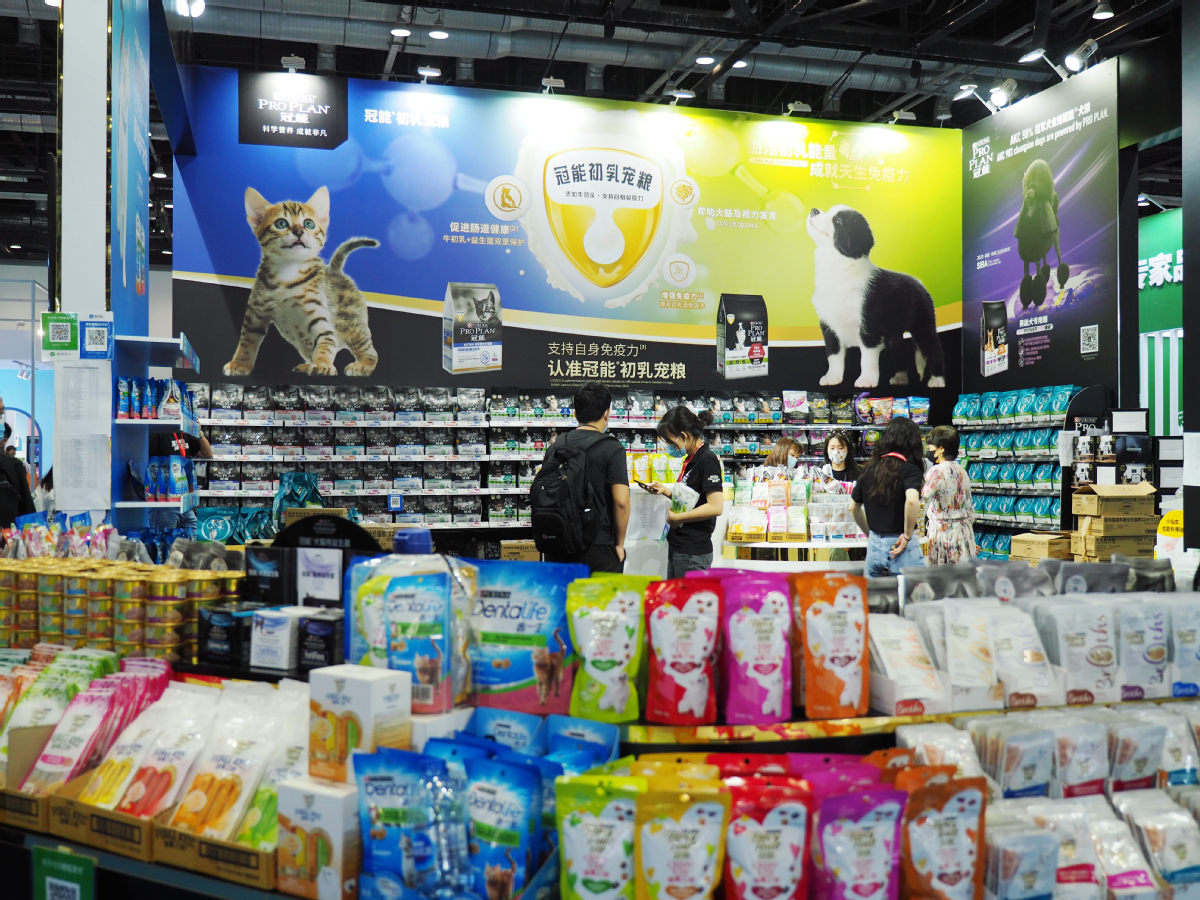
The Consumption Squeeze
-
The Cat Segment: Total expenditure reached RMB 152.0 billion, growing at a swift 5.2% rate. Average annual spending per individual cat surged 3.2% to reach RMB 2,085. This sector is projected to hit RMB 218.4 billion by 2028, permanently overtaking the dog sector in total value.
-
The Dog Segment: Valued at RMB 160.6 billion, growing at a more modest 3.2%. While the population growth of dogs is leveling off due to strict regional city-level large-dog bans and walking constraints, average annual spending per dog remains high at RMB 3,006 (+1.5%), sustained primarily by high veterinary and specialized care costs for aging animals.
2. Demographic Drivers & Geographic Corridors
The customer base has undergone a major demographic transition. The market is now young, urban, and increasingly tech-reliant:
-
Post-90s Generations: Represent 42.7% of active buyers, forming the current mainstream purchasing core.
-
Post-00s Generations: Account for 26.3% of the segment and represent the fastest-growing consumer block.
Geographically, the “Cat Economy” is highly concentrated within Tier-1 and emerging Tier-1 mega-cities. Beijing, Shanghai, and Chengdu stand as the core consumption epicenters.
In these densely populated environments, younger consumers view pets not merely as functional animals, but as central emotional anchors (“fur-kids”). This emotional projection directly drives a willingness to allocate a larger share of disposable income toward premium, humanized pet lifestyles.
3. The Nutritional Pivot: Formulations & Processing
Pet food remains the absolute cornerstone of industry spending, commanding a dominant 53.7% market share. The remaining expenditures are distributed across medical care (27.6%), pet supplies (12.2%), and specialized services (6.5%).
Urban Pet Industry Share Breakdown
==================================
[████████████████████████████] 53.7% Pet Food (Staples, Treats, Supplements)
[██████████████] 27.6% Medical Care & Veterinary Diets
[██████] 12.2% Pet Supplies & Smart Telemetry
[███] 6.5% Pet Grooming & Premium Services
Within the high-margin food category, consumer preferences have fundamentally shifted. Traditional extruded kibbles are losing ground to specialized premium alternatives, defined by two major manufacturing styles:
-
Baked Kibbles: Favored for their low-temperature processing, which preserves baseline nutrient profiles and eliminates the need for post-extrusion oil spraying, appealing directly to health-conscious cat owners.
-
Freeze-Dried Raw Formulations: Witnessing exponential demand. Domestic and imported manufacturers are scaling up freeze-dried capacity to capture high-margin treat and topper segments, capitalizing on the consumer belief that raw, moisture-depleted meats align with a feline’s ancestral biological requirements.
4. Radical Ingredient Transparency & Protein Sourcing
The modern Chinese pet parent exhibits highly sophisticated, critical reading habits regarding ingredient decks. Driven by strict safety standards from major warehouse clubs (such as Sam’s Club and Costco China requiring independent human-grade certifications), local owners are demanding absolute traceability.
Complete Rejection of Red Meat and Seafood
A major surprise in the 2026 data is a collective consumer retreat away from standard beef, pork, lamb, and marine fish proteins in feline diets:
-
Marine Risk: Heavy metals, plastic micro-particle contamination, and radiation anxieties have severely damaged consumer trust in broad seafood or salmon-based formulations.
-
Digestive/Allergen Risk: Red meats are increasingly scrutinized by urban owners as primary triggers for feline food sensitivities, inflammatory bowel disease (IBD), and unwanted weight gain in sedentary, indoor cats.
Rise of Poultry-Centric Formulation
Consequently, poultry-based proteins (Chicken, Duck, and Turkey) have emerged as the gold standard of urban pet nutrition. Chicken and duck are favored for their low allergen profiles, predictable digestibility, and cleaner supply-chain transparency.
5. Retail and Import Environment
The structural landscape for brands trying to navigate this shift has become intensely competitive.
Market Segment |
Retail Price Range |
Dominant Players & Structural Realities |
Ultra-Premium |
>RMB 60 per Kg(>$16.70 / kg) |
Dominated by premium imported brands. Highly insulated by high-income urban consumer loyalty, though facing pressure from localized manufacturing pipelines. |
Mid-Tier |
RMB 15 – 30 per Kg($4.20 – $8.30 / kg) |
Heavily led by digital-native domestic brands. Growing rapidly via direct-to-consumer (DTC) live-stream commerce platforms. |
Mass-Market |
<RMB 15 per Kg (<$4.20 / kg) |
Dominated by legacy domestic manufacturers utilizing high-volume traditional dry channels; experiencing margin compression. |

