



World’s Largest Soybean Producer Strengthens Global Dominance Amid Record Production and Robust Export Demand led by China
BRASÍLIA, Brazil — Brazil is set to reinforce its position as the world’s leading soybean producer and exporter after the country’s National Supply Company (Conab) increased its forecast for the 2025/26 soybean harvest to a record 180.25 million metric tonnes, slightly above the 180.13 million tonnes projected in May.
The revised estimate, released as part of Conab’s latest grain survey, reflects continued expansion in planted area, favorable growing conditions across key producing regions and strong technological adoption among Brazilian farmers. The forecast represents the largest soybean crop ever harvested by any country and further cements Brazil’s strategic importance in global agricultural trade.
Conab also maintained its soybean export forecast at 116.1 million tonnes, citing the record harvest and continued strength in export shipments despite changing global trade dynamics.
Record Crop Production Extends Brazil’s Leadership
Brazil has steadily expanded its soybean production over the past two decades through a combination of acreage growth, improved genetics, advanced crop management practices and investment in logistics infrastructure.
The latest forecast implies an increase of approximately 8.8 million tonnes compared with the previous season, according to Conab, reflecting both higher productivity and expanded cultivation. The agency noted that favorable weather conditions and strong technology adoption contributed significantly to the improved outlook.
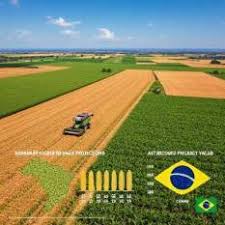
Brazil Soybean Production Trend
Season |
Production (Million Tonnes) |
|---|---|
2022/23 |
~154 |
2023/24 |
~169 |
2024/25 |
~171.4 |
2025/26 (Current Forecast) |
180.25 |
The latest figure exceeds earlier USDA and market expectations and positions Brazil significantly ahead of the United States as the world’s largest soybean producer.
Exports Remain at Historic Levels
Conab maintained its soybean export estimate at 116.1 million tonnes, which would represent one of the largest export programs ever recorded globally. The export outlook is supported by:
-
Record production volumes
-
Competitive pricing
-
Strong Chinese demand
-
Expanding market access
-
Improved port logistics
The agency also projects approximately 61.58 million tonnes of soybeans will be directed toward domestic processing industries, supporting growth in soybean meal and soybean oil production. Carryover stocks are expected to reach approximately 9.2 million tonnes, providing additional supply security.
Brazil Soybean Supply Balance 2025/26
Category |
Volume (Million Tonnes) |
Production |
180.25 |
Exports |
116.10 |
Domestic Processing |
61.58 |
Ending Stocks |
~9.20 |
China Continues to Anchor Demand
China remains the single most important destination for Brazilian soybeans. Industry analysts note that Brazil’s combination of abundant supply, competitive pricing and established logistics networks continues to make Brazilian soybeans highly attractive to Chinese crushers and feed manufacturers.
Recent trade analyses suggest Brazil could supply as much as 85 million tonnes of soybeans to China during the current marketing cycle, supported by strong demand from the country’s livestock and aquaculture sectors. Soybean meal remains a critical ingredient for:
-
Poultry feed
-
Swine feed
-
Aquaculture diets
-
Dairy nutrition programs
-
Beef cattle supplementation
As a result, developments in Brazil’s soybean sector have direct implications for global animal protein production.
Impact on Global Feed Markets
The record Brazilian harvest is expected to have significant consequences for international feed ingredient markets. Soybean meal is the world’s most important protein source for livestock feed, and the larger crop is expected to:
-
Improve global soybean meal availability
-
Moderate feed cost inflation
-
Support poultry and swine profitability
-
Enhance export competitiveness for livestock producers
Feed manufacturers across Latin America, Asia and the Middle East are expected to benefit from improved availability of soybean-derived feed ingredients.
Brazil’s Expanding Agricultural Power
The soybean forecast forms part of a broader record outlook for Brazilian agriculture. Conab’s latest survey projects Brazil’s total grain production at 358.6 million tonnes, another historic high. Soybeans remain the largest contributor to overall crop output, followed by corn, which is also expected to deliver a strong harvest.
Brazil Grain Production Forecast 2025/26
Commodity |
Production (Million Tonnes) |
Soybeans |
180.25 |
Corn |
~138 |
Other Grains |
~40 |
Total Grain Production |
358.6 |
Implications for Global Trade
The record soybean crop arrives at a time when global agricultural trade flows continue to evolve amid geopolitical shifts, changing demand patterns and competition among major exporters.
Brazil now accounts for a substantial share of global soybean exports and continues to gain market share in key importing regions. Agricultural economists note that the country’s structural advantages include:
-
Vast arable land resources
-
Favorable climate conditions
-
Efficient double-cropping systems
-
Competitive production costs
-
Expanding transportation infrastructure

