


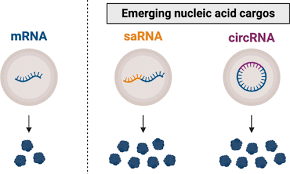
One of the biggest technology shifts in animal health since monoclonal antibodies got approved and commercialised, currently underway is – RNA Vaccines and Therapeutics as they have the potential to shape future of veterinary biologicals and therapeutics in myriad ways. This report covers the past, present and future of RNA Technology and its applications in our Animal Health Industry. Savour the details.
European Medicines Agency’s (EMA) recent validation of Nobivac NXT HCPChFeLV is not just an isolated approval; it represents a profound, institutional regulatory shift. By approving a vaccine that explicitly utilizes self-amplifying RNA (saRNA) particle technology for its Feline Leukaemia (FeLV) component, regulators have officially cleared the path for RNA platforms to achieve mainstream commercialisation in global veterinary medicine.
RNA technology is rapidly transforming veterinary medicine. Long regarded as an experimental platform, RNA-based therapeutics have now entered commercial practice across multiple animal species, driven by advances in molecular biology, lipid nanoparticle delivery systems and scalable manufacturing.
The veterinary RNA landscape now spans:
-
Commercially approved RNA vaccines
-
Products under regulatory review
-
Late-stage clinical development
-
Early research programmes
Industry analysts estimate the global veterinary RNA therapeutics and vaccine market at US$120–180 million in 2026, with the potential to exceed US$2–3 billion by 2035, supported by applications in companion animals, livestock and aquaculture.
Understanding the Technologies
| Platform | Mechanism | Veterinary Status |
|---|---|---|
| mRNA | Encodes antigen directly | Commercial (aquaculture); pipeline in companion animals; previously Covid Vaccines |
| Self-amplifying RNA (saRNA) | Self-replicates inside cells, enabling lower doses | First EMA positive opinion (2026) |
| RNA Interference (RNAi) | Silences target genes | Commercial in aquaculture and parasite control research |
| Circular RNA (circRNA) | Stable RNA with prolonged protein expression | Preclinical |
ALREADY APPROVED & COMMERCIALISED
While the human medical world recognized mRNA via COVID-19 vaccines, the veterinary sector actually commercialized its first RNA platform years prior—primarily focused on production animals—before bridging the technology into companion animal clinics.
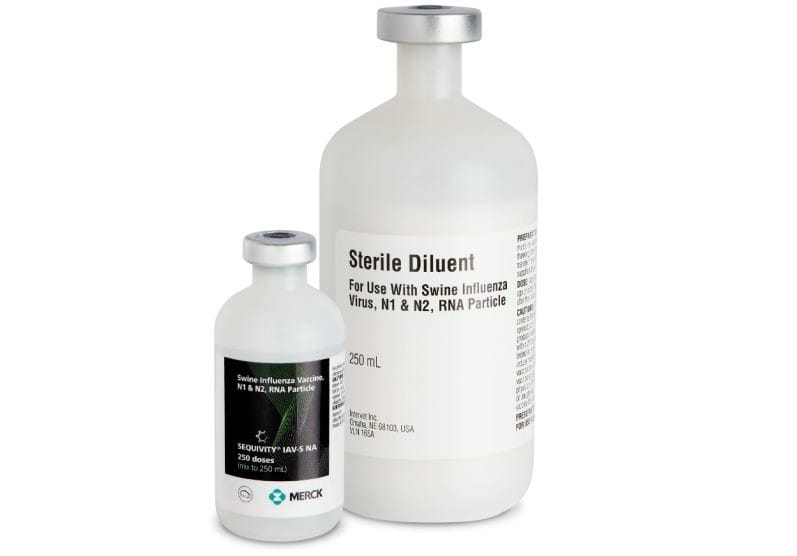
Swine Market: SEQUIVITY® (Merck Animal Health)
-
Approval & Status: Approved by the USDA in 2018. It is an established, highly commercialized platform in industrial pork production.
-
The Technology: Uses a specialized RNA particle technology. It is a prescription-based, customizable vaccine platform.
-
Mechanism: Rather than mass-manufacturing a static strain, veterinarians take a diagnostic field sample of a farm’s mutating virus (e.g., Influenza A in Swine, Porcine Circovirus, Rotavirus, or Sapovirus). The pathogen’s Gene of Interest (GOI) is sequenced electronically, synthesized into an RNA blueprint, and packaged into non-replicating RNA particles.
-
Why It’s a Game-Changer: Traditional vaccine development takes years. SEQUIVITY allows Merck to deliver a completely herd-specific, multivalent custom prescription vaccine to a farm in just 12 to 16 weeks without handling live pathogens.
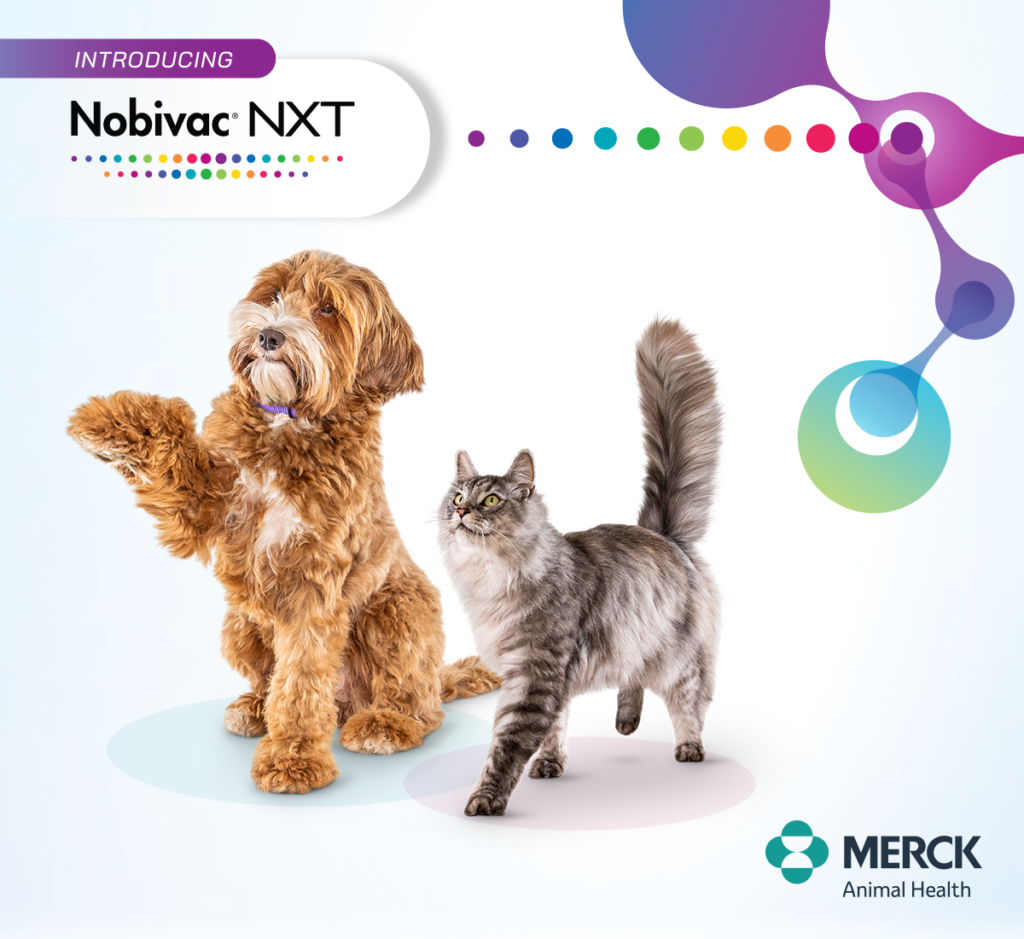
Companion Animal Market: Nobivac® NXT Line (Merck Animal Health)
Following the success of livestock applications, this platform was adapted for domestic pets, removing standard chemical adjuvants (additives that trigger immune responses but can cause localized pain or injection-site sarcomas).
-
Nobivac NXT Canine Flu H3N2 (USDA Approved 2024): The first companion animal RNA-particle vaccine approved in the U.S.. It delivers an ultra-low volume, 0.5-mL dose that halves the fluid volume of traditional shots, drastically reducing injection-site inflammation and pain in dogs.
-
Nobivac NXT Feline Suite (EMA Approved / Commercialized 2024–2026): Ranging from standalone FeLV vaccines to the newly recommended Nobivac NXT HCPChFeLV.
-
The saRNA Mechanism: Unlike standard mRNA, which is translated directly into a fixed amount of protein, self-amplifying RNA (saRNA) includes a code derived from an alphavirus (Venezuelan equine encephalitis virus). This instructs the somatic cells to replicate the code temporarily inside the cell. A tiny dose generates massive amounts of targeted viral proteins, triggering both humoral (antibody) and cellular (killer T-cell) immunity within just one week of administration.
-
Nobivac NXT Rabies (Commercialized in Canada): A 3-year duration of immunity (DOI) RNA-particle rabies vaccine currently utilized in Canadian veterinary clinics.
Aquaculture Market – Fish Vaccines
-
Clynav (Aquaculture)
Company: Elanco (through the former Bayer Animal Health portfolio)
Species: Atlantic salmon
Target: Pancreas disease caused by salmonid alphavirus
Technology: DNA vaccine (not RNA)
While not RNA-based, Clynav demonstrated the commercial feasibility of nucleic acid vaccines in veterinary medicine and paved the way for later RNA platforms.
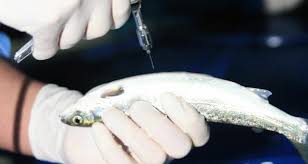
RNA-Based Fish Vaccines
Several RNA-based vaccines for aquaculture have reached commercial or limited commercial use in countries such as Norway and Chile, targeting diseases including infectious salmon anaemia and infectious pancreatic necrosis. Public disclosure varies because some products are marketed through integrated aquaculture companies rather than broad commercial channels.
UNDER APPROVAL & CLINICAL PIPELINES
The regulatory framework proven by the NXT and Sequivity tracks has cracked open pipelines for next-generation prophylactic vaccines and active therapeutics.
A. Livestock Biosecurity & Transboundary Diseases (Under Regulatory Review)
With traditional vaccines showing limitations against rapidly shifting livestock panzootics, several consortia are pushing RNA candidates through regulatory bodies (USDA, EMA, and APVMA):
-
African Swine Fever (ASF) mRNA Vaccines: Because ASF is a massive, multi-gene double-stranded DNA virus, live-attenuated attempts have frequently failed safety profiles. Multiple groups (including partnerships involving Zoetis and regional agricultural bodies) are trailing lipid-nanoparticle (LNP) encapsulated mRNA strains targeting specific structural proteins of ASF to allow safe, non-live field distribution.
-
Highly Pathogenic Avian Influenza (HPAI) platforms: Following the global spread of H5N1 (and its recent historic arrival on the Australian mainland), companies are building modular mRNA avian vaccines. This allows manufacturers to swap out genetic sequences in real-time to match mutating wild migratory bird clades.
Veterinary Oncology Therapeutics (Clinical Trial Phase)
The most highly anticipated crossover of RNA technology is shifting away from preventing disease to treating existing cancers in dogs and horses.
-
Autologous Tumor mRNA Vaccines (Canine Melanoma & Osteosarcoma): Currently moving through veterinary university clinical trial registries, these therapeutics operate as personalized immunotherapy. A biopsy is taken from a dog’s removed tumor, the unique tumor-associated antigens are sequenced, and a custom mRNA cocktail is synthesized. When injected back into the patient, it trains the dog’s own immune system to seek out and destroy microscopic metastatic cancer cells.
-
In-Tumor mRNA Therapeutics: Biotech startups are conducting field trials utilizing direct intratumoral injections of mRNA encoding for specific cytokines (like IL-12). This temporarily turns the tumor microenvironment into an localized immune-stimulant factory, shrinking oral melanomas and soft-tissue sarcomas in dogs.
Antisense Oligonucleotides (ASOs) and siRNA (Early Pipeline)
Beyond vaccines, RNA molecules that silence bad genes (rather than encoding for proteins) are entering small-animal testing.
-
Canine Osteoarthritis Gene Silencing: Researchers are evaluating small interfering RNAs (siRNAs) designed to knockdown nerve growth factor (NGF) or specific inflammatory interleukins locally in joints. This would provide weeks of localized pain relief, functioning as a long-acting biological alternative to daily NSAID pills or monoclonal antibodies.
Why RNA Is Attractive
| Conventional Vaccine | RNA Vaccine |
|---|---|
| Long development timeline | Rapid design |
| Cell culture required | Synthetic manufacturing |
| Limited adaptability | Easily updated for emerging strains |
| Higher production complexity | Potentially lower manufacturing costs at scale |
Commercial Landscape
| Company | RNA Strategy | Stage |
|---|---|---|
| MSD Animal Health | saRNA vaccines | Commercial/Regulatory |
| Zoetis | Research collaborations | Discovery |
| Boehringer Ingelheim Animal Health | Companion-animal vaccines | Early research |
| Elanco | Aquaculture nucleic acid technologies | Commercial foundation |
| HIPRA | RNA vaccine research | Development |
| Ceva Santé Animale | RNA biologics | Research |
| Arcturus Therapeutics | Veterinary collaborations | Early stage |
| Replicate Bioscience | saRNA platform | Preclinical – Rabies Vaccines |
Estimated Market Potential
| Segment | 2026 | 2035 |
|---|---|---|
| Companion animals | US$35M | US$1.2B |
| Poultry | US$15M | US$500M |
| Swine | US$20M | US$600M |
| Aquaculture | US$70M | US$450M |
| Cattle | <US$10M | US$300M |
| Total | US$120–180M | US$2.5–3.0B |
Key Challenges
Despite the promise, several hurdles remain:
-
RNA stability and cold-chain requirements.
-
Delivery systems, particularly lipid nanoparticles, tailored for different animal species.
-
Cost competitiveness in livestock applications.
-
Regulatory validation of new manufacturing platforms.
-
Public perception and communication around nucleic acid technologies.
Future of RNA Technology in Animal Health
The regulatory stance of the EMA and USDA has shifted from skepticism to full operational adoption.
Traditional Vaccine Challenges |
The RNA Platform Countermeasure |
High Reactivity / Adjuvant Pain |
Completely adjuvant- and preservative-free, relying on the genetic sequence to spark immune cascades. |
Tedious Manufacturing Cultures |
Growing live viruses in eggs or cell lines takes months; RNA is completely synthetic and printed via DNA templates in days. |
Pathogen Mutation Bottlenecks |
If a strain mutates, a traditional manufacturing plant takes years to retool; an RNA dashboard can adjust a genetic sequence instantly. |

