


Marking a historic validation for artificial intelligence in veterinary pharmaceutical pipelines, the U.S. Food and Drug Administration (FDA) Center for Veterinary Medicine has officially granted full, unconditional approval for Laverdia® (verdinexor tablets).
Developed by biotech innovator Anivive Lifesciences, Laverdia stands as the first fully approved oral, at-home therapeutic for canine lymphoma—one of the most common and devastating malignancies in domestic dogs. The regulatory milestone transitions the drug from its initial 2021 conditional status (Laverdia-CA1) under the Minor Use/Minor Species (MUMS) pathway into a fully cleared, first-line tool for veterinary oncologists nationwide.
Beyond its clinical applications, the approval represents a watershed moment for biotechnology: it is the world’s first animal health product to successfully navigate a complete, technology-enabled lifecycle from initial AI-driven discovery through automated clinical trial recruitment to full federal validation.
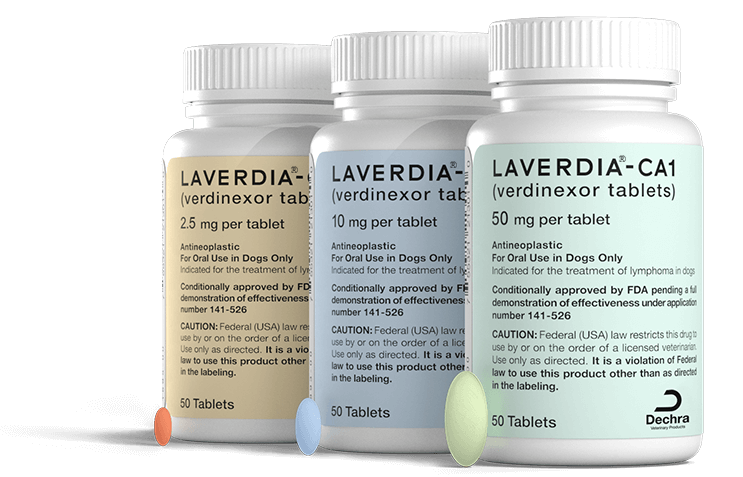
LAVERDIA -CA1: Mechanism of Action
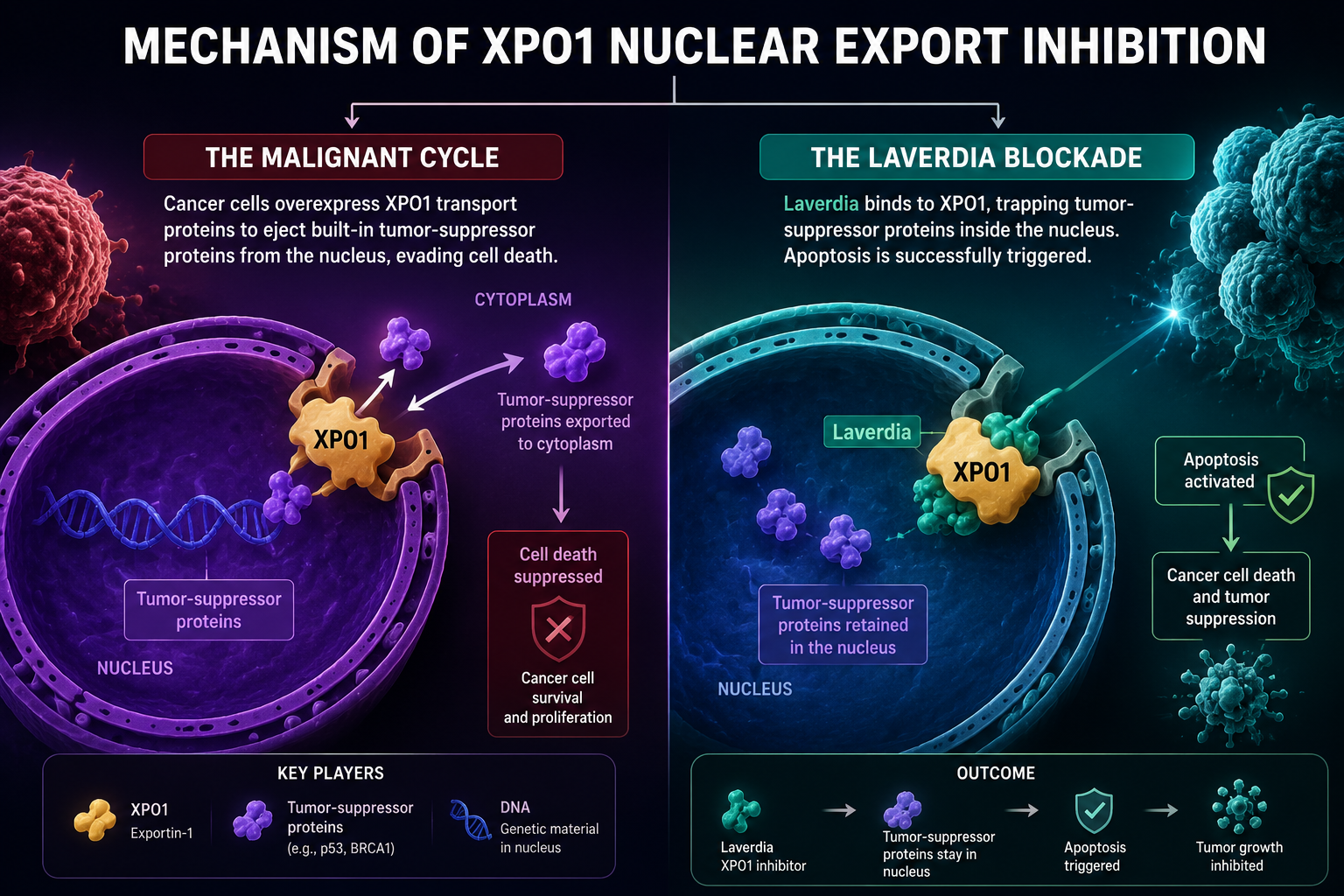
Unlike traditional, cytotoxic chemotherapies that systemically target and destroy all rapidly dividing cells, Laverdia operates as a targeted Selective Inhibitor of Nuclear Export (SINE). The drug targets a critical mechanism of cancer cell survival:
-
Hijacked Transport: Cancer cells frequently overexpress a cellular transport protein known as XPO1 (Exportin 1). This protein acts as an intracellular shuttle, actively ejecting natural tumor-suppressor proteins out of the cell’s nucleus and into the cytoplasm.
-
Nuclear Trap: By binding directly to XPO1, Laverdia physically blocks this export gateway. This forces vital tumor-suppressor proteins to accumulate inside the nucleus. Once trapped, these proteins successfully trigger apoptosis (programmed cell death), halting the spread of the lymphoma while sparing non-cancerous tissue from extensive damage.
R&D Paradigm Shift: Powered by AI Discovery
Developing novel animal health pharmaceuticals has historically been a sluggish, multi-million dollar gamble. Anivive bypassed traditional bottlenecks by utilizing a dual-engine technology platform that drastically compressed standard developmental timelines:
I. Discovery: AniviveSELECT
Instead of engineering a compound from scratch, Anivive deployed its proprietary machine-learning software, AniviveSELECT, to scan global chemical libraries and human medical data. The AI mapped evidence from human oncology against veterinary disease biology, identifying verdinexor—originally studied in human clinical contexts—as a high-probability match for treating canine B-cell and T-cell lymphomas.
II. Recruitment: AniviveTRIAL
To clear the stringent FDA Technical Efficacy requirements for full approval, the company had to conduct a robust, multi-site field study. The company used its secondary platform, AniviveTRIAL, an automated data-matching network that rapidly cross-referenced clinical records across veterinary hospitals to connect eligible patient candidates with open trial slots. This digital recruitment infrastructure accounted for approximately 40% of the entire study enrollment, shaving months off the clinical phase.
Clinical Protocol and Veterinary Logistics
With the full approval finalized, U.S. commercial distribution of Laverdia will continue under an exclusive out-licensing agreement with Dechra Veterinary Products.
The drug transitions the management of canine lymphoma from resource-heavy clinical settings to the home environment:
-
Administration: The coated tablets are prescribed by a licensed veterinarian and administered orally by the owner twice a week, spaced at least 72 hours apart. The manufacturer stresses that the medication must be given immediately following a full meal to maximize systemic bloodstream absorption.
-
Safety Mandates: Because verdinexor is an antineoplastic agent with potential teratogenic properties, the FDA requires veterinarians to issue a standardized Client Information Sheet with every refill. Caregivers must wear disposable, chemotherapy-resistant medical gloves when handling the tablets and when cleaning up any bodily fluids (urine, feces, saliva, or vomit) for up to three days post-dosing.

