


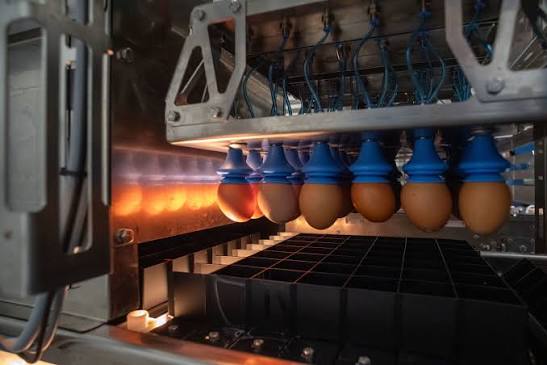
Australia’s egg industry has entered a new era of animal welfare and precision hatchery technology with the delivery of the country’s first commercially produced in-ovo sexed chicks, marking a significant milestone in the modernization of layer production.
The achievement represents the first successful commercial application of in-ovo sex determination technology in Australia, allowing hatcheries to identify the sex of embryos before hatching and eliminating the need to hatch unwanted male layer chicks—a long-standing ethical challenge for the global egg industry.
The milestone is expected to accelerate the adoption of advanced hatchery technologies across Australia while aligning the country’s egg sector with rapidly evolving international animal welfare standards.
Addressing One of the Egg Industry’s Biggest Welfare Challenges
Globally, approximately 7–8 billion male layer chicks are culled annually because they neither lay eggs nor possess the growth characteristics required for commercial broiler production. The practice has increasingly come under scrutiny from consumers, retailers, animal welfare organizations and policymakers.
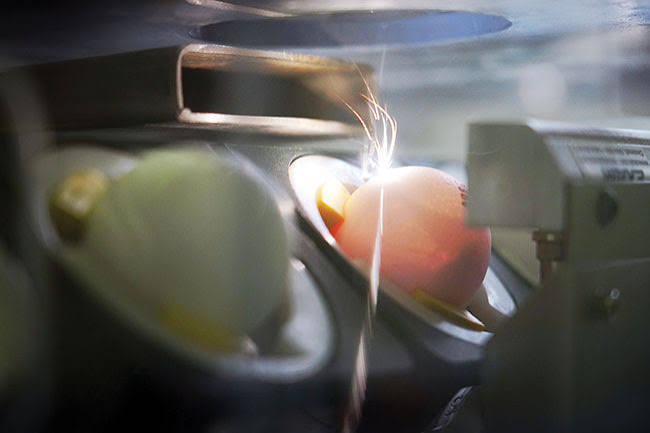
In-ovo sexing technology addresses this issue by determining the sex of an embryo during incubation—typically between day 9 and day 13, depending on the technology used. Male eggs are identified before hatching and can instead be diverted for alternative uses such as vaccine production, animal feed ingredients, fertilizer or other industrial applications, eliminating the need for post-hatch culling.
The technology represents one of the most significant welfare innovations introduced into commercial layer production during the past decade.
Technology Moves from Europe to Australia
Australia joins a growing list of countries adopting in-ovo sexing following commercial implementation in Europe.
Countries including Germany, France, Italy, Austria, and Switzerland have already introduced legislation or industry commitments aimed at eliminating routine culling of day-old male chicks.
Germany became the first country to prohibit the practice in 2022, followed by France in 2023, prompting hatcheries to invest heavily in automated embryo sexing technologies.
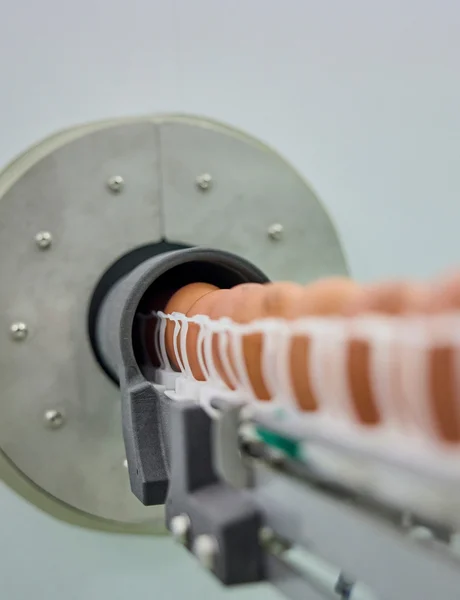
Several technology providers—including companies such as Agri Advanced Technologies (AAT), In Ovo, Orbem, Seleggt, and Plantegg—have commercialized different approaches based on spectroscopy, hormone detection, MRI imaging, optical sensing and artificial intelligence.
Australia’s first commercial delivery demonstrates that these innovations are now expanding into Asia-Pacific markets.
Improving Hatchery Efficiency
Beyond animal welfare, in-ovo sexing offers significant operational advantages.
Removing male embryos before hatch reduces unnecessary incubation costs, improves hatchery efficiency and lowers labour requirements associated with chick sorting.
Industry analysts estimate that commercial hatcheries may reduce incubation-related costs while improving overall resource utilization, particularly energy, transport and chick handling.
The technology also supports sustainability goals by reducing waste generated during the hatching process.
Australian Egg Industry Continues Modernisation
Australia produces approximately 6.8–7.0 billion eggs annually, supported by an estimated 22–23 million commercial laying hens.
According to Australian Eggs, annual per-capita egg consumption has increased steadily over the past decade to approximately 260–270 eggs per person, driven by growing consumer demand for affordable, high-quality protein.
The Australian egg industry generates an estimated A$1.3–1.5 billion in farm-gate value annually and continues investing in automation, biosecurity, genetics and welfare improvements.
The adoption of in-ovo sexing aligns with broader industry investments in:
-
Precision hatchery automation
-
Artificial intelligence-based flock monitoring
-
Digital traceability
-
Automated grading and packing
-
Improved biosecurity systems
-
Sustainable production technologies
Consumer Expectations Driving Investment
Growing consumer awareness regarding animal welfare has become a major driver of investment in next-generation hatchery technologies.
Major food retailers across Europe have already committed to sourcing eggs from supply chains that eliminate day-old chick culling, while several multinational food companies have incorporated similar commitments into their responsible sourcing policies.
Although Australia has not introduced legislation requiring in-ovo sexing, industry observers believe early adoption positions Australian producers favourably as retailers increasingly emphasize higher welfare production systems.
Global Market Expands Rapidly
The global market for hatchery automation and embryo sexing technologies is expected to grow significantly during the remainder of the decade.
Increasing regulatory pressure, retailer commitments and consumer preferences are expected to accelerate commercial deployment across North America, Asia and Latin America.
Industry analysts estimate that in-ovo sexing could become standard practice across much of the developed egg industry within the next five to ten years as technology costs decline and throughput capacity improves.
Modern systems are now capable of processing tens of thousands of eggs per hour, making commercial deployment increasingly viable for large-scale hatcheries.
Industry Significance
The first commercial delivery of in-ovo sexed chicks represents more than a technological achievement—it marks a structural shift in how layer chicks are produced.
By combining animal welfare improvements with operational efficiency, Australia’s egg industry is positioning itself alongside leading global producers embracing precision hatchery technologies.
As regulatory expectations evolve and retailers place greater emphasis on ethical sourcing, in-ovo sexing is widely expected to become a defining innovation in the future of commercial egg production, helping producers balance welfare, sustainability and productivity in an increasingly technology-driven poultry sector.
Sources
-
Australian Eggs – Industry updates and production statistics
-
Agri Advanced Technologies (AAT) – In-ovo sexing technology information
-
Seleggt – Commercial in-ovo sexing program
-
In Ovo – Hatchery automation and embryo sexing technology
-
German Federal Ministry of Food and Agriculture – Legislation on day-old chick culling
-
European Commission – Animal welfare policy developments
-
World Poultry magazine – Hatchery technology and in-ovo sexing coverage

