



New diagnostic capability adds molecular screening for zoonotic Taenia and Echinococcus species to routine faecal testing in the U.S. and Canada.
As an initiative under its One Health Commitments, IDEXX Laboratories has expanded its flagship Fecal Dx™ antigen testing platform with automated detection of taeniid tapeworms, marking a significant advancement in companion animal parasite diagnostics and zoonotic disease surveillance across North America. Beginning this week, all Faecal Dx antigen testing panels processed through IDEXX Reference Laboratories in the United States and Canada will automatically include screening for Taenia and Echinococcus species at no additional cost to customers.
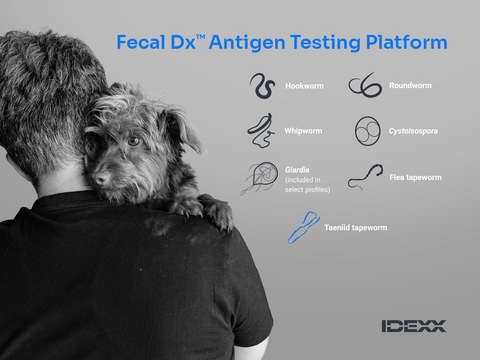
The enhancement represents the third major expansion of the Fecal Dx platform in four years and broadens its diagnostic coverage to seven of the most clinically important intestinal parasite groups affecting dogs and cats. Since its introduction in 2012, more than 50 million Faecal Dx antigen tests have been performed worldwide, making it one of the most widely adopted veterinary fecal diagnostic platforms.
Earlier Detection of Clinically Important Tapeworms
Unlike conventional faecal flotation methods, which depend on identifying parasite eggs under a microscope, the Faecal Dx platform detects parasite-specific coproantigens. This enables veterinarians to identify infections earlier in the parasite life cycle—even before eggs are shed—thereby improving diagnostic sensitivity and facilitating earlier treatment. According to IDEXX, antigen-based testing can detect up to twice as many intestinal parasite infections as fecal flotation alone.
The newly added taeniid panel is designed to detect several clinically relevant species, including:
-
Taenia crassiceps
-
Taenia pisiformis
-
Taenia taeniaeformis
-
Echinococcus granulosus
-
Echinococcus multilocularis
These parasites are recognized by the Companion Animal Parasite Council (CAPC) as important pathogens in veterinary medicine, particularly because certain Echinococcus species can infect humans and cause serious disease.
Overcoming the Diagnostic “Blind Spot”
For decades, identifying tapeworms in domestic dogs and cats has been a notorious challenge for veterinary practitioners. Traditional fecal flotation methods rely heavily on finding visible proglottids (tapeworm segments) or eggs. However, because taeniid eggs are shed intermittently and are morphologically identical to each other under a microscope, standard fecal exams routinely yield false negatives.
The expanded Fecal Dx platform bypasses these limitations by detecting specific hookworm, roundworm, whipworm, and now taeniid tapeworm antigens secreted directly into the feces. This enables the detection of sub-clinical infections during the pre-patent period—weeks before the worms mature and begin shedding eggs.
Strengthening One Health Surveillance
The addition has implications beyond routine companion animal care. Echinococcus species are responsible for echinococcosis, a zoonotic disease that can cause hydatid cysts or alveolar echinococcosis in humans following accidental ingestion of parasite eggs. Although relatively uncommon, these infections can result in severe liver, lung and other organ involvement, making early detection in animal reservoirs an important component of One Health disease prevention.
IDEXX noted that the expanded testing capability is particularly valuable in regions where Echinococcus is endemic, including parts of North America and Europe, enabling veterinarians to identify infected animals earlier and implement targeted treatment and prevention strategies that may help reduce environmental contamination and zoonotic transmission.
Expanded Parasite Coverage
With the latest enhancement, the Fecal Dx platform now screens for:
-
Hookworms
-
Roundworms
-
Whipworms
-
Flea tapeworm (Dipylidium caninum)
-
Taeniid tapeworms (Taenia and Echinococcus)
-
Cystoisospora
-
Giardia (available in selected testing profiles)

