


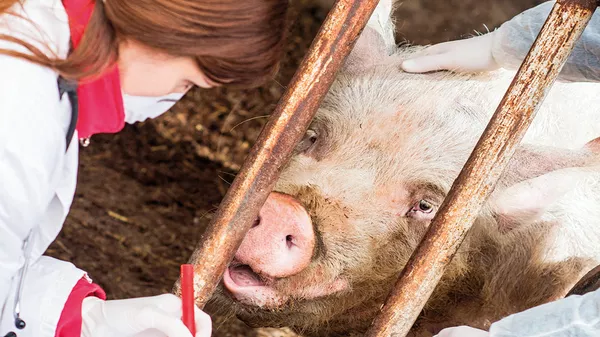
PARIS, FRANCE — The European Food Safety Authority (EFSA) has released its highly anticipated annual epidemiological report on African Swine Fever (ASF), delivering a sharp warning to the continent’s commercial pork integrators. The data reveals a troubling resurgence of the deadly virus, characterized by a staggering 76% year-over-year surge in domestic pig outbreaks and a 44% spike in wild boar cases.
While aggregate figures remain below the historic multi-year peaks observed between 2018 and 2023, EFSA scientists stress that the rapid geographical expansion and shifting transmission dynamics pose an immediate risk to the multi-billion-euro European biosecurity framework.
Numbers: Regional Hotspots Push EU Biosecurity Spends
The annual report underscores a sharp geographic polarisation in virus tracking across the European Union. Commercial pig farms and wildlife management systems are facing unequal pressure along two distinct geographical axes:
-
Romania (Commercial Epicenter): Romania continues to be the hardest-hit domestic production hub, accounting for an alarming 81% of all commercial swine cases in the EU. Structural biosecurity gaps in backyard holdings and localised farm-gate transit corridors remain the primary drivers of contamination.
-
Poland (Wildlife Vector Capital): Poland holds a grim lead in wildlife transmission, driving nearly one-third of all wild boar vectors on the continent. The persistent viral load in Poland’s wild boar population creates a permanent cross-border contamination threat for contiguous commercial zones in Germany and the Czech Republic.
Catalan Anomaly: New ASF Strain Breaches Spain After 31 Years
The most alarming revelation in the EFSA briefing is what researchers are calling the “Catalan Anomaly.” For the first time in 31 years, African Swine Fever has re-emerged in Spain, isolated within a wild boar population in the high-density pork-producing region of Catalonia.
Spain is the European Union’s largest pork exporter and the cornerstone of the continental supply chain. A structural outbreak within its borders could trigger immediate international trade bans, causing catastrophic financial fallout for domestic producers.
A Biological Mystery
Adding to the urgency, advanced genetic sequencing has confirmed that the Spanish strain does not match any known ASF variants currently circulating in Europe. This critical finding indicates that the infection was not caused by standard transboundary wildlife migration from neighboring states.
The structural mismatch has triggered an immediate, high-priority pan-European investigation. Veterinary authorities and intelligence lines are scrambling to trace untracked, cross-border biological entryways, focusing heavily on illegal meat imports, contaminated catering waste from international transport hubs, and human-mediated transmission vectors.
Commercial Swine Farms: Actionable Safety Steps
In response to the EFSA data, European swine integrators and animal health authorities are being urged to move away from reactive containment and pivot toward hard-line, preventative biosecurity.
Biosecurity Vector |
Immediate Operational Directives |
Fencing & Wildlife Segregation |
Enforce double-fencing protocols to ensure zero physical contact between domestic herds and wild boars. |
Feed Safety & Sourcing |
Audit all bedding and grain inputs; ban the use of forage harvested from areas with active wild boar restrictions. |
Transport Disinfection |
Mandate automated, multi-stage chemical washdowns for all livestock trailers crossing regional borders. |
“The significant rise in domestic pig outbreaks and the discovery of an entirely unmapped strain in Spain are clear indicators that our current defensive lines are being outmaneuvered,” an EFSA veterinary epidemiology spokesperson stated. “Commercial pork integrators must treat biosecurity as an absolute, non-negotiable metric of operational survival. A single transport breach can collapse a regional export lane overnight.”

