


India’s organized food sector is witnessing a marked shift in pork availability, driven by a steady influx of international imports. According to industry analysis published on June 3, 2026, by Asian Agribiz, foreign pork shipments entering the Indian market have risen consistently over the past several years—a trend experts anticipate will accelerate further into 2027 as regulatory entry points loosen.
While this shift has significantly stabilized raw material access for the country’s high-end culinary, hospitality, and retail processed meat portfolios, it has simultaneously introduced an intense economic challenge for domestic pig farmers and regional breeding operations.
Price-to-Quality Mismatch: Local Players on the Defensive
Speaking to Asian Agribiz, Dr. C P Gopakumar, Managing Director of DLG Farms—a prominent commercial pig breeding and livestock operator based in Mysuru—underscored the mounting systemic pressure on the domestic piggery supply chain. Over the last couple of years, the rise in imported pork has begun to fundamentally outpace the commercial viability of home-grown herds.
The underlying bottleneck stems from structural disparities in operational scale, feed optimization, and processing quality:
-
Production Subsidies and Scale: Imported pork—primarily sourced from highly automated, subsidized production networks across European and North American trade blocks—enters Indian ports at wholesale price points that domestic farmers find difficult to match.
-
Feed Price Spikes: Indian pig producers continue to grapple with high domestic prices for soybean meal (SBM) and maize, which constitute up to 70% of livestock overheads.
-
Processing and Portional Uniformity: International integrators deliver standardized, portion-controlled primal cuts (such as loins, bellies, and ribs) backed by uncompromised cold-chain verification. Local processing units remain largely fragmented, making it hard to consistently meet the strict portioning specifications of modern retail chains and five-star hotels.
Evolving Trade Windows and Biosecurity Safeguards
The ongoing structural shift traces back to landmark bilateral trade agreements executed over the last few years, including the formal opening of the Indian market to US pork products and the streamlined alignment of veterinary health certificates with countries like Canada and the United Kingdom.
Concurrently, India’s domestic swine herd has faced intense production headwinds. Since 2021, persistent seasonal outbreaks of African Swine Fever (ASF) across traditional pig-rearing zones—particularly the Northeast states, Kerala, and parts of Karnataka—have decimated smallholder stocks, causing sudden localized supply voids.
To maintain output continuity for premium products like bacon, sausages, and cured hams, major domestic food processing giants have systematically shifted their sourcing strategies toward verified disease-free, international suppliers.
Path Forward: Transforming Backyard Mentality into Commercial Scale
For local players to survive this market opening, industry leaders argue that India’s piggery sector must rapidly abandon its traditional “backyard mentality” in favor of mechanized, large-scale commercial operations.
Dr. Gopakumar has long advocated for a holistic transformation of the domestic ecosystem, noting that state subsidies must pivot toward capital-intensive breeder farms rather than micro-holdings. Producers are beginning to call for:
-
Advanced Genetic Infrastructure: Importing elite frozen semen lines from disease-free origins to boost litter sizes from the current sub-optimal average of 10–12 piglets per sow per year toward international baselines of over 25.
-
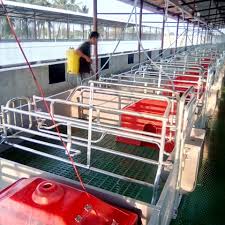
Affordable Farm Automation: Integrating automated liquid-feeding systems and climate-isolated farrowing crates to accelerate growth rates, allowing animals to reach an optimal slaughter weight of 120 kg within 140 days.
-
Modernized Slaughtering Corridors: Direct corporate and state investment in modern, bio-secure abattoirs and dedicated cold-chain logistics.

