

HomeCorporateBRICS for Global Protein Security: India Leads Dialogue on Advanced Livestock Tech...

BRICS for Global Protein Security: India Leads Dialogue on Advanced Livestock Tech and Feed Systems

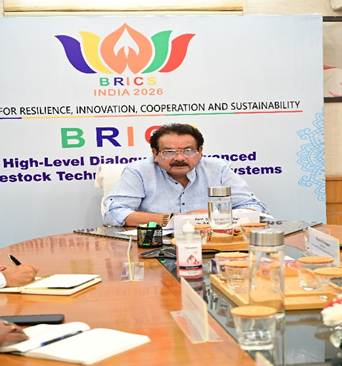
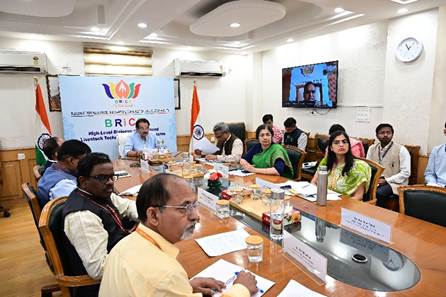
NEW DELHI, India — Under its 2026 BRICS Chairship, India has taken the center stage in addressing global food and biosecurity challenges by convening a crucial multilateral summit. Organized virtually from Krishi Bhawan by the Department of Animal Husbandry & Dairying (DAHD), Government of India, the High-Level Dialogue on Advanced Livestock Technology & Feed Systems (ALT&FS) brought together leading policymakers, veterinary scientists, and agricultural economists from across the newly expanded BRICS bloc.
The dialogue featured active delegations from Brazil, Russia, India, China, South Africa, Ethiopia, Iran, the UAE, and recent entrant Indonesia. The central mandate of the summit was clear: establish an unalterable framework for technical cooperation and joint scientific research to insulate international livestock supply chains from a volatile combination of feed scarcity, low animal productivity, and climate-driven viral mutations.
Core Crisis: Overcoming the Transboundary Bottleneck

Addressing the international gathering, Union Minister for Fisheries, Animal Husbandry & Dairying, Shri Rajiv Ranjan Singh, emphasized the foundational role that livestock management plays in protecting rural economies, driving women’s financial inclusion, and maintaining nutritional security across the BRICS alliance. Together, the member nations represent approximately 42% of the world’s agricultural land and nearly half of global grain and smallholder protein production.
However, the Minister issued a blunt assessment of the structural issues facing the sector. He noted that the global livestock economy is currently bound by three interrelated challenges:
  • Feed Deficit: Rapidly fluctuating grain yields have triggered acute shortages in green fodder and compound feed ingredients, sending input costs soaring for smallholders
  • Low Relative Animal Yields: Fragmented genetics across developing agrarian regions have resulted in sub-optimal daily milk and meat yields per animal
  • Elevated Epidemiological Pressures: Climate-driven mutations have accelerated the transboundary spread of highly infectious diseases, including Foot-and-Mouth Disease (FMD) and African Swine Fever (ASF)
“We must aggressively replace fragmented, reactive farm management with an inclusive, farmer-centric, and technologically advanced livestock architecture,” Minister Singh stated. “Overcoming these cross-border challenges requires the BRICS nations to move past isolated national policies and embrace collective, synchronized action.”

Technical Frameworks: Implementing Climate-Resilient Animal Husbandry

To translate diplomatic consensus into operational blueprints, senior DAHD officials and international experts outlined targeted implementation sectors during the technical sessions.
1. Resilient Feed Systems & Hydroponic Sourcing
With the Food and Agriculture Organization (FAO) actively participating via Dr. Thanawat Tiensin (Director of Animal Production and Health Division), delegations debated alternative feed formulations. The Indian delegation, anchored by DAHD Secretary Naresh Pal Gangwar and NDDB Chairman Dr. Meenesh Shah, presented data on silage optimization and low-cost hydroponic fodder setups. The objective is to stabilize animal nutrition matrices using bypass protein technology, insulating farmers from volatile grain markets.
2. Genetic Synchronization and Cross-Data Bridging
A significant portion of the dialogue focused on advanced reproductive technologies, including in-vitro fertilization (IVF) and Embryo Transfer Technology (ETT). India highlighted its domestic successes under the Rashtriya Gokul Mission in propagating high-yield, heat-tolerant native cattle lines (such as Gir and Sahiwal). BRICS members agreed to explore cross-national data-bridging frameworks to evaluate and fast-track genetic upgrades tailored to tropical and semi-arid geographies.
3. Integrated Epidemic Surveillance & Vaccine Banks
Minister of State Prof. S.P. Singh Baghel and Additional Secretary Varsha Joshi emphasized the need for joint disease monitoring networks. The alliance discussed the feasibility of setting up inter-regional vaccine banks for critical livestock diseases. Standardizing diagnostic protocols and sharing real-time epidemiological maps will allow member states to block transboundary animal viruses before they disrupt domestic livestock populations.

Strategic Value: Securing the Post-2030 Global Food Grid

The High-Level ALT&FS Dialogue closed with a joint commitment to establish permanent scientific working sub-groups among the member nations. By matching Russia and Brazil’s vast grain export capacities with India and China’s advanced digital agritech platforms, the expanded BRICS bloc aims to build a highly self-reliant, climate-resilient global protein pipeline.
As member countries prepare for the upcoming full BRICS Agriculture Ministers’ meeting scheduled for mid-June in Indore, this dialogue serves as a foundational step toward transforming smallholder livestock farming from a vulnerable rural livelihood into a predictable, tech-driven agribusiness.
RELATED ARTICLES

LEAVE A REPLY

Please enter your comment!
Please enter your name here