


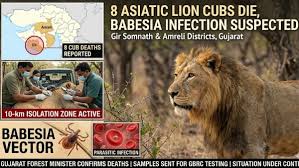
Gujarat Forest and Environment Department, in coordination with the Junagadh Wildlife Division, has successfully controlled an emergency situation in Gir Asiatic Lion Sanctuary. Following a localized, highly virulent outbreak of a tick-borne parasitic disease that tragically claimed the lives of eight Asiatic lion cubs, field veterinarians and rapid response teams have initiated a successful containment and isolation protocol, reporting zero additional mortalities over the last 72 hours.
Pathogen: Babesia in Wild Felids
National Institute of High-Security Animal Diseases (NIHSAD) confirmed the presence of Babesia, a microscopic protozoan parasite transmitted primarily via ixodid (hard) ticks.
When the parasite enters the bloodstream of a wild felid, it invades and multiplies within red blood cells, triggering Babesiosis.
Clinical Manifestations Observed in the Gir Outbreak:
-
Severe Hemolytic Anemia: The rapid destruction of red blood cells causes acute oxygen deprivation, resulting in pale mucous membranes and extreme physical lethargy
-
Hyper-pyrexia (High Fever): The host’s immune system triggers a profound febrile response to combat the parasitemia
-
Respiratory Distress: Infected lions exhibit persistent nasal discharge and labored breathing as systemic organs begin to fail
-
Immune Vulnerability in Cubs: Because lion cubs lack a fully matured immune system and carry a higher vulnerability to high tick burdens in their dens, the pathogen proved highly fatal to the younger demographic before adult lions showed visible clinical signs
Containment Protocol: Tactical Ring-Fencing
To prevent the protozoan outbreak from spilling over into the wider, interconnected sub-populations of the estimated 700+ Asiatic lions across the Saurashtra region, wildlife authorities deployed a rigorous three-tier ring-fencing mechanism
1. Targeted Immobilization & Isolation
Veterinary strike teams tracked, tranquilized, and successfully extracted 17 clinically symptomatic or exposed adult lions and sub-adults from the infected pockets. These animals were immediately split and transferred into specialized quarantine enclosures:
-
The Jamwala Rescue Centre * The Jasadhar Animal Care Centre

