


ANDHRA PRADESH, INDIA — A dual crisis of unprecedented climatic stress and intensifying biosecurity post H5N1 outbreaks have pushed India’s poultry industry into a state of high emergency.
State Animal Husbandry Departments across southern and central India—with localized epicenters spanning Andhra Pradesh’s NTR, Krishna, and Eluru districts—have issued urgent veterinary alerts. Commercial broiler and layer operations are currently battling a lethal combination of a record-breaking summer heatwave and a strictly monitored regulatory push against Highly Pathogenic Avian Influenza (H5N1). El nino effect leading to high summer temperatures and lower annual monsoon rainfall appears to be in effect early this year.
Clinical Impact: Severe Heatwave Results in High Chicken Mortality Past 15%
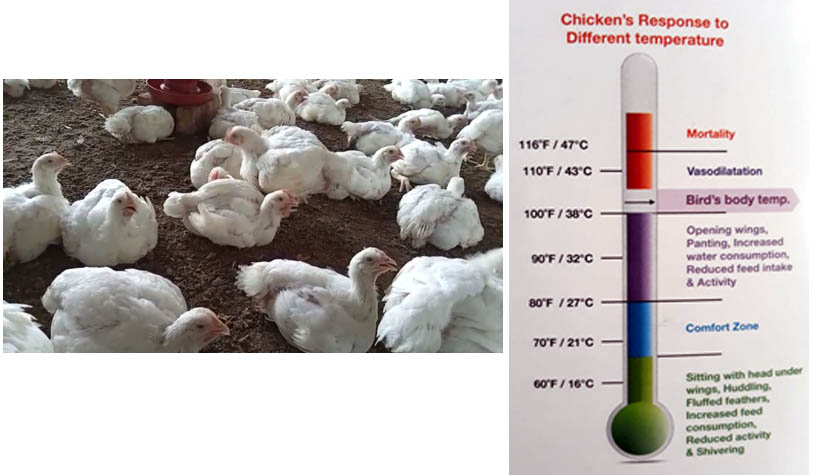
With ambient summer temperatures consistently peaking above 45°C, commercial poultry farms are experiencing extreme environmental stress resulting in higher mortalities.
In poorly ventilated or traditional open-sided sheds, historical summer mortality rates (which typically hover between 7% and 8%) have jumped past a critical 15% baseline.
[Effects of High Temperatures on Commercial Chickens]
Ambient Air Temperatures Exceed 45°C
│
▼
Birds Lack Sweat Glands ──► Forced Hyperventilation (Severe Gasping)
│
▼
Excessive CO2 Expelled ──► Respiratory Alkalosis
│
▼
Systemic pH Imbalance ──► Acute Cardiovascular Collapse & Spiked Mortality
Because chickens lack sweat glands, they rely entirely on evaporative cooling through panting. This prolonged heat exposure triggers a cascading physiological breakdown leading to mortalities:
-
Respiratory Alkalosis: Constant, severe gasping causes the birds to expel excessive amounts of carbon dioxide. This disrupts their blood chemistry, raising blood pH levels and leading to acute cardiovascular collapse
-
Production Dehydration: Survival mechanisms have overridden commercial growth. Broilers are exhibiting stunted body weight due to heat-induced anorexia. Meanwhile, layer operations report a sharp drop in egg production, egg size and shell quality issues, caused by heat-induced lack of calcium carbonate transfer
Biosecurity Concerns: H5N1 Regulatory Action
Compounding the intense environmental stress, federal and state veterinary authorities have enacted strict bio-surveillance mandates following regional outbreaks of H5N1 Avian Influenza.
Coming directly on the heels of major bird depopulations—such as the recent culling of 2.5 lakh birds in Maharashtra’s Navapur cluster—regulatory agencies are leaving no room for error. Field veterinarians are enforcing rigorous health audits, as the high-stress heatwave leaves flocks immunologically compromised and highly susceptible to viral outbreaks.
The Poultry Federation of India is actively utilizing this crisis to lobby central ministries for a standardized, target-matched H5N1 poultry vaccination framework to shield commercial investments from future viral shocks.
Veterinary Interventions and Field Mandates
To stem the rising mortality rates, field veterinary surgeons have issued an immediate, actionable protocol for all farm integrators and independent producers:
Environmental Controls
-
Roof-Cooling Sprinklers: Mandatory installation of continuous overhead sprinklers and low-pressure misting fans inside sheds to drop ambient temperatures by a vital 3°C to 5°C
-
Thatch Suspension: Immediate removal or suspension of damp paddy straw thatch insulation on roofs, which can trap heavy, stagnant humidity inside the pens during peak thermal hours
Operational Adjustments
-
Chrono-Feeding: Halting feed distribution during the hottest hours of the day (10:00 AM to 4:00 PM) to minimize specific action—the internal metabolic heat generated by digestion. Feeding schedules are being strictly pushed into the cooler early morning and late evening times
Nutritional & Clinical Support
-
Automated Electrolyte Therapy: Continuous administration of scientifically balanced oral rehydration salts (ORS), potassium chloride, and sodium bicarbonate via automated drinking lines to counteract respiratory alkalosis
-
Therapeutic Dosing: Fortifying water supplies with high-dose B-Complex vitamins, Vitamin C, and easily digestible protein feeds to stabilize cell membranes, stimulate natural immunity, and restore fluid-electrolyte balances

