


New research suggests dangerous mutations are emerging during mammalian infection rather than being transmitted directly from wild birds
A newly published study in Nature Medicine has intensified global concern over the evolving H5N1 avian influenza outbreak after researchers reported that mammalian-adaptive mutations are arising independently during infection in mammals rather than being directly inherited from infected wild birds.
The paper, published on May 15, focuses on the rapidly expanding D1.1 genotype of highly pathogenic avian influenza (HPAI) H5N1, which has become one of the dominant variants associated with poultry outbreaks and spillover infections in mammals across North America. The findings come as the United States continues monitoring an unprecedented multistate H5N1 outbreak involving:
- commercial poultry
- wild birds
- dairy cattle
- multiple mammalian species
- confirmed human infections.
According to U.S. public health data cited in the study, 71 confirmed human H5N1 infections have been reported in the United States, primarily linked to:
- infected poultry exposure
- dairy farm contact
- occupational exposure in livestock settings.
Study Highlights New Evolutionary Concern
The most significant finding from the study is evidence that key mammalian-adaptive mutations are developing de novo — meaning they are emerging independently within infected mammalian hosts during replication — rather than being consistently transmitted from wild bird reservoirs. Researchers warned that this evolutionary pattern may increase the probability of:
- viral adaptation to mammals
- expanded host range
- improved replication in mammalian tissue
- higher zoonotic risk.
The paper notes that while wild birds remain the primary reservoir for H5N1 circulation globally, the virus appears increasingly capable of acquiring adaptive mutations after crossing into mammalian hosts.
This raises concern because repeated mammalian infections create more opportunities for:
- viral reassortment
- adaptive evolution
- enhanced mammalian transmissibility.
D1.1 Variant Expanding Rapidly Across North America
The D1.1 genotype has emerged as one of the fastest-expanding H5N1 lineages associated with the ongoing North American outbreak.
The variant has been detected in:
- poultry operations
- dairy cattle
- wild birds
- carnivorous mammals
- farm-associated animal populations.
Researchers said the D1.1 lineage demonstrates continued viral diversification following widespread transmission events in:
- migratory bird networks
- commercial poultry systems
- mammalian spillover environments.
Human Cases Remain Limited but Closely Monitored
Although the 71 confirmed U.S. human infections remain largely associated with direct animal exposure, public health agencies continue emphasizing the need for intensive surveillance because influenza viruses can evolve rapidly under sustained transmission pressure.
Most human infections linked to the current outbreak have involved:
- poultry workers
- dairy farm personnel
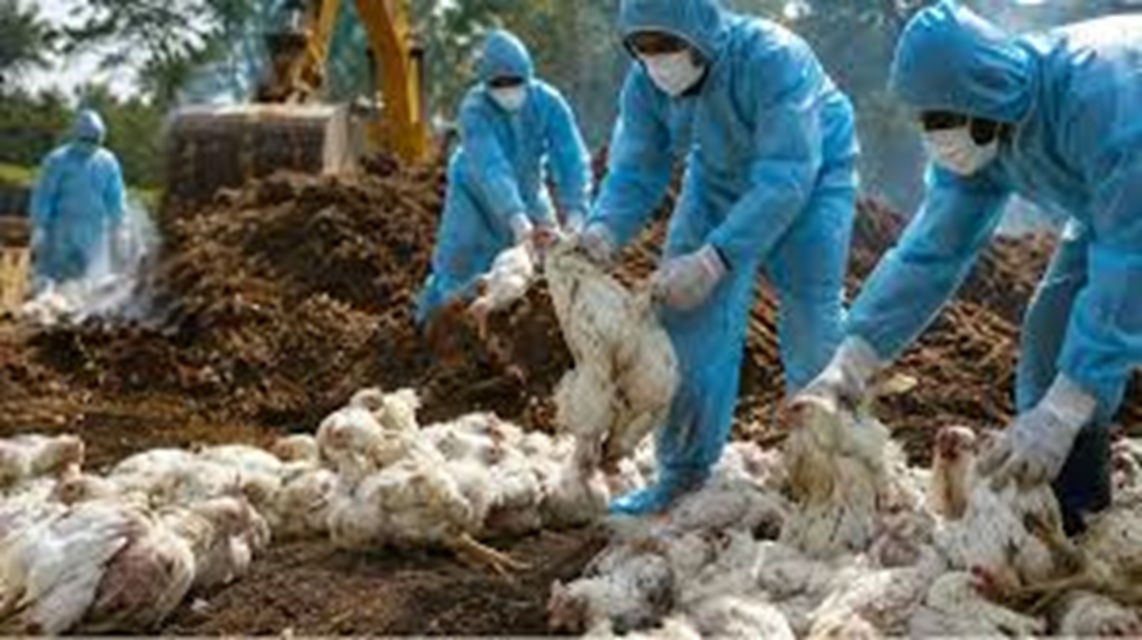
- individuals involved in culling operations.
Reported symptoms have generally ranged from:
- mild conjunctivitis
- respiratory symptoms
- flu-like illness
though health authorities remain alert to the possibility of more severe disease outcomes if viral adaptation increases.
Dairy Cattle Infections Changed Global Risk Perception
One of the most significant developments in the ongoing H5N1 crisis has been the unexpected spread of the virus into U.S. dairy cattle herds. Before 2024, H5N1 outbreaks were primarily viewed as:
- poultry-associated events
- wild bird-driven epidemics.
However, widespread infection in dairy cattle fundamentally altered scientific understanding of the virus’s:
- host flexibility
- transmission dynamics
- mammalian adaptation potential.
The emergence of H5N1 in cattle raised particular concern because:
- dairy systems involve intensive mammalian populations
- repeated cow-to-cow transmission may facilitate adaptation
- occupational human exposure risk increases substantially.
Mammalian-Adaptation Mutations Under Scrutiny
The study highlights that several mutations associated with improved viral replication in mammals have appeared independently during infection events.
Such mutations are considered highly significant because they may influence:
- receptor binding
- polymerase efficiency
- viral replication at mammalian body temperatures
- tissue tropism.
Scientists emphasized that the mutations observed in infected mammals were not necessarily dominant in wild bird populations before spillover occurred.
This suggests the virus may be evolving adaptively after entering mammalian hosts rather than carrying fully adapted mammalian features beforehand.

