

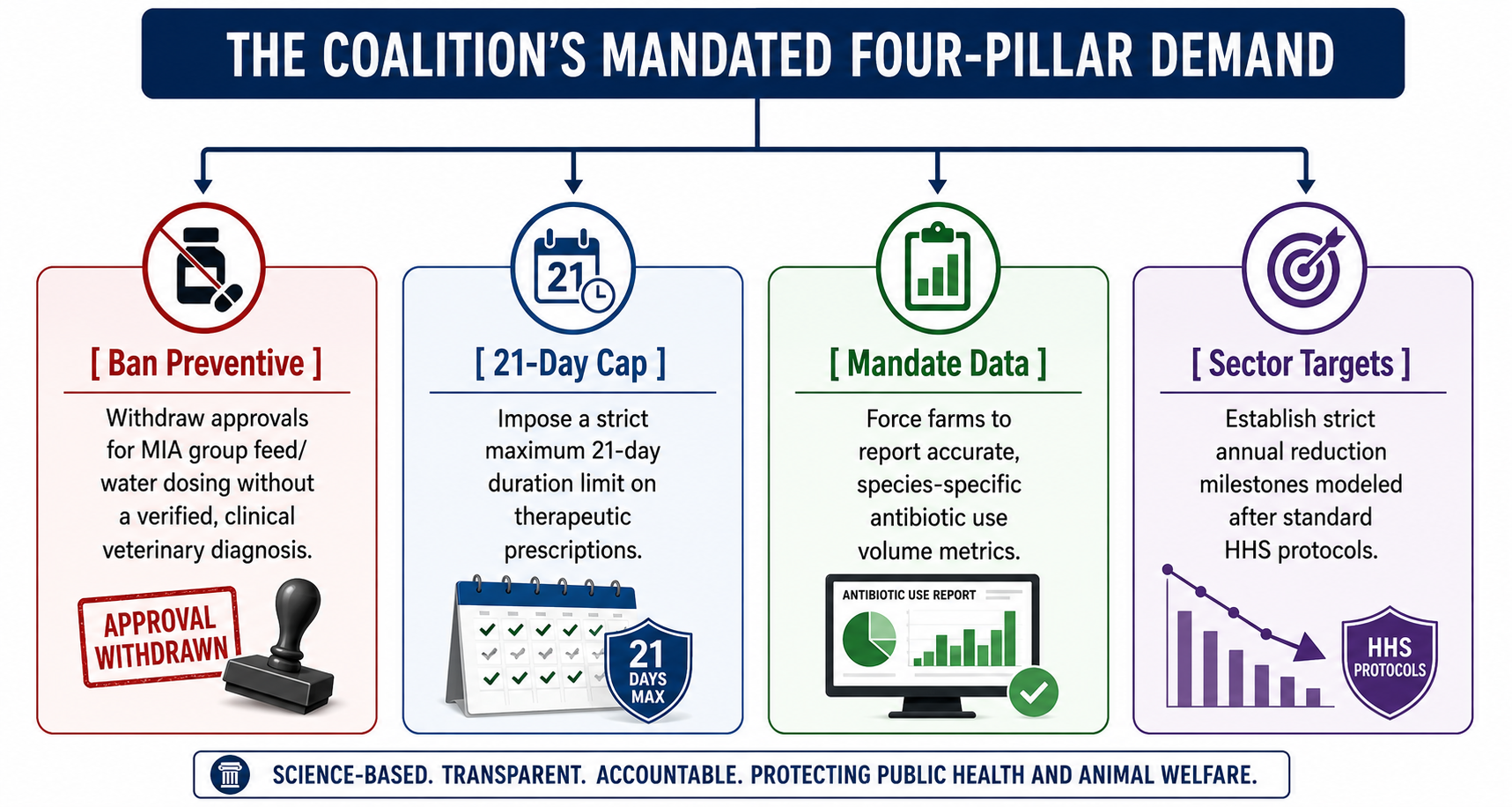
In an action with far reaching benefits for livestock and public health dynamics – a high-powered legal coalition of 65 public health, consumer defence and animal welfare organisations has filed a sweeping petition with the U.S. Food and Drug Administration (FDA) requesting restricted usage and outright ban on certain antibiotics in Livestock.
The citizen petition demands that the regulatory agency execute its statutory obligations under the Federal Food, Drug, and Cosmetic Act (FFDCA) by completely withdrawing approvals for the routine, mass administration of medically important antibiotics (MIAs) to healthy food-producing animals.
Led by advocates including Earthjustice, the National Consumers League, Consumer Reports, and the Center for Infectious Disease Research and Policy (CIDRAP), the historic filing aims to dismantle a major legal loophole in the nation’s biosecurity framework—one that critics say fuels a deadly, cross-species “silent pandemic” of antimicrobial resistance (AMR).
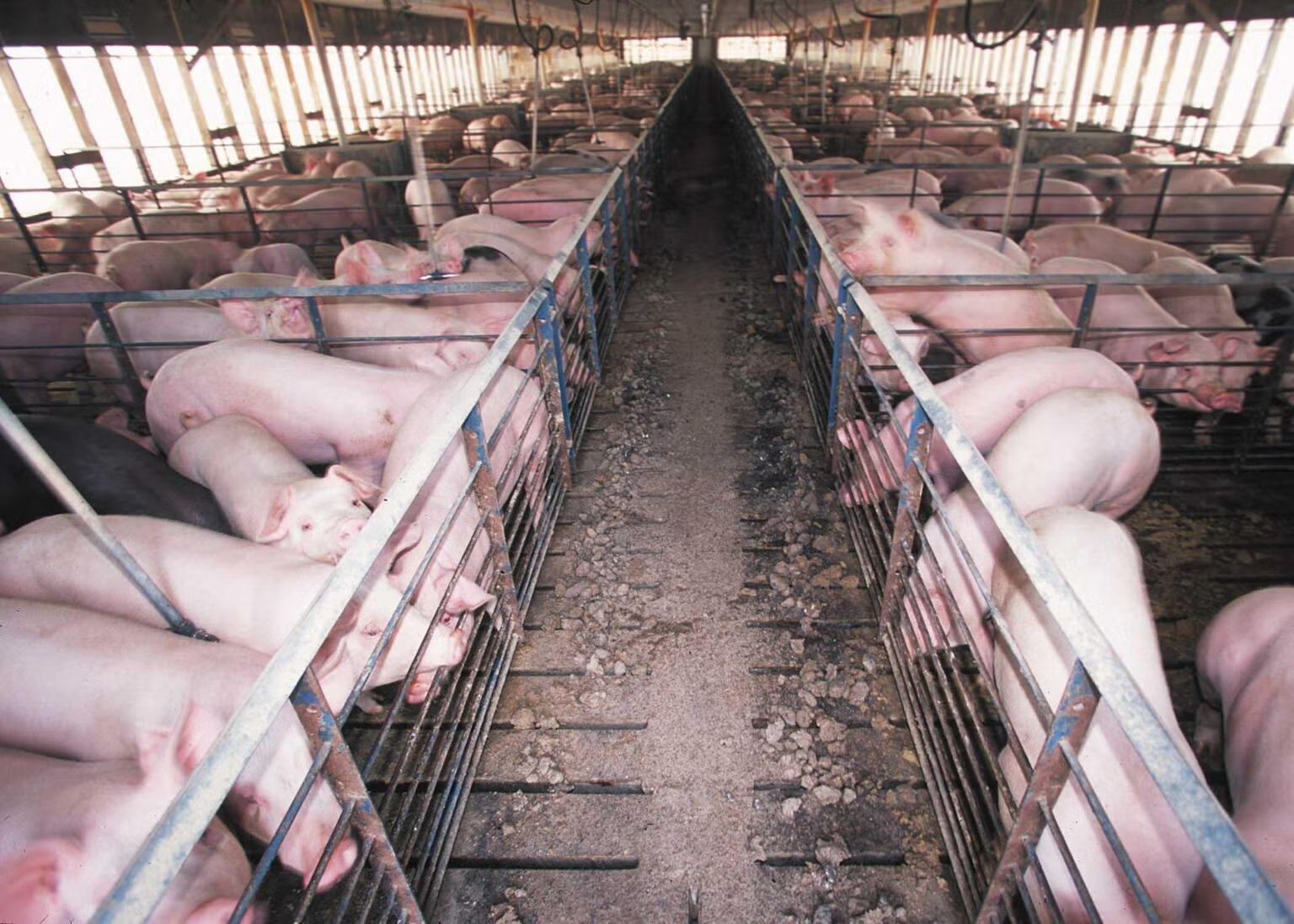
Mass-Medication Issues
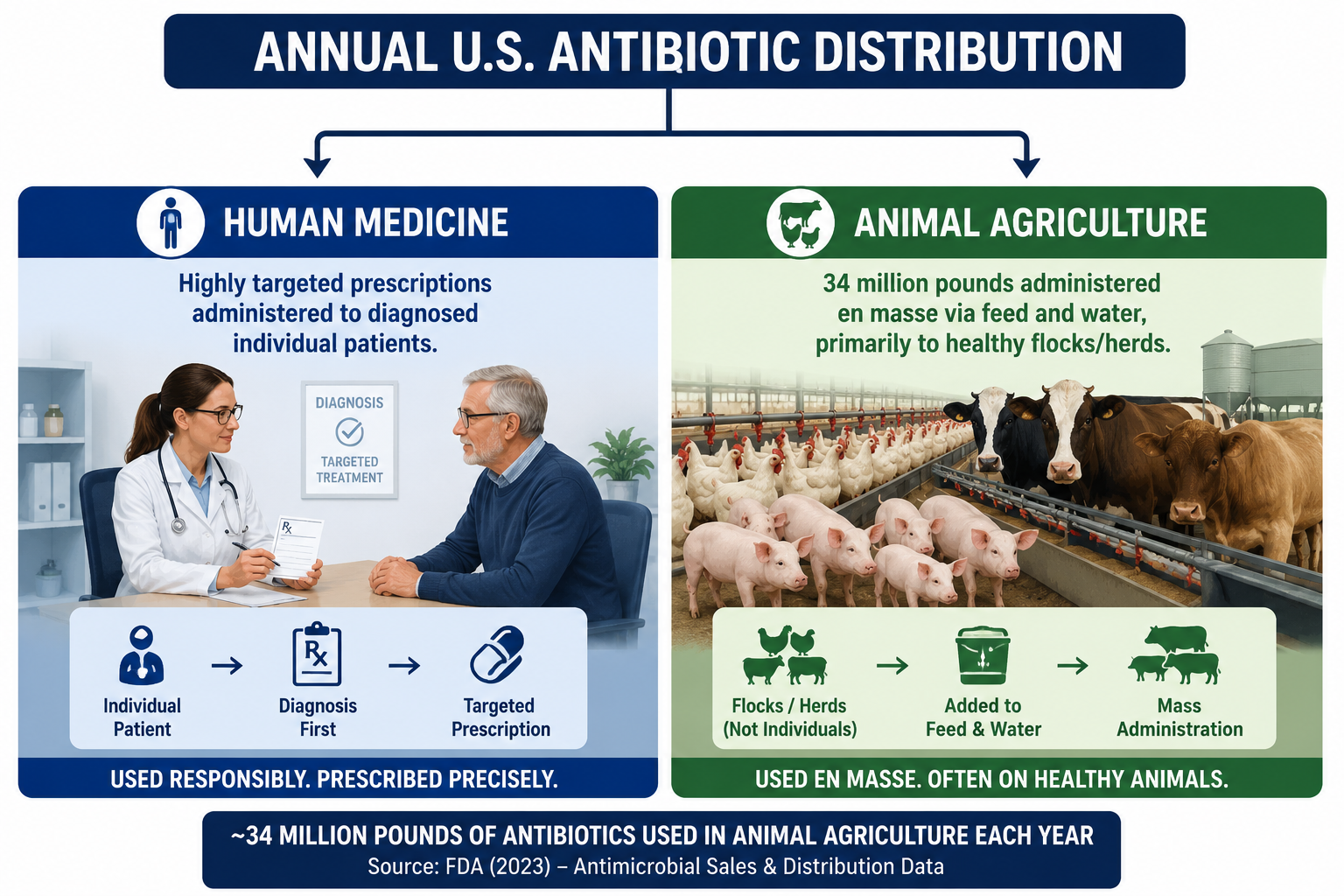
At the centre of the legal dispute is an astonishing volume mismatch between human medical use and livestock administration. According to data cited within the petition, an estimated 34 million pounds of antibiotics are routed directly into U.S. livestock feed and water lines every single year. This represents the single largest volume use of antimicrobial drugs in the United States.
While the FDA successfully phased out the legal use of antibiotics explicitly designated for “growth promotion” under Guidance for Industry (GFI) #213, critics argue the policy simply shifted labels.
Mega-integrators across the poultry, swine, dairy, and beef cattle sectors still routinely dump identical low-dose, medically important antibiotics into daily herd rations under the broad clinical umbrellas of “disease prevention” or “herd maintenance.”
The multi-group coalition presents clear evidence that these sustained, low-dose group treatments create optimal evolutionary environments for bacteria to mutate, develop drug-resistant strains, and cross into the human food chain through three distinct vectors:
-
Direct Processing Vectors: Drug-resistant pathogens remaining on raw meat products post-slaughter infect consumers during handling or undercooking.
-
Environmental Leaching: Millions of tons of livestock manure containing active antibiotic residues and mutated bacterial strains are spread onto commercial crop soils or leach directly into public watersheds.
-
Occupational Exposure: Farmworkers and processing plant staff inhale airborne resistant strains, inadvertently acting as community transmission vectors.