

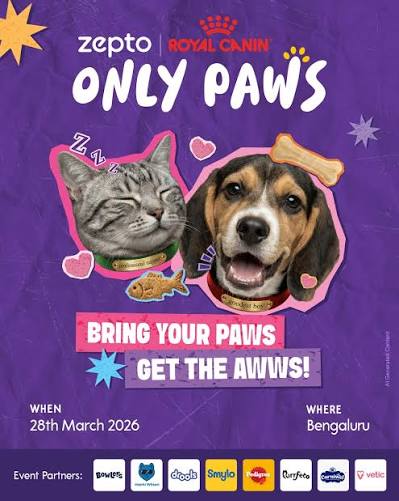
ASAP – finally gets defined and gets a definite, strict timeline, all of 10 Minutes. 10 minutes is the time it takes now for:
-
Pet Walkers to show up at your place
-
Pet foods, meds and care products deliveries at door and
-
Online Vet Consultations and Vetcare Services
Thats the Q-Com, short for Quick-Commerce in its full glory, re-defining the distribution and supply chains for delivery of pet products and services in India.
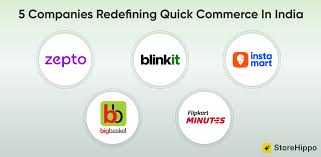
India’s around $800 million pet care ecosystem is undergoing a dramatic structural transformation as the nation’s hyper-competitive quick-commerce platforms—Blinkit, Zepto, and Swiggy Instamart—cannibalize market share from traditional e-commerce giants and brick-and-mortar pet specialty stores.
Q-Com success is forcing hands of global majors – Amazon and Walmart-owned Flipkart to join the bandwagon.
Driven by explosive urban demand and an absolute consumer intolerance for multi-day delivery windows, major animal health entities and direct-to-consumer (D2C) brands are aggressively restructuring their supply chains. The traditional multi-tier distribution model is rapidly giving way to localized partnerships, positioning premium therapeutic nutrition lines and over-the-counter (OTC) veterinary hygiene products inside micro-warehouses designed for 10-to-15-minute door-to-door delivery.
Digital Migration: Data Behind the Boom
According to 2026 data analytics from industry trackers like MetricsCart, the “Pet Care” vertical has transitioned from a fringe convenience category to one of the highest-velocity, highest-margin segments within the quick-commerce ecosystem.
The underlying market forces accelerating this transition include:
-
Scale of the Shelf: In a striking volume indicator, platform-wide data from Blinkit alone recorded over 1,469 active, distinct pet care stock-keeping units (SKUs) cataloged across its dark stores as of mid-2026 – shows the scale of adoption
-
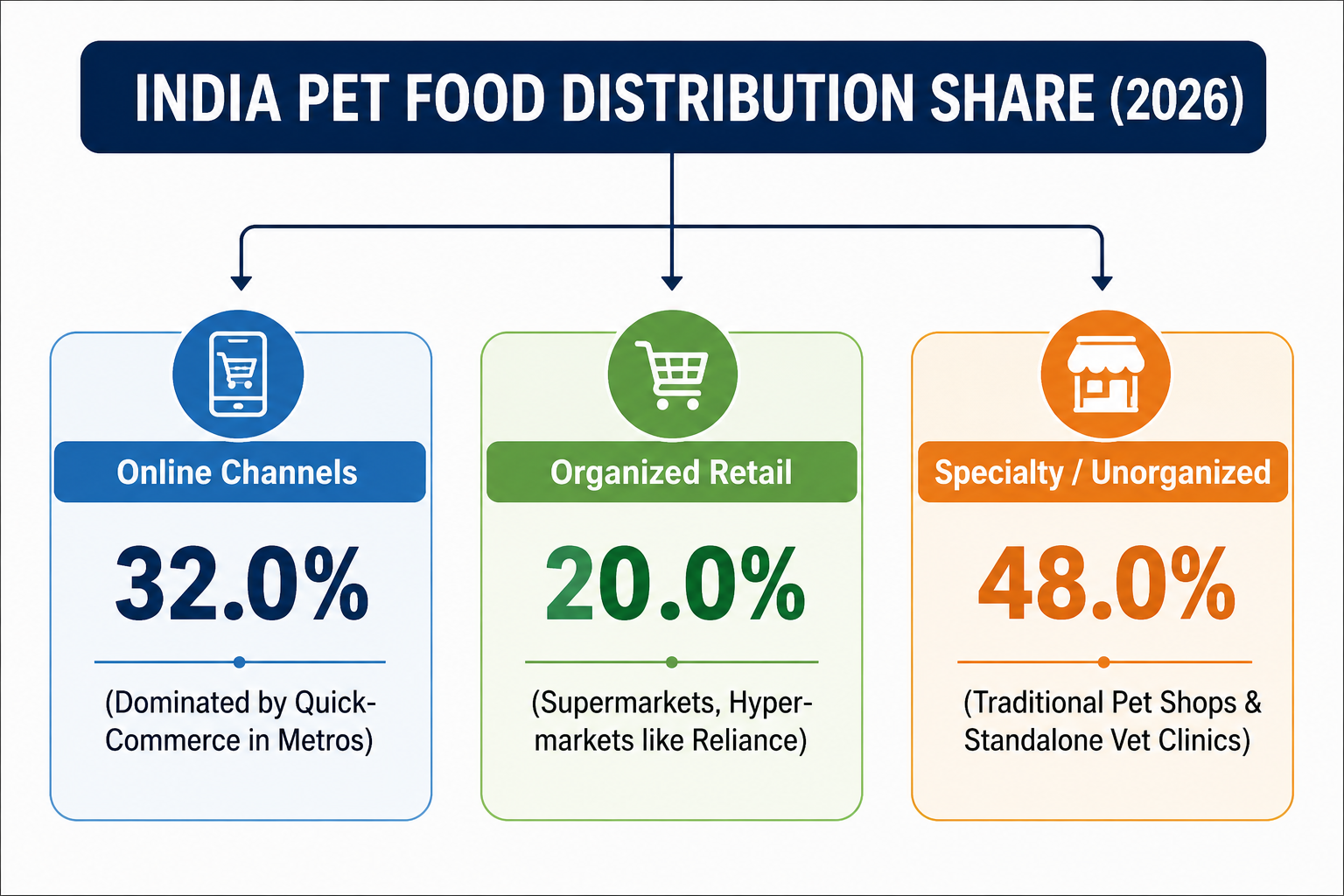
Online Stranglehold: The broader Indian pet food sector is projected to cross $775 million, with online platforms seizing a commanding 32% market share. In metro cities like Delhi-NCR, Mumbai and Bengaluru, quick-commerce has become the default online procurement method, capturing high-income households from legacy e-commerce platforms – that explains why India doesn’t have as yet adoption of Subscription Model
-
Premiumization Trajectory: The average order value within the quick-commerce pet vertical has scaled significantly. While mass-market brands like Pedigree remain steady volume drivers (averaging an entry price of around $ 8), ultra-premium, veterinary-endorsed brands like Farmina and Royal Canin are thriving on instant-delivery platforms, logging average ticket sizes ranging between $ 20 and over $ 50.
Dark Stores Magic: Moving Premium Care to the Micro-Level
Historically, premium therapeutic diets (such as hepatic, renal, or urinary care kibble) and clinical veterinary grooming aids were strictly locked behind veterinary clinic dispensaries or organised pet specialty franchises.
To bypass the geographic constraints of these traditional channels, animal health entities are modifying their product packaging and intake strategies to meet the uncompromising logistical requirements of quick-commerce dark stores.
Packaging for High-Velocity Fulfilment
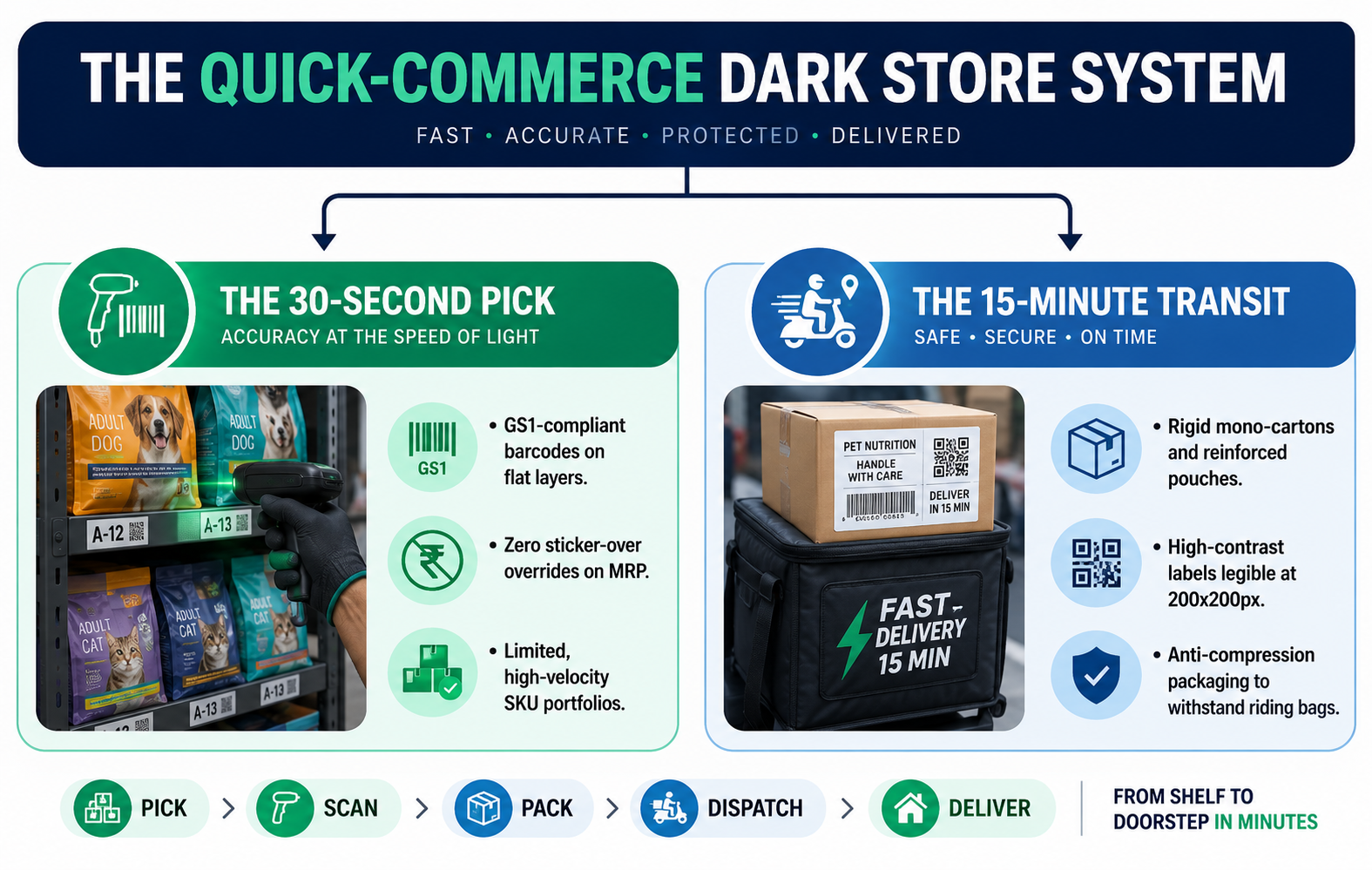
To thrive inside a network of over 4,000 hyper-dense dark stores operated by Blinkit and Zepto across the country, animal health brands are overhauling their packaging design:
-
Barcode Optimisation: Labels now feature flat, high-contrast, GS1-compliant barcodes. If a dark store picker’s scanner cannot read a code on the first pass within 30 seconds, the inventory faces immediate physical rejection at intake
-
Compression Durability: Because packages are stuffed into insulated delivery bags alongside heavy groceries, liquids, and household chemicals, flexible pouches have been replaced with reinforced, multi-layered laminate or rigid mono-cartons to survive two-wheeler transit
-
Digital Display Thumbnails: Brands are re-designing product front-panels specifically to ensure that the exact health benefit (e.g., “Anti-Tick Shampoo” or “Gastrointestinal Kibble”) is legible as a small 200×200-pixel digital thumbnail on a 6″ mobile screen
Changing Consumer Lifestyles Driving the Trend
The sudden shift toward instant pet care procurement is directly tied to the demographic profile of the modern Indian pet parent. India’s pet dog population has surged to 31 million, alongside a rapidly growing cat population of 5.5 million. The market is concentrated heavily within single-person apartments and nuclear families in Tier-1 cities.
For these time-constrained pet parents, the decision to outsource basic care to on-demand platforms is a matter of lifestyle compatibility. The “humanisation” of pets means companion animals are treated with the same consumer urgency as infants. If an owner notices a flea breakout or runs out of breed-specific puppy food at 10:00 PM, waiting 48 to 72 hours for a traditional e-commerce shipment is no longer an acceptable option.
By inserting specialised animal health solutions directly into the 10-minute quick-commerce delivery loop, pharmaceutical and clinical pet care brands are tapping into an highly lucrative, premium market. In doing so, they are permanently changing how urban Indians navigate veterinary wellness and daily animal maintenance.
The Q-Com boom for Pet Products and Services is still only at an early take-off point with an expected hockey-stick type growth over the short to mid-term. This distribution strategy may have lessons for the leading pet food as well as supplements companies globally, with availability of an additional, maybe a must-have channel as Q-Com gets adopted in many countries.

