



If any further proof was needed that we are more similar to our pets – look no further. New research from North Carolina State University shows cognitive decline in dogs is associated with a shorter stride length – specifically in their front limbs as is observed in human beings.
This work provides a more complete picture of dogs that are developing dementia, potentially allowing earlier detection and providing another means of monitoring progress.
North Carolina State University researchers have established a clinical link between cognitive decline and mobility in companion animals. Their published studies reveal that canine cognitive dysfunction is directly associated with a significant decrease in front-leg stride length, making gait monitoring an important tool for early dementia detection.
Full Paper for download – fvets-13-1814017
Here are the key takeaways from the university’s neurological and mobility studies published in Frontiers in Veterinary Science:
The Brain-Body Connection
- Shorter Front Strides: Research shows that age-related cognitive impairment is heavily linked to a reduction in thoracic limb (front leg) stride length, independent of physical joint pain
- Translational Science: Because front legs require significant cortical control for spatial awareness and balance, this shortened stride acts as an early behavioral biomarker for brain decline
- Sleep Disruption: NC State studies also found that dogs with higher dementia scores experience significantly less Rapid Eye Movement (REM) and Non-REM sleep, which impairs the brain’s ability to clear toxins like beta-amyloid proteins
The researchers enrolled 88 geriatric dogs with an average age of about 12 years in the study. Dogs were evaluated approximately every six months, undergoing physical, neurologic, and orthopedic examinations, mobility assessments, hearing testing, and blood work. The dogs completed a standardized cognitive test, and owners were asked to complete several questionnaires at each six-month time point, including the Canine Dementia Scale (CADES), and Canine Brief Pain Inventory (CBPI).
Gait speed was assessed by two trained observers as the dogs walked a straight, five-meter indoor walkway. Stride length was measured for both front (thoracic) and back (pelvic) limbs, then data for front limb, back limb and height-adjusted stride length were generated.
The researchers found that owner-reported cognitive decline was associated with shorter thoracic limb stride length, adjusted for height. Higher CADES scores were also associated with reduced stride length, even after adjusting for age and CBPI scores.
A 10-point increase in CADES corresponded to an approximate 1.2% reduction in thoracic limb stride length. Interestingly, pelvic limb stride length did not correlate with cognitive changes.
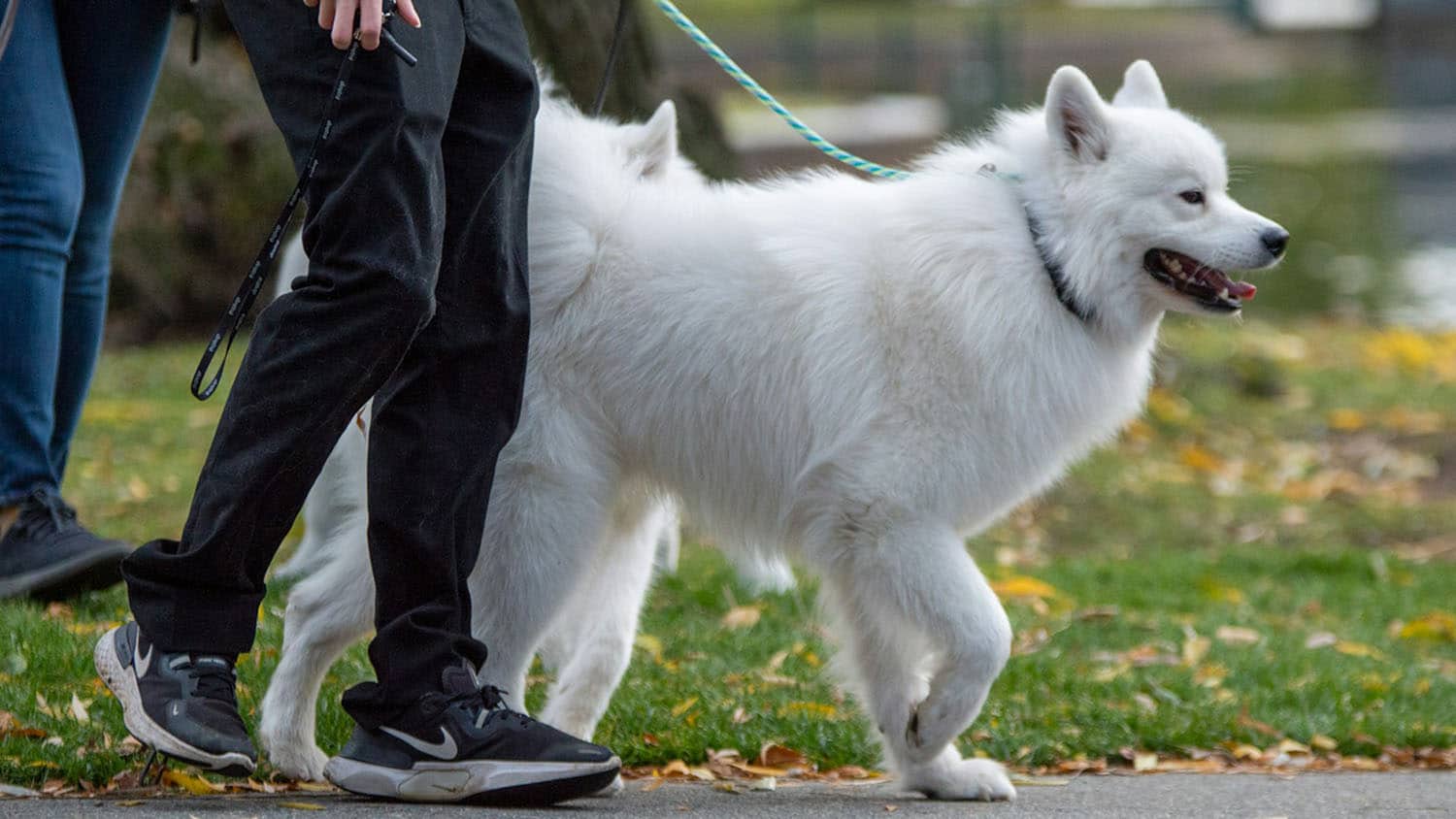
Preventing and Slowing Decline
-
Active Engagement: A longitudinal study tracking over 850 senior dogs found that regular hiking, swimming, and mental enrichment activities are associated with lower cognitive decline scores
-
Consistent Routine: Regular physical exercise and training help maintain neuromuscular innervation and delay functional neurological decline in older animals

