


UK researchers identify plastic particles across multiple pet food categories, calling for further investigation into potential health impacts and contamination pathways
Brighton & Exeter, United Kingdom | 20 June 2026 — A newly published peer-reviewed study by researchers from the University of Sussex and the University of Exeter has found evidence of microplastic contamination in 76% of commercially available pet food products, highlighting a previously under-recognized route of exposure for companion animals and prompting calls for further research into food safety and manufacturing practices.
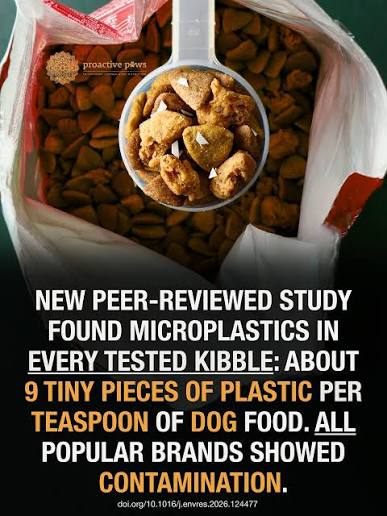
Published in the journal Environmental Toxicology and Chemistry, the study is among the first comprehensive investigations into microplastics in commercial pet foods and suggests that dogs, cats and even wildlife consuming manufactured diets may be routinely exposed to microscopic plastic particles through their daily meals.
Extensive Testing Across Commercial Brands
Researchers analysed 38 pet food products representing 19 major brands available in the United Kingdom, including dry and wet foods formulated for dogs, cats and hedgehogs.
Each product underwent repeated laboratory analysis, with six replicate samples tested per product, producing a total of 228 individual samples. The findings revealed:
-
76% of products (29 of 38) contained detectable microplastics.
-
84% of the brands tested had at least one contaminated product.
-
27.6% of all individual laboratory samples were positive for microplastic particles.
-
Nearly half of the products had multiple positive test samples.
What Types of Plastics Were Found?
Laboratory analysis identified several common synthetic polymers frequently used in consumer products and industrial applications.
The most frequently detected materials included:
-
Polyester
-
Polyethylene (PE)
-
Polypropylene (PP)
-
Polyacrylamide
Researchers suggest these particles may originate from several points within the production chain, including raw ingredients, manufacturing equipment, processing environments and food packaging, although the study was not designed to determine the precise source of contamination.
Wet Food May Present Greater Exposure
While average concentrations of microplastics were broadly similar between wet and dry diets, the researchers noted that pets typically consume a much larger mass of wet food because of its higher moisture content.
Using dietary intake models, the study estimated that:
-
a 35-kg dog fed a wet-food diet could ingest approximately 313 microplastic particles per day on average.
This suggests that overall exposure may be higher for animals consuming predominantly wet formulations despite comparable concentrations per gram of food.
Higher Than Human Food in Some Comparisons
The authors reported that measured microplastic concentrations in pet foods were generally:
-
higher than many levels reported for human foods, but
-
lower than concentrations found in certain wild invertebrates.
Importantly, they observed a relatively high proportion of contaminated products, suggesting pet food may represent a meaningful exposure pathway for companion animals and potentially for terrestrial ecosystems through animal waste.
Premium Brands Not Entirely Immune
The study also explored contamination by market segment.
Although value-priced products tended to show more positive samples than mid-range and premium brands, microplastics were detected across multiple price categories, indicating that contamination is not confined to lower-cost products.
Implications for the Global Pet Food Industry
The findings come as the global pet food industry continues to expand rapidly. Industry analysts estimate the worldwide pet food market exceeds US$150 billion annually, driven by premiumisation, functional nutrition and increasing pet ownership. Manufacturers have invested heavily in higher-quality ingredients, sustainability initiatives and food safety systems.
The new research suggests that microplastic contamination may become an emerging area of scientific and regulatory interest alongside existing concerns relating to contaminants, packaging migration and ingredient traceability.
Health Effects Remain Uncertain
Despite the widespread detection of microplastics, the researchers stressed that the study does not demonstrate that the detected particles cause disease in pets.
Current evidence is insufficient to establish direct health effects at the exposure levels observed, and significant scientific questions remain regarding:
-
long-term accumulation,
-
gastrointestinal absorption,
-
inflammatory responses,
-
endocrine effects,
-
impacts on the gut microbiome, and
-
potential interactions with other environmental contaminants.

