


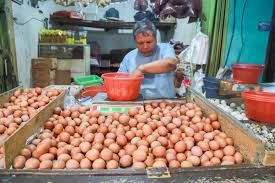
Jakarta, June 10, 2026 — A growing debate over foreign investment in Indonesia’s poultry industry is exposing local faultlines within one of Southeast Asia’s largest egg and poultry markets, as domestic poultry farmers warn that additional outside capital could worsen oversupply, further reduce farm-gate prices and threaten the survival of thousands of small and medium-sized poultry farmers.
The controversy emerged following reports that discussions were underway regarding potential foreign participation, including interest from Chinese investors, in certain segments of Indonesia’s layer (egg-production) segment.
While the Indonesian Chamber of Commerce and Industry (Kadin) has clarified that discussions remain at an early stage and no specific project has been approved, the proposal has generated strong opposition from local poultry farmers across the country.
Farmers Fear Further Oversupply
The strongest resistance has come from layer farmers in East Java, particularly in Blitar, Indonesia’s largest table egg-producing region.
Representatives of independent poultry farmer associations argue that the industry is already facing severe profitability challenges due to prolonged periods of egg prices trading below production costs. According to farmer groups, introducing new large-scale investment into egg production could significantly increase supply at a time when the market is already struggling with deman-supply mismatch.
Industry leaders note that Indonesia already maintains one of Asia’s largest laying-hen populations. Estimates cited by producer organizations suggest that the national layer population exceeds 400 million birds, while Blitar alone accounts for approximately 30 million laying hens. Under these conditions, additional production capacity could exacerbate existing oversupply pressures.
“Adding new farms is not the solution,” industry representatives have argued. Instead, they believe policy efforts should focus on improving downstream processing, export development and market access for existing producers.
A Strategic Industry for Indonesia
The stakes are high because poultry remains Indonesia’s most important source of animal protein locally.
Chicken meat and eggs are among the country’s most affordable protein sources and play a critical role in national food security. The sector supports millions of livelihoods directly and indirectly through farming, feed manufacturing, hatcheries, processing, logistics and retail distribution. Research indicates that poultry products account for the majority of animal-protein consumption in Indonesia and remain central to government nutrition programs.
Market analysts expect the Indonesian poultry industry to continue expanding over the coming decade. Industry forecasts suggest the sector could grow at an annual rate exceeding 5% through 2032, supported by population growth, urbanization, rising incomes and government nutrition initiatives.
One major demand driver is Indonesia’s national free-meal program, which is expected to increase consumption of poultry products significantly over the coming years. Industry observers believe long-term demand fundamentals remain strong despite current pricing challenges.
Foreign Capital Versus Domestic Capacity
Supporters of foreign investment argue that additional capital could accelerate modernization, improve productivity and strengthen Indonesia’s position as a regional poultry producer. Potential benefits frequently cited, include:
-
Modern production facilities
-
Advanced genetics
-
Improved biosecurity
-
Better supply-chain integration
-
Processing and export infrastructure
-
Technology transfer
However, critics counter that the Indonesian poultry sector does not currently suffer from a shortage of production capacity. Instead, they argue that profitability challenges stem from structural issues including market transparency, flock management, production planning and periodic oversupply.
Many producer groups are calling for greater transparency regarding grandparent-stock (GPS) imports, day-old chick distribution and national poultry-population data before any new investment initiatives move forward.
Real Opportunity: Value Addition and Exports
Rather than expanding farm-level production, farmer organizations are increasingly advocating for investment in downstream poultry infrastructure. Priority areas include:
-
Egg processing plants
-
Liquid egg manufacturing
-
Egg powder production
-
Export-oriented processing facilities
-
Cold-chain infrastructure
-
Value-added poultry products
Industry leaders argue that Indonesia should focus on converting surplus production into export opportunities rather than creating additional supply that could further pressure domestic prices.
This strategy aligns with broader government ambitions to increase agricultural exports and strengthen Indonesia’s food-processing capabilities.
Structural Challenges Remain
Beyond the investment debate, Indonesia’s poultry industry continues to face several long-term challenges.
Feed remains the largest production cost, accounting for approximately 65–75% of total poultry-production expenses. Dependence on imported soybean meal and exposure to global commodity-price volatility continue to affect profitability. Other challenges include:
-
Disease threats and biosecurity gaps
-
Cold-chain limitations outside Java
-
Price volatility
-
Climate-related production risks
-
Uneven adoption of modern farming technologies

