


Source: https://l1nq.com/xmjec40
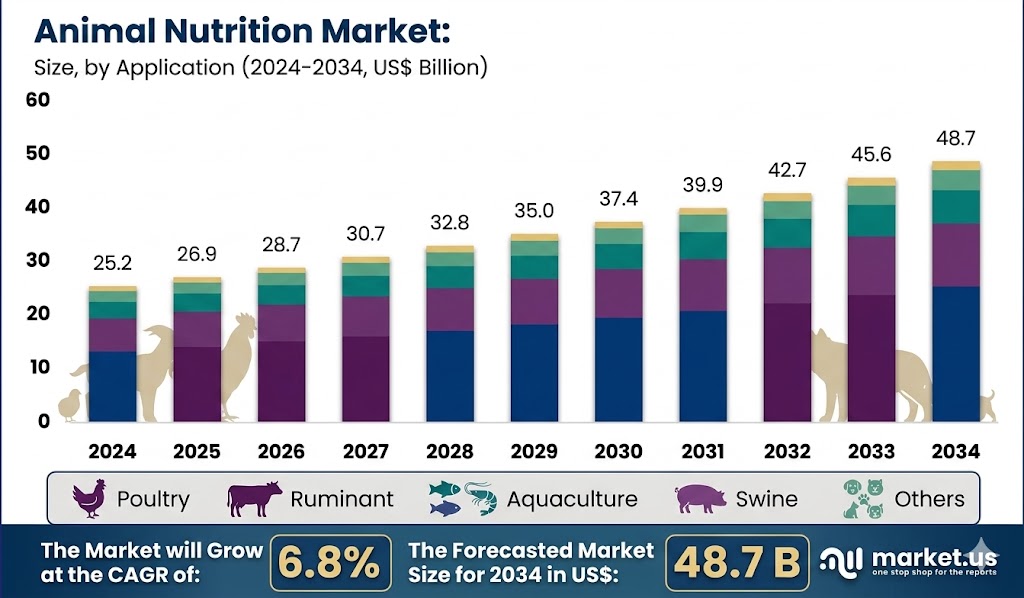
The Animal Nutrition Market Size is expected to be worth around US$ 48.7 Billion by 2034 from US$ 25.2 billion in 2024, growing at a CAGR of 6.8% during the forecast period 2025 to 2034.
The global animal nutrition industry plays a critical role in supporting livestock health, improving feed efficiency, and enhancing the quality of animal-derived food products. Animal nutrition involves the formulation and supply of balanced nutrients, including proteins, vitamins, minerals, amino acids, enzymes, and feed additives, to ensure optimal animal growth, reproduction, and immunity. The sector serves a wide range of animals, including poultry, swine, cattle, aquaculture species, and companion animals.
Rising demand for high-quality meat, dairy, eggs, and seafood products has significantly contributed to the expansion of the animal nutrition market. Increasing awareness regarding animal health and productivity, combined with the growing adoption of scientific feeding practices, continues to support market growth across both developed and emerging economies.
Technological advancements in feed formulation, precision nutrition, and sustainable feed ingredients are reshaping the industry landscape. Manufacturers are increasingly focusing on natural and organic feed additives, probiotics, and specialty nutrients to improve animal performance while meeting evolving regulatory and environmental standards.
The poultry segment remains a major consumer of animal nutrition products due to increasing global poultry consumption and commercial farming activities. In addition, aquaculture nutrition is witnessing notable growth driven by rising seafood demand and expanding fish farming operations worldwide.
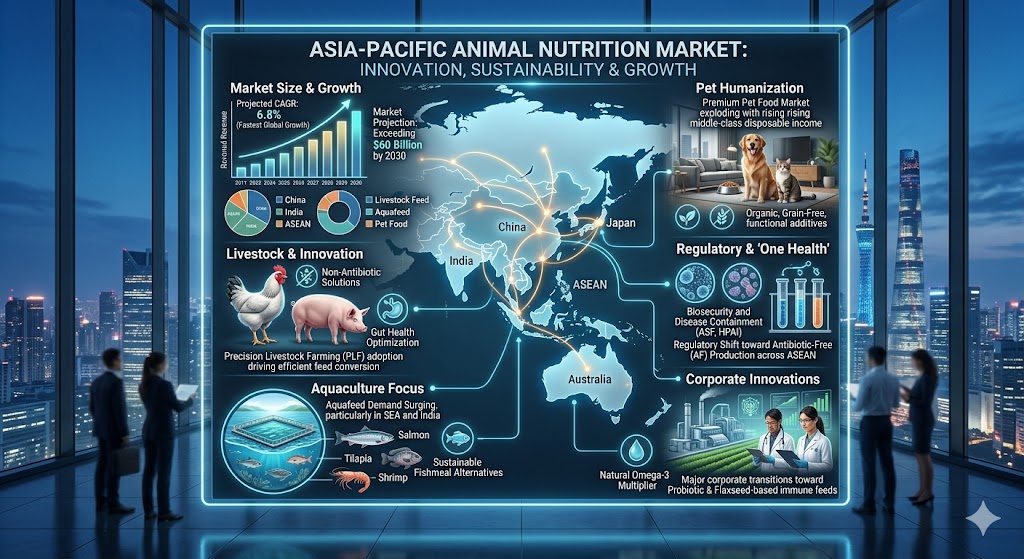
Asia-Pacific represents a significant market for animal nutrition, supported by large livestock populations, expanding meat production, and increasing investments in modern farming practices.
Key Takeaways
-
In 2024, the global animal nutrition market accounted for US$ 25.2 billion and is projected to reach US$ 48.7 billion by 2034, registering a CAGR of 6.8% during the forecast period.
-
Based on product type, the market is categorized into antioxidants, eubiotics, amino acids, and fiber. Among these, the amino acids segment dominated the market in 2024, capturing a revenue share of 54.5%.
-
By application, the market is segmented into poultry, ruminant, aquaculture, swine, and others. The poultry segment emerged as the leading category, accounting for 51.8% of the overall market share in 2024.
-
In terms of end users, the market is divided into veterinarians, animal feed manufacturers, households, farms, and others. The farms segment held the largest share of 58.5%, reflecting the increasing adoption of advanced animal nutrition products in commercial farming operations.
-
Regionally, North America maintained its leading position in the global animal nutrition market, securing a market share of 38.3% in 2024.
Regional Analysis
North America dominated the global animal nutrition market in 2024, accounting for the largest revenue share of 38.3%. The regional market growth is primarily driven by increasing meat consumption, rising demand for premium animal feed, and technological advancements in feed additives. Strong livestock production across the United States continues to support demand for amino acids, probiotics, enzymes, and other nutritional feed ingredients.
Growing pet ownership and increasing consumer focus on pet health have also accelerated the demand for fortified pet nutrition products. In addition, leading industry participants are expanding their production capacities and introducing innovative feed solutions to improve livestock productivity and feed efficiency. Favorable regulatory frameworks and continuous investments in feed safety and ingredient innovation further strengthen the regional market outlook.
Asia Pacific is anticipated to register the fastest CAGR during the forecast period owing to rapid expansion in livestock farming, increasing protein consumption, and rising urbanization. Countries such as China and India are witnessing strong growth in feed production and poultry consumption, supporting market expansion.
The growing aquaculture industry, coupled with increasing investments in sustainable feed ingredients and modern farming practices, is further driving regional demand. Government support, rising disposable income, and expanding commercial farming activities are expected to continue fueling the growth of the animal nutrition market across Asia Pacific.
Emerging Trends
-
Rise in Natural and Organic Feed Additives: Feed producers are increasingly adopting natural ingredients such as herbs, essential oils, and plant extracts instead of synthetic additives. This shift is driven by demand for antibiotic-free products, improved animal health, regulatory compliance, enhanced digestion, stronger immunity, and sustainable livestock production practices globally.
-
Focus on Gut Health and Immunity: Animal nutrition companies are emphasizing gut health through probiotics, prebiotics, and enzyme-based additives. These ingredients improve nutrient absorption, strengthen immunity, reduce disease risks, and minimize antibiotic dependency. The trend is particularly significant in poultry and swine farming for better productivity and safer food production.
-
Sustainability in Feed Production: Sustainable feed production is gaining importance through the use of alternative ingredients such as insect protein, algae, and recycled food waste. These solutions reduce environmental impact, improve feed efficiency, lower emissions, conserve resources, and support global efforts toward eco-friendly and climate-resilient livestock farming systems.
-
Customized Nutrition Based on Species and Life Stages: Feed manufacturers are developing customized nutrition solutions according to species, age, and production goals. Tailored feed formulations improve animal growth, productivity, health, and feed efficiency. This approach also reduces waste, lowers feeding costs, and supports better animal welfare across different livestock categories.
-
Digital Tools and Precision Feeding: Advanced technologies such as sensors, smart feeders, and AI-driven software are transforming animal nutrition management. Precision feeding systems monitor intake, detect health concerns early, and optimize feed rations. These technologies improve efficiency, reduce feed waste, lower operational costs, and enhance livestock productivity significantly.
-
Regulatory Push for Antibiotic-Free Nutrition: Governments are imposing stricter regulations on antibiotic usage in animal feed due to food safety and antimicrobial resistance concerns. Feed manufacturers are adopting alternatives including probiotics, herbal extracts, and essential oils to maintain animal health naturally while meeting consumer demand for antibiotic-free meat and dairy products.
-
Increased Demand for Functional Feed: Functional feed products are gaining popularity as farmers seek solutions that improve fertility, immunity, stress management, disease resistance, and product quality. These specialized feeds enhance livestock performance, animal welfare, and farm profitability, making them increasingly important in modern high-performance and commercial farming operations.

