


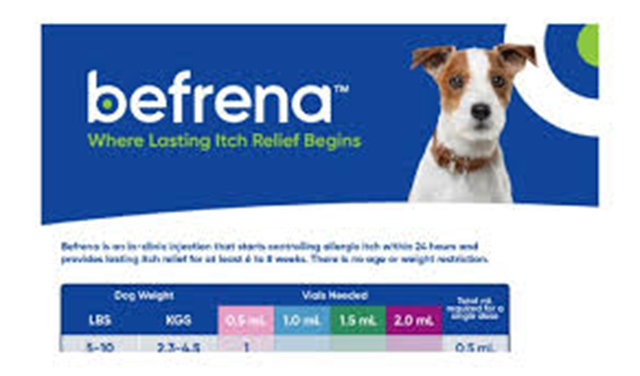
After the intense rivalry in JAK-Inhibitors’ space with a triangular contest between incumbent Zoetis, Elanco and MSD Animal Health, a new and more important front is opened in the MAbs segment – with launch of Befrena by Elano.
The launch of Elanco’s Befrena™ (tirnovetmab) has introduced direct competition to Zoetis’ long-standing blockbuster, Cytopoint® (lokivetmab) which remained unchallenged for almost a decade. Both these products are in-clinic, subcutaneous injectable monoclonal antibodies (mAbs) designed to neutralize interleukin-31 (IL-31) —the primary cytokine responsible for sending itch signals from a dog’s skin to its brain.
A clinical and commercial comparison highlights the distinct advantages of each therapy across efficacy, safety, and pricing.
Efficacy & Duration of Action: The Extended Window
While both therapies achieve rapid itch relief, the key competitive advantage lies in the duration of the clinical effect and quick onset of action.
Onset of Action
-
Befrena™: Statistically significant reductions in Pruritus Visual Analog Scale (PVAS) scores are observed within 24 hours of the initial injection as per pack insert
-
Cytopoint®: Demonstrates a similarly rapid onset, with visible reduction in scratching and licking behavior within 24 to 48 hours, resulting in a slight edge in favor of Befrena
Duration of Efficacy
-
Duration of Action: This is where the product profiles diverge. Cytopoint’s label specifies a 4-to-8-week dosing window, but real-world clinical data shows a steep decline in efficacy for many highly atopic dogs around Day 28, requiring strict monthly clinic visits
-
Befrena’s Extended Baseline: Befrena’s formulation is designed to extend the dosing baseline to a reliable 6 to 8 weeks (fully maintaining lower PVAS scores through Day 56 in clinical trials). For pet owners, this translates to an average reduction of 2 to 4 clinic visits per year compared to dogs that burn through Cytopoint on a 4-week cycle. However, since Befrena isn’t yet adopted by a large number of pet owners and also that its usage is just starting. it remains to be seen if 56 days efficacy claim holds in real-world
Safety Profiles: Targeted vs. Systemic Impact
Because both products are highly purified monoclonal antibodies rather than chemical pharmaceuticals, they bypass the liver and kidneys entirely, breaking down naturally into harmless amino acids. This gives them an advantage over daily oral immunosuppressants or JAK inhibitors (like Apoquel®).
Safety Vector |
Befrena™ (tirnovetmab) |
Cytopoint® (lokivetmab) |
Age & Weight Restrictions |
None. Approved for puppies and adult dogs of any weight. |
None. Safe for dogs of all sizes and ages. |
Concomitant Drug Safety |
High. Confirmed safe when co-administered with NSAIDs, antihistamines, antimicrobials, ectoparasiticides, and allergen immunotherapies. |
High. Can be safely used alongside antibiotics, vaccines, steroids, and flea/tick preventatives. |
Common Side Effects |
Mild, transient gastrointestinal upset (vomiting, diarrhea) and localized lethargy. |
Mild lethargy, injection site pain, and rare transient vomiting. |
Contraindications |
Not yet clinically evaluated in pregnant, breeding, or lactating dogs. |
Not evaluated in pregnant or lactating animals. |
Pricing Strategy & Clinical Value Architecture
Because Befrena is currently in its commercial launch phase, Elanco is using a strategic pricing model to gain market share from Zoetis.
Pricing Breakdown
-
Per-Vial Cost: On a per-milligram baseline, Elanco has positioned Befrena at parity with or slightly below Cytopoint’s current wholesale acquisition cost. Both medications are tiered by weight bands (utilizing larger single-dose vials or combinations for giant breeds).
-
Lifetime Value (LTV) Calculation: The true financial differentiation occurs at the consumer level. For a dog that requires year-round itch management and normally clears Cytopoint in 4 weeks, switching to a guaranteed 6-to-8-week Befrena protocol lowers annual clinic injection fees, veterinary visit costs, and total medication spend by roughly 20% to 25% annually potentially.
And the Winner is….
-
BEFRENA if: The priority is extending the time between veterinary visits, improving compliance for busy pet owners, and managing dogs that routinely experience “itch breakthroughs” around week 4 of their current therapy
-
CYTOPOINT if: The dog has a multi-year history of successful, well-tolerated management on a flexible 6-to-8-week schedule, and the clinic benefits from volume-tier purchasing rebates established through Zoetis’ ecosystem

