


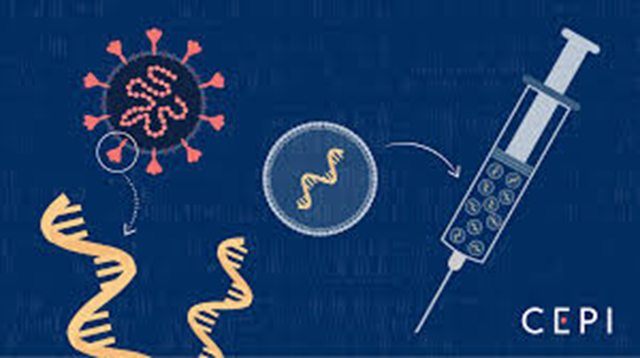
The global efforts for a potential new pandemic preparedness has achieved a historical milestone with the initiation of the world’s first large-scale, late-stage mRNA pandemic influenza vaccine trial. Dosing is officially underway for the pivotal Phase 3 study of Moderna’s investigational candidate, mRNA-1018, engineered to target the highly pathogenic avian influenza (H5N1) A virus.
Designed to evaluate safety and immunogenicity in approximately 4,000 healthy adults across 26 sites in the United Kingdom and various clinical locations in the United States, the trial represents an aggressive pivot toward rapid-response platforms. The clinical trial infrastructure—initially destabilized after U.S. federal funding under the Department of Health and Human Services (HHS) was withdrawn—has been entirely rescued via an emergency injection of up to $54.3 million from the Coalition for Epidemic Preparedness Innovations (CEPI). Early interim readouts demonstrate a robust protective profile, establishing a new precedent for proactive vaccine development before human-to-human transmission takes hold.
Zoonotic Vector Acceleration
The clinical urgency underwriting mRNA-1018 is driven by the unprecedented ecological footprint of the H5N1 clade 2.3.4.4b. Since 2024, global tracking has confirmed over 116 human cases of H5 bird flu, primarily linked to close occupational contact with infected animals. Crucially, the virus has undergone a profound mammalian adaptation shift, decimating wild bird populations, causing persistent outbreaks in commercial poultry, and heavily infiltrating livestock networks—specifically impacting U.S. dairy cattle operations across multiple states.
While sustained human-to-human transmission has not yet materialized, the veterinary-to-human interface is under intense stress. Public health officials caution that most individuals lack any pre-existing immunity to H5N1, making rapid, pre-pandemic vaccine construction an absolute necessity.
Limitations of Legacy Vaccines
Historically, 84% of global influenza vaccine manufacturing capability relies on 11-day-old fertilized hen eggs, with the remaining 16% utilizing cell cultures. During a true avian influenza pandemic, poultry culls directly cripple the egg supply chain, creating a catastrophic structural bottleneck. Furthermore, conventional egg- and cell-based platforms require 4 to 6 months to deliver the first commercial scale batches following candidate vaccine virus (CVV) declaration by the WHO.
Odyssey 301 Trial Protocol & Preliminary Efficacy Data
The Phase 3 trial—designated internally by Moderna as the Odyssey 301 Trial—is a randomized, observer-blinded study assessing the investigational vaccine in healthy adults aged 18 years and older.
Trial Logistics and Enrollment Distribution
-
Total Cohort Size: ~4,000 participants.
-
Geographical Stratification: 75% of the total cohort (~3,000 participants) is being actively recruited in the United Kingdom, leveraging the UK Vaccine Innovation Pathway (a system-wide Clinical Trial Accelerator managed by the UK Health Security Agency and the NIHR). The remaining 25% are being dosed at domestic U.S. clinical sites.
Target Risk Groups: The protocol explicitly prioritizes two high-risk groups: poultry industry workers/livestock farmers (highest zoonotic exposure risk) and adults over the age of 65 (highest risk of severe clinical outcomes).
CEPI Intervention & Global Equity Mandate
To prevent the trial from entering an indefinite freeze, CEPI stepped in to commit up to $54.3 million to advance mRNA-1018 through Phase 3 licensure. This intervention is heavily tied to CEPI’s “100 Days Mission”—a global directive to validate and manufacture scalable therapeutics within 100 days of a novel outbreak.
The emergency funding is contingent on a binding Global Equitable Access Agreement:
-
Capacity Allocation: If mRNA-1018 achieves full market licensure, Moderna is contractually obligated to allocate 20% of its real-time H5 pandemic vaccine manufacturing capacity to low- and middle-income countries (LMICs).
-
Pricing Cap: Doses distributed under this allocation must be delivered at affordable, subsidized pricing tiers to prevent the nationalistic hoarding witnessed during the 2020–2022 pandemic cycles.
Regulatory Outlook & Strategic Projections
Moderna is executing a rolling submission strategy, feeding real-time immunogenicity and safety data directly to the U.S. Food and Drug Administration (FDA) and the U.K. Medicines and Healthcare products Regulatory Agency (MHRA).
-
Integrated Licensure Pathways: To expedite approval, Moderna plans to merge the safety and platform data of mRNA-1018 with the regulatory dossiers compiled for its seasonal influenza candidate, mRNA-1010 (which has already undergone extensive Phase 3 testing).
-
Timeline to Full Biologics License Application (BLA): Management targets a full BLA submission by the third quarter of 2026, with the final comprehensive trial readout concluding in early 2027.
-
Strategic Stockpiling Options: Despite the domestic regulatory funding shifts, the Biomedical Advanced Research and Development Authority (BARDA) retains latent options to procure up to 50 million doses for the U.S. Strategic National Stockpile upon FDA clearance, validating the asset’s critical status as an indispensable global health countermeasure.