


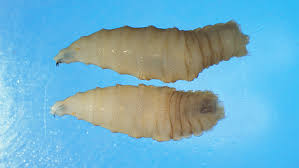
U.S. Department of Agriculture (USDA) is racing against the clock to contain an agricultural emergency that could alter the economics of the American meat industry. The federal government confirmed that the New World screwworm (NWS)—a highly destructive, flesh-eating parasite declared eradicated from the U.S. mainland in 1966—has been detected in a three-week-old beef calf on a ranch in Zavala County, Texas, roughly 50 miles from the Mexican border.
The sudden reemergence of Cochliomyia hominivorax represents a dangerous biological wildcard for the livestock sector. If the parasite breaches early containment buffers, it threatens to devastate a domestic cattle herd that is already sitting at historic lows. Furthermore, a wider outbreak presents an immediate political challenge for the Trump administration, disrupting ongoing federal initiatives aimed at tackling record-high retail beef prices across the country.
Biological Threat: Inside the “Horror Movie” Parasite
The New World screwworm is uniquely dangerous compared to standard blowfly variations because its larvae feed strictly on the living tissue of warm-blooded hosts.
Female screwworm flies are drawn to open wounds, abrasions, or mucous membranes—making the postpartum navel of a newborn calf an ideal target. Within hours of oviposition, the eggs hatch into larvae equipped with sharp mouth hooks. These maggots literally screw their way into the living flesh, expanding the wound and triggering progressive tissue destruction that invariably proves fatal to the host if left untreated.
The Texas incident was identified via an umbilical lesion on a single calf. While the animal is expected to recover with targeted veterinary care, the fact that the pest managed to breach the strong biological barriers that held it at the Panama gap for decades has put the entire industry on high alert.
Crisis Containment Protocol Mobilized
In response to the positive confirmation from the National Veterinary Services Laboratories (NVSL) in Ames, Iowa, federal and state regulators immediately activated their emergency response playbook.
-
The 20-Kilometer Quarantine: The Texas Animal Health Commission (TAHC) established “Infested Zone 01,” a rigid 20-kilometer (12.4-mile) quarantine perimeter encompassing the detection site. No warm-blooded livestock can be transported outside of this grid without mandatory physical inspections and written clearance from a state-authorized veterinarian
-
Sterile Insect Technique (SIT) Flood: Eradication relies on flooding the ecology with laboratory-sterilized male flies. Because female screwworm flies mate only once in their lifetime, breeding with a sterile partner results in nonviable eggs, effectively forcing the wild population to collapse. The USDA has expedited the deployment of ground release chambers to augment the 4 million sterile flies already dropped aerially over the border corridor every week
Colliding with the Cattle Inventory Crisis
The screwworm incursion hits the American agricultural sector at its most vulnerable moment in modern history. Due to successive years of intense regional droughts, soaring hay costs, and liquidation trends across the Southwest, the U.S. domestic cattle herd is currently at its lowest inventory level since the 1950s.
Texas is the largest producer of beef cattle in the nation. Economists warn that if the pest becomes established in the state’s commercial rangelands, the financial fallout will be severe. Historical tracking models from the major outbreaks of the 1970s indicate that a widespread modern epidemic across the Southwest could trigger direct livestock damage exceeding $3 billion to $8 billion.
Compounding the supply issue, the ongoing crisis has already forced the suspension of live cattle imports from Mexico. These imports historically supplied Texas feedlots with a steady stream of stocker cattle, further squeezing domestic beef production lines.
Economic and Political Headwinds: The Beef Price Battle
For the Trump administration, the timing of the Texas screwworm detection is problematic. Retail beef prices in the United States are sitting at record-high benchmarks, having surged over 57 percent since 2020. The administration has faced intense pressure to curb consumer food inflation, making the stabilizing of meat prices a key domestic policy objective.
The economic mechanics of a potential screwworm epidemic present a multi-stage market problem:
-
Short-Term Liquidation Spike: If panic takes hold, ranchers may temporarily flood slaughterhouses with cattle to reduce their exposure to the parasite, briefly causing a artificial supply drop that could lower prices in the short term.
-
Medium-to-Long-Term Price Surges: Once those liquidated numbers clear the supply chain, the loss of breeding heifers and increased mortality among newborn calves will permanently shrink the total beef supply. Because consumer demand for beef is historically price inelastic, extreme supply shortages will inevitably send retail prices soaring to unprecedented highs.

