


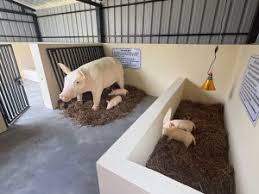
In a major structural intervention for India’s animal husbandry sector, the Department of Animal Husbandry, Government of Uttarakhand, in collaboration with the People for Animals–Public Policy Foundation (PFA-PPF), has inaugurated the nation’s first Scientific Pig Housing Model Demonstration Unit.
Unveiled at the Livestock Extension Officer Training Centre in Pashulok, Rishikesh, by Dr. Udai Shankar, Director of the state’s Animal Husbandry Department, the pioneering installation establishes a high-welfare blueprint for commercial pig farming. Designed as a life-sized, walk-through educational installation, the unit enables livestock owners, agricultural entrepreneurs, and state veterinary officers to study advanced, bio-secure housing layouts via models, architectural blueprints, and interactive displays without the use of live animals.
The facility arrives as a direct defense infrastructure update against African Swine Fever (ASF)—a highly contagious, panzootic viral disease causing up to 100% mortality in domestic herds, which has systematically devastated the livelihoods of pig farmers across northern and northeastern India.
Structural Biosecurity: Breaking the 100% Mortality Wave
Under India’s National Action Plan for the Prevention, Control, and Containment of African Swine Fever, the confirmation of a single ASF positive case forces veterinary teams to enforce immediate, non-negotiable culling of all swine within a 1-kilometer infected zone. Past epizootic waves across North India have led to the destruction of tens of thousands of animals, wiping out regional breeding colonies.
Because ASF lacks an approved commercial vaccine or treatment, farm-gate architectural biosecurity acts as the only viable defense line. The Rishikesh Demonstration Unit bridges a major scientific gap by shifting animals out of unhygienic, high-stress concrete pens into specialized, environment-controlled configurations.
The facility demonstrates how basic structural upgrades intercept transmission pathways:
-
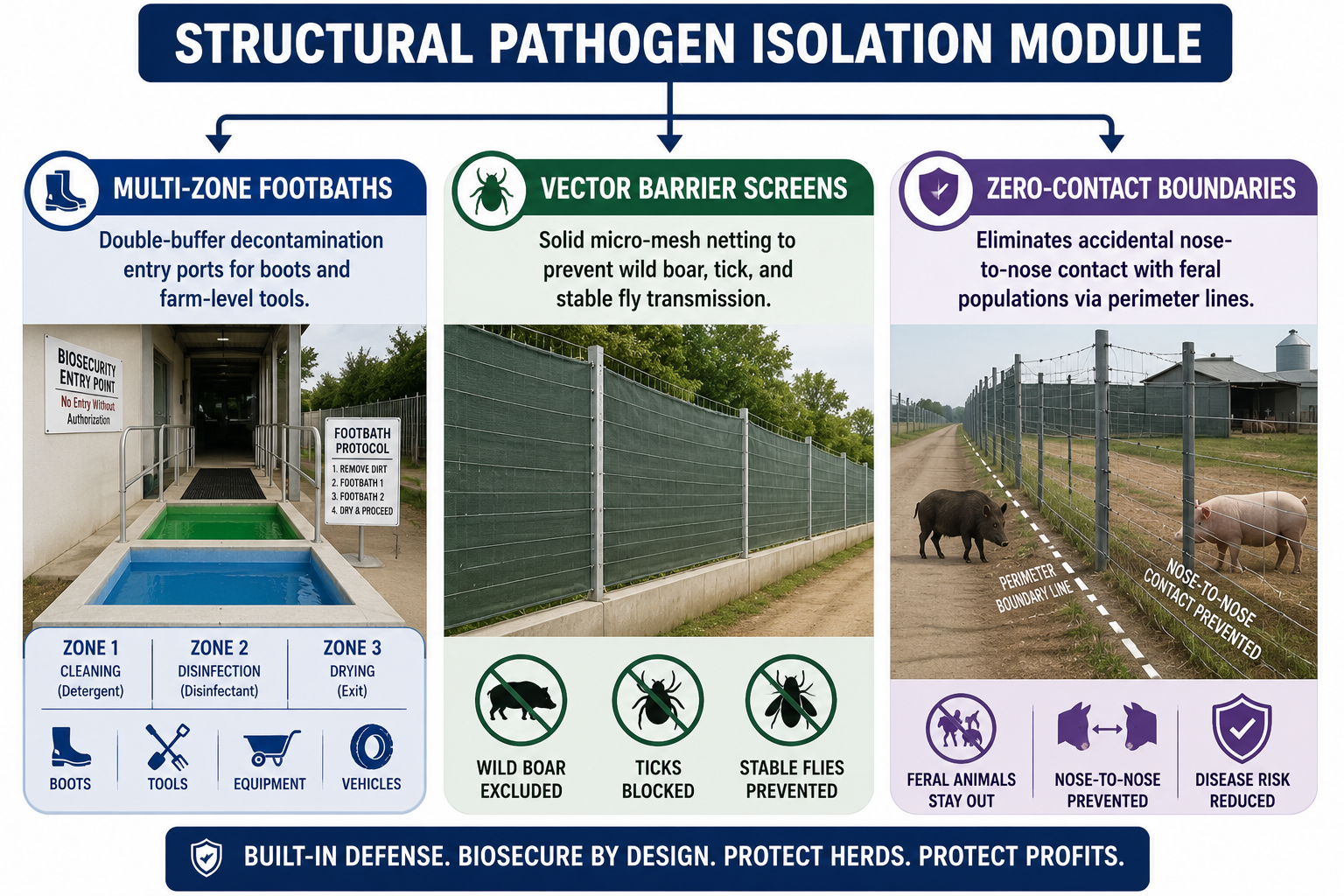
Vector Interception: The layout integrates heavy perimeter fencing and micro-mesh vector screens to prevent stable flies, ticks, and free-roaming wild boars—the primary natural reservoirs of the ASF virus—from interacting with the domestic herd.
-
Decontamination Buffer Zones: The blueprint mandates a single-entry pipeline featuring automated footbaths and equipment-wash stations, neutralizing potential vehicular or footwear tracking before humans step into the production space.
-