



McKinsey’s eighth annual dairy executive survey—expanded to include Europe—shows an industry facing intense cost and margin pressure, even as demand grows. Here’s the leadership agenda for the year ahead.
n the first few months of 2026, dairy processors across the United States and Europe find themselves operating in a challenging environment—one defined by persistent cost inflation, labor constraints, input volatility, and rising uncertainty around trade and regulation, particularly in Europe. At the same time, supply-side risks are increasing as producers contend with animal health issues (such as highly pathogenic avian influenza, New World screwworm, and bluetongue), alongside climate-related disruption and structural constraints on milk supply growth in several European markets.
Yet core demand remains resilient. Consumers continue to prioritize dairy as a primary source of nutrition, sustaining growth in key categories even amid a more cautious macroeconomic backdrop. For executives, these crosscurrents translate into a clear imperative: protect margins and execution in the near term, while investing selectively behind durable growth themes—most notably, protein-led innovation.
These are among the findings of McKinsey’s eighth annual US dairy survey, complemented this year by expanded interviews and survey data from European dairy executives (see sidebar, “About the research”). Our research reveals industry leaders’ top priorities and concerns. It also highlights emerging trends, including a more pragmatic stance on sustainability and a deliberate approach to digital and AI adoption.
Download the detailed report here – the-dairy-industrys-2026-playbook McKinsey & Co
What are dairy executives’ top priorities?
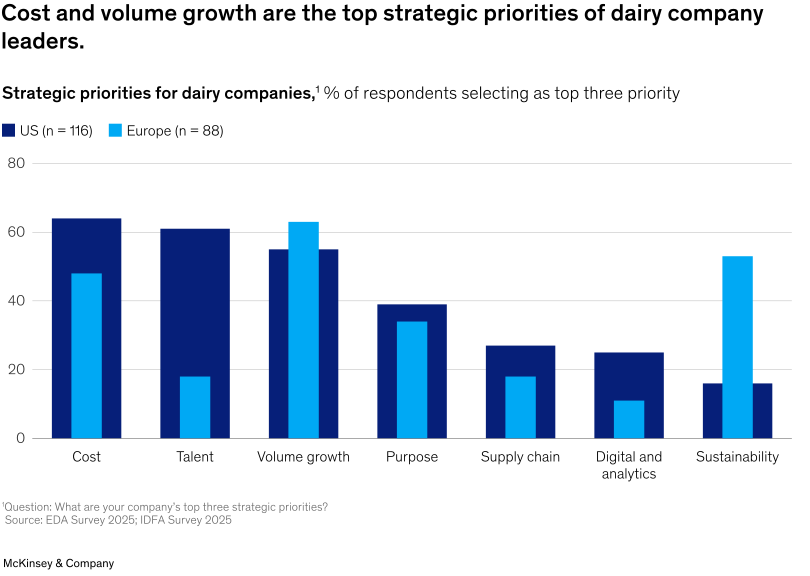
In both Europe and the United States, cost management and volume growth are among the top strategic priorities (Exhibit 1). US dairy executives’ priorities are broadly similar to last year. Talent is high on US leaders’ agendas but less of a priority in Europe. Sustainability, on the other hand, remains a top priority in Europe but not in the United States.
Exhibit 1
We strive to provide individuals with disabilities equal access to our website. If you would like information about this content we will be happy to work with you. Please email us at: McKinsey_Website_Accessibility@mckinsey.com
Cost and margin discipline
Across regions, cost inflation and commodity price volatility continue to compress margins and shape value chain decisions. Approximately 65 percent of US respondents rank cost management among their top three priorities—consistent with 2024 (69 percent) and up from 2023 (48 percent)—reflecting sustained cost increases in raw materials and logistics. European leaders report similar pressure, with roughly half placing cost among their top three priorities.
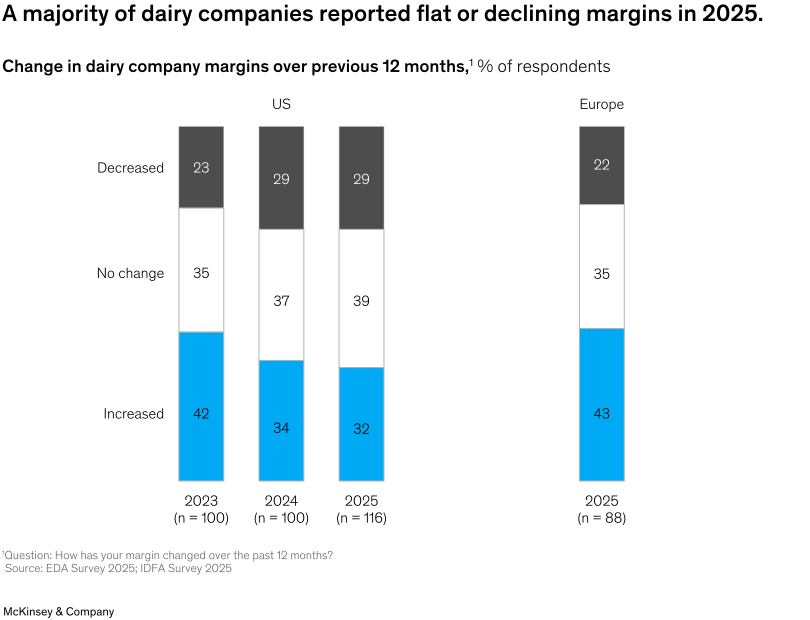
These cost pressures are evident in margin outcomes. In the United States, nearly 70 percent of surveyed dairy companies reported flat or shrinking margins in 2025, up from 66 percent in 2024 and 58 percent in 2023. Europe shows a comparable dynamic, with 57 percent reporting flat or shrinking margins in 2025 (Exhibit 2).
Exhibit 2
We strive to provide individuals with disabilities equal access to our website. If you would like information about this content we will be happy to work with you. Please email us at: McKinsey_Website_Accessibility@mckinsey.com
How are dairy processors responding to market pressures? Nearly 40 percent of US respondents report making strategic or operational changes—most commonly, switching suppliers (61 percent) and rationalizing SKUs (52 percent). In Europe, a larger share of leaders (66 percent) report taking action, with the most common moves being portfolio rationalization (52 percent) and changes in the geographic distribution of products (48 percent).
The high costs of raw materials and logistics have squeezed our margins, forcing us to look for efficiencies in other areas of the business.
Despite these headwinds, executives expect stabilization in the near term. Optimism is stronger in the United States, where 95 percent of respondents expect margins to increase, compared with 76 percent in Europe. US consumer purchasing trends support that outlook: Retail milk sales rose nearly 5 percent in value in the 12 months ending August 2025, and total refrigerated dairy sales increased 15 percent in value over the three years ending 2024.
Revenues and Volume Growth
In both markets, revenue and volume growth remain top strategic priorities. Approximately 55 percent of US dairy processors rank volume growth among their top priorities, consistent with 2024 and up from 2023 (48 percent). Volume growth expectations are reflected in the $11 billion that US processors are investing in new dairy manufacturing capacity.
In Europe, 65 percent identify volume growth as a top priority. European leaders are more measured in their outlook than their US peers: Around 40 percent expect their volumes to remain flat or decline, compared with about 20 percent of US respondents, potentially reflecting heightened concerns around supply constraints and labor shortages.
Consumption is going very well within dairy. . . . I think we have a bright future, although production across Europe is unlikely to increase.
Revenue expectations are more aligned across regions: 87 percent of US respondents and 84 percent of European respondents anticipate revenue increases over the next three years. Consumer demand signals support this confidence. In the United States, 38 percent of consumers report actively prioritizing more dairy, and 70 percent plan to increase protein intake, with dairy products among the most preferred protein sources (41 percent for yogurt, cottage cheese, cheese; 38 percent for milk).
Talent pipelines
Talent represents one of the sharpest points of divergence between regions. In the United States, 61 percent of respondents (down from 67 percent in 2024) cite talent as a top strategic priority. Leaders describe persistent challenges in labor availability and retention in manufacturing and processing, particularly in frontline, maintenance, and skilled roles.
Even with really competitive wage and benefit structures . . . we have serious challenges filling those positions and retaining our current workforce.

