



BEIJING — The global pork capital is locked in what agricultural economists are calling one of the most severe, structural herd liquidations in modern history. Driven by a punishing combination of overexpansion and a permanent shift in consumer eating habits, China’s massive swine sector is losing an estimated $3.8 billion USD per month.
The financial crisis is fundamentally reshaping the East Asian protein market. It is taking an equal toll on vulnerable smallholders and heavily leveraged, multi-story “hog hotel” mega-operations alike.
Micro-Data: Squeezed by Record-Low Prices
The roots of the current crisis tie back to the devastating 2019 African Swine Fever (ASF) epidemic, which wiped out nearly two-thirds of China’s hog herd. The resulting extreme pork shortage sent profits skyrocketing to an unprecedented $300 to $400 per head. This sparked a massive rush of corporate capital into high-density, industrialized high-rise confinement facilities.
However, that rapid rebuilding phase severely overshot actual market capacity. The resulting supply glut has kept the industry consistently unprofitable for years.
By mid-2026, live pig purchase prices across prominent breeding provinces fell below 10 RMB per kilogram (breaching 5 yuan per jin), marking the lowest economic returns the country has seen in 16 years. Farmers are absorbing a net loss of $65 USD (roughly 380 to 450 RMB) on every single hog sent to slaughter.
Unlike American producers, who can often use land equity or flexible credit lines to weather negative margins, Chinese operations lack these safety nets. This vulnerability is rapidly accelerating bankruptcies and forced consolidation across the countryside.
Demand Problem: Shifting Generational Diets
While supply numbers remain unsustainably high, the crisis is further compounded by a significant, structural drop in domestic demand. Pork has long been the primary barometer of food costs in China, but consumer habits are undergoing an unprecedented shift.
Older demographic brackets historically consumed 70 to 80 pounds of pork per capita annually. In contrast, younger, urban consumers are actively cutting back, favoring lean poultry, seafood, and imported beef instead.
Furthermore, macroeconomic headwinds—including a prolonged real estate slowdown and weaker consumer spending—have drastically reduced traffic at major restaurants and construction site canteens, which typically serve as the two largest volume consumers of commercial pork.
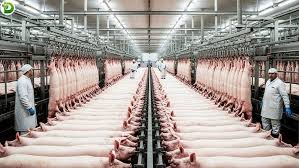
Government Mandates: Capping Sows to Stabilize the Market
Faced with a severe market imbalance, the Ministry of Agriculture and Rural Affairs (MARA) has shifted from encouraging expansion to enforcing strict reductions. The central government issued direct policy mandates instructing commercial enterprises to cut capacity, aiming to lower the national breeding sow inventory to a hard cap of 39 million head.
To enforce these adjustments, Beijing has rolled back the subsidized expansion loans that originally fueled the corporate mega-farm boom. Additionally, authorities are using national strategic cold-storage reserves to purchase excess meat and stabilize collapsing prices.
Despite these government interventions, top-tier corporate giants like Muyuan Foodstuff, Wens Foodstuff, and Twins Group continue to aggressively pump out volume in an effort to lower their fixed overhead costs per head. This persistent volume war is muting government supply signals and extending the liquidation cycle.
With massive herds still moving through corporate high-rises and overcapacity remaining high, agricultural analysts project that this historic financial purge will drag on well into 2027 before the East Asian pork matrix returns to profitability.

